


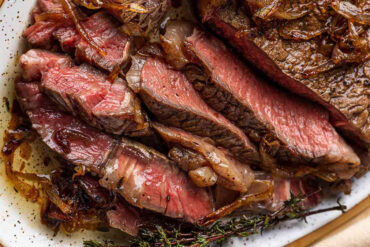
For years, red meat has been blamed for increasing inflammation, a key driver of aging and age-related diseases. But new research is challenging that belief, suggesting that red meat itself may not be the culprit. Instead, the real issue may be something else entirely: body fat.
A Surprising Study on Meat and Inflammation
Researchers analyzing data from the Multi-Ethnic Study of Atherosclerosis (MESA) found that after accounting for body mass index (BMI), red meat was not associated with higher inflammation levels. Published in the American Journal of Clinical Nutrition, the study included over 3,600 adults between the ages of 45 and 84. It examined the relationship between red meat consumption and various inflammation markers, like C-reactive protein.
Without adjusting for BMI, red meat appeared to be linked to inflammation. But when BMI was factored in, the link disappeared. Dietitian Rick Miller, who was not involved in the study, emphasized that “adiposity and not red meat is potentially the more important driver of whole-body inflammation.”
Interestingly, the study also found that people who ate more unprocessed red meat had lower levels of glutamine, a metabolite tied to reduced inflammation. But this detail didn’t outweigh the overall finding: red meat alone is not a direct source of chronic inflammation.
Caveats and Criticism
While these results are promising for red meat eaters, the study has limitations. It relied on self-reported dietary habits, didn’t measure portion sizes precisely, and only included certain ethnic groups. Furthermore, the study was partially funded by Beef Checkoff, a beef industry marketing group, raising concerns about potential bias. Dietitian Karen Berg warned that such funding warrants caution when interpreting results.
As an observational study, it can’t prove cause and effect. More rigorous, long-term research is needed before changing dietary guidelines.
Red Meat and Aging: The Inflammation Puzzle
Chronic low-grade inflammation is a known contributor to aging and age-related diseases such as cardiovascular disease, diabetes, and cognitive decline. If red meat does not increase inflammation – especially when BMI is managed – it may not accelerate aging as previously thought. In fact, lean red meat may support healthy aging by providing essential nutrients like high-quality protein, iron, zinc, and vitamin B12.
These nutrients help maintain muscle mass, support the immune system, and may reduce frailty in older adults. Branched-chain amino acids in red meat also promote muscle repair and energy production, which are especially important as people age.
The Benefits of Red Meat
According to a narrative review published in Nutrients by researchers at Texas Tech University, red meat is rich in:
- Complete proteins that support muscle growth
- Heme iron that helps prevent anemia
- Vitamin B12, essential for brain function
- Bioactive compounds like taurine and creatine that assist in energy metabolism and antioxidant defense
Lean red meat is particularly filling and may help control appetite and manage weight. For older adults, this can be a powerful tool in preventing muscle loss and maintaining mobility.
However, the benefits depend on portion size, frequency, and cooking method. Experts suggest limiting intake to two or three servings per week, with portions around 3 to 4 ounces.
Risks Still Exist
Despite the new findings on inflammation, red meat is still linked to several health risks when consumed excessively, especially in processed forms:
- Heart Disease: High saturated fat content in fatty cuts can raise LDL cholesterol, increasing heart disease risk. A review from Hartford HealthCare warns that processed meat like bacon and hot dogs raises this risk even more sharply.
- Cancer: The International Agency for Research on Cancer classifies red meat as a probable carcinogen, particularly in relation to colorectal cancer. Cooking at high temperatures (like grilling or pan-frying) produces chemicals such as heterocyclic amines that may raise cancer risk.
- Type 2 Diabetes and Obesity: Overconsumption of fatty or processed red meat is linked to weight gain and insulin resistance. Still, lean red meat may support satiety and help manage hunger hormones like leptin, which can aid in weight control.
- Metabolic-Associated Steatotic Liver Disease (MASLD): Red meat, especially in obese individuals, has been associated with increased liver fat due to excess heme iron and amino acids.
The Cooking Factor
How you cook red meat makes a big difference. Research from Kansas State University shows that marinating meat with antioxidant-rich spices before grilling can reduce carcinogen formation by up to 88%. Avoiding charring and high-heat cooking methods like pan-searing or smoking can further reduce harmful compounds.
Finding Balance
Red meat doesn’t need to be eliminated, but it should be eaten in moderation. The type, cut, preparation, and frequency all matter. Experts recommend:
- Choosing lean cuts like tenderloin or sirloin
- Limiting servings to 3–4 ounces, 2–3 times per week
- Using moist heat cooking or marinating before grilling
- Avoiding processed forms like sausage, bacon, or hot dogs
For those looking to reduce meat intake, plant-based proteins like legumes, tofu, and nuts offer similar nutrients without the risks. Fish and poultry are also healthier alternatives with lower saturated fat content.
The newest research challenges the long-standing belief that red meat causes inflammation, suggesting that excess body fat may be the true driver. But that doesn’t make red meat a health food. It offers important nutrients and can support muscle health and satiety when consumed responsibly. Still, risks like heart disease and cancer remain concerns, especially when meat is processed or overcooked.
As we learn more, it’s becoming clear that context matters. Red meat in moderation, as part of a balanced diet, likely does more good than harm—especially for individuals maintaining a healthy weight. But the debate is far from over, and future studies will continue to refine what we know.
Sources:
- American Journal of Clinical Nutrition
- Nutrients (Texas Tech University)
- Hartford HealthCare Heart & Vascular Institute
- The Washington Post
- University of Southern California Keck School of Medicine
- University of Texas MD Anderson Cancer Center
- Kansas State University marinade study
- EatingWell Magazine