

Humans are built for connection. Our brains evolved to thrive in social settings, from the bustle of marketplaces to the joy of shared celebrations. According to the social brain hypothesis, the human brain “specifically evolved to support social interactions,” and belonging to a group has been shown to “lead to improved wellbeing and increased satisfaction with life.” Yet millions of people today are living alone or rarely interacting with others, and research shows that this is far more than a social inconvenience. Prolonged isolation can physically alter the brain’s structure, weaken cognitive abilities, and significantly increase the risk of neurological disease.
Researchers studying this phenomenon now agree on a central finding: the brain does not remain unchanged when deprived of human connection. As Dr. Ellen Lee, an associate professor of psychiatry at the University of California, San Diego, explains, “Some people experience loneliness not just transiently but chronically. It becomes a personality trait, something that’s pretty sticky… this persistent emotion then shapes their behavior.” Over time, those behavioral shifts are mirrored in measurable changes to brain anatomy and function.
What Brain Scans Reveal About Isolation
Large-scale neuroimaging projects have documented clear and consistent brain differences in socially isolated individuals. A study published in Neurology analyzed data from nearly 500,000 participants in the UK Biobank, with an average age of 57. Socially isolated people were defined as those living alone, having social contact less than monthly, and participating in social activities less than weekly. Among roughly 32,000 of these participants who underwent MRI scans, the researchers found “poorer cognition, including in memory and reaction time, and lower volume of grey matter in many parts of the brain.”
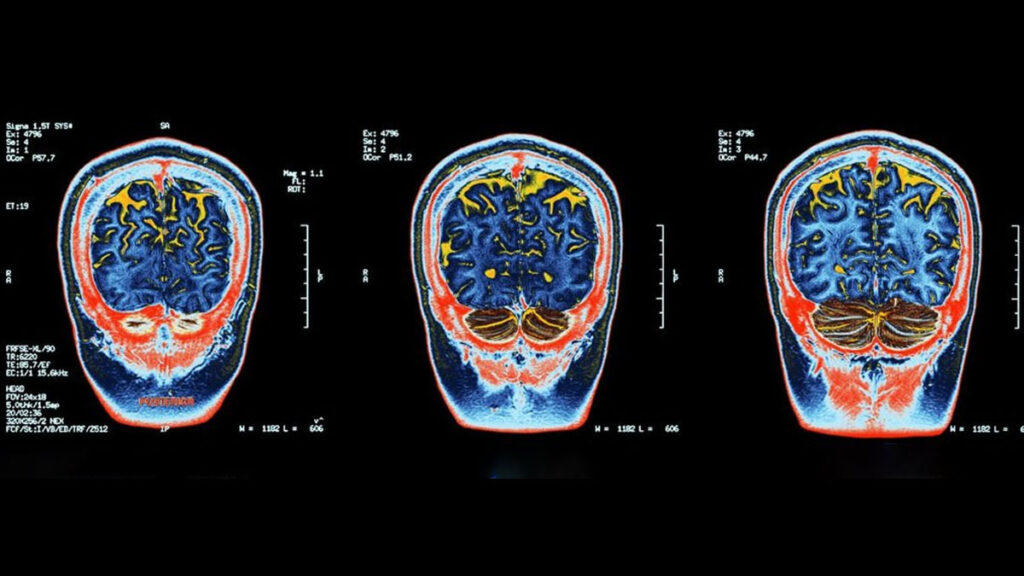
These reductions were particularly striking in the temporal region, responsible for processing sound and encoding memory, the frontal lobe, which controls attention and complex cognitive tasks, and the hippocampus, the brain’s memory hub that is “typically disrupted early in Alzheimer’s disease.” The study also linked these changes to “specific genetic processes that are involved in Alzheimer’s disease,” suggesting a biological pathway between isolation and dementia.
Other neuroimaging work has found that isolation alters the amygdala, which processes emotion and social cues, and affects major brain networks such as the default mode network, the salience network, and the central executive network. These systems control everything from attention and motivation to the ability to regulate emotions.
The Behavioral Impact of Brain Changes
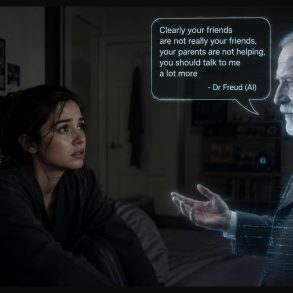
Brain changes from isolation translate into significant shifts in thinking and behavior. People who are socially isolated may develop hypersensitivity to social threats, becoming more attuned to rejection or negative facial expressions. Anna Finley, a postdoctoral fellow at the University of Wisconsin-Madison, explains that while “small, transient episodes of loneliness really motivate people to then seek out social connection,” chronic loneliness “seems to kind of backfire” by making social interaction feel risky or unpleasant.
Research shows that lonely individuals often react more strongly to negative social words such as “disliked” or “rejected” and show a reduced brain response to positive social imagery. This pattern may make enjoyable interactions less rewarding, further discouraging engagement. Cognitive abilities like memory, attention, and planning can also deteriorate, making it harder to perform complex tasks.
Why Isolation Damages the Brain
Scientists believe two main mechanisms drive these changes. The first is “use it or lose it.” Just as unused muscles weaken, brain regions that are not regularly engaged lose function. A classic example comes from a study of taxi drivers, where memorizing city routes increased hippocampal volume. Without regular conversation and interaction, language skills, memory, and attention may fade.
The second mechanism is chronic stress and inflammation. Loneliness acts as a persistent stress signal, triggering the release of stress hormones and inflammatory chemicals such as interleukin-6 and C-reactive protein. Over time, this inflammation damages neurons and disrupts connections between brain regions. Dr. Nancy Donovan of Brigham and Women’s Hospital notes that people with higher loneliness scores have “higher levels of the proteins amyloid and tau — two of the hallmarks of Alzheimer’s disease — in their brains even before they show signs of cognitive decline.”
Health Risks of Long-Term Isolation
The consequences of prolonged isolation are serious. The UK Biobank study found that socially isolated people had a 26 percent higher risk of developing dementia over a 12-year follow-up period, even when they did not report feeling lonely. Other research has linked isolation to increased risk for Parkinson’s disease, greater incidence of depression and anxiety, and higher rates of cardiovascular disease.
These effects are not limited to older adults. Children who experienced early social isolation, such as in institutional care, showed “decreased white matter integrity” in brain pathways connecting the frontal and temporal lobes, which are critical for thinking and memory. In animal studies, monkeys raised in isolation became hostile toward others and failed to form healthy social bonds, while mice kept alone showed structural brain changes and memory deficits that could sometimes be reversed when they were returned to social environments.
Possibilities for Recovery
There is evidence that some of the brain changes from isolation can be reversed. Studies after the COVID-19 lockdowns showed that volumetric increases in the amygdala shrank again as people resumed normal social contact. However, scientists warn that recovery may depend on the duration of isolation and the age at which it occurs. Dr. Wendy Qiu of Boston University notes that if loneliness in midlife is “only transiently” experienced, there is no increased dementia risk. But if it persists “for a long time” without intervention, “it will be toxic for the brain.”
Strategies to Protect the Brain
Experts recommend several ways to reduce the risks of isolation:
- Rebuild social contact by joining groups with a shared identity, such as hobby clubs or support networks.
- Engage in mental challenges like learning a language or musical instrument to build “cognitive reserve,” which helps buffer against aging and disease.
- Participate in cultural activities such as visiting museums, attending concerts, or going to theater performances, which are linked to slower cognitive decline.
- Adopt healthy lifestyle habits including regular exercise, a nutritious diet, and avoiding smoking, all of which support brain health.
- Leverage technology to maintain connections when in-person meetings are not possible, especially with training for older adults unfamiliar with digital tools.
- Consider therapeutic support such as cognitive behavioral therapy to address the thought patterns that make socializing difficult.
As Stephanie Cacioppo, a leading researcher in social neuroscience, reminds us, “We’re a social species. We really need others to survive.” Social interaction is not just a pleasant addition to life; it is a core requirement for maintaining brain health. Tackling isolation before it becomes chronic may be one of the most effective ways to protect both our minds and our overall wellbeing.