
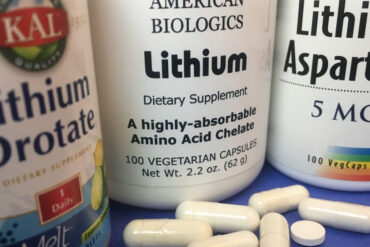
Low-dose lithium, sometimes called microdose lithium, refers to taking trace amounts of lithium—usually between 0.3 and 5 milligrams of elemental lithium per day—hundreds of times less than the amount used in prescription treatments for bipolar disorder. At these micro levels, lithium is not a psychiatric drug but a naturally occurring mineral supplement. It can be taken as lithium orotate, a form widely available over the counter and often used in research because it appears to reach the brain effectively at small doses.
In contrast, medical lithium carbonate used for bipolar disorder contains up to 1,800 milligrams daily and requires blood monitoring due to potential side effects. Microdose lithium has shown none of these toxicities. It’s roughly equivalent to what people in lithium-rich regions consume naturally in their water supply.
The Alzheimer’s Connection
Among all its potential benefits, lithium’s role in protecting the brain against Alzheimer’s disease has generated the most excitement. Researchers in Brazil found that giving Alzheimer’s patients as little as 300 micrograms—less than one-thousandth of a psychiatric dose—stabilized their cognitive function for over a year. The placebo group continued to decline, while the lithium group held steady.
Follow-up research from Harvard and other universities revealed that lithium orotate interacts with several biological pathways that drive Alzheimer’s: it reduces amyloid buildup, limits tau tangles, suppresses inflammation, and promotes the growth of new neurons. Imaging studies in the United Kingdom using specialized 7Li-MRI scans confirmed that these small amounts of lithium reach the brain, proving exposure even at supplement-level doses.
Animal research backs up these findings. Mice and other models given trace lithium showed restored synapses, reduced Alzheimer’s-type pathology, and improved memory—effects suggesting that lithium could modify the disease process itself rather than just mask symptoms.
Benefits Beyond the Brain
While cognitive protection remains lithium’s best-documented benefit, evidence suggests its effects reach far beyond the brain.
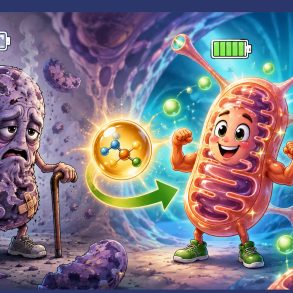
Lithium stimulates autophagy, the cell’s internal recycling system that clears out damaged proteins and debris—one of the most important anti-aging processes in biology. It also improves mitochondrial health, the energy production within cells, leading to better performance and less oxidative damage. Studies show that lithium tells cells to produce new, more efficient mitochondria while removing old ones, keeping energy production youthful.
Some research also links lithium to longer telomeres, the protective caps at the ends of chromosomes that shorten with age. A Swedish study found that bipolar patients taking lithium had 35 percent longer telomeres than others, suggesting a potential slowing of cellular aging. Results are mixed across populations, but many scientists view lithium as a promising modulator of biological aging.
Lithium may also fight “zombie cells,” or senescent cells, that stop dividing but continue releasing harmful inflammatory signals. By improving mitochondrial efficiency, lithium reduces the creation of these senescent cells, potentially lowering chronic inflammation—a hallmark of aging and many degenerative diseases.
Observations from the Real World
Population-level evidence adds to the intrigue. Studies in Japan, Texas, and Denmark found that areas with higher natural lithium in the water had lower overall mortality rates and significantly reduced rates of Alzheimer’s, obesity, and type 2 diabetes. In Texas, researchers tracked health outcomes for seven years and saw consistent benefits across diverse populations. These findings are correlations, not proof, but their consistency across cultures suggests something important is happening.
Animal studies indicate that low-dose lithium may even protect the kidneys, in contrast to the well-known damage caused by high doses. Researchers at the University of Toledo found that small doses slowed age-related kidney decline. Similarly, metabolic benefits have been observed, with improved insulin sensitivity and lower obesity rates in populations consuming lithium-rich water.
Longevity and Life Extension
Does low-dose lithium extend lifespan? In short-lived species like worms and fruit flies, the answer is yes—it consistently lengthens life by improving cellular resilience. In mice, the effect is more modest but still measurable. Human data come from population studies showing that regions with higher lithium levels in drinking water tend to have longer average lifespans. While this doesn’t prove causation, the convergence of evidence suggests lithium helps protect against diseases that shorten life, such as dementia and metabolic decline.
Practical Use and Safety
Lithium orotate is the most common supplement form. A typical capsule contains about 5 milligrams of elemental lithium, equivalent to what many people consume naturally from mineral-rich water. Most studies report excellent tolerability at these levels, with no need for blood monitoring.
People considering low-dose lithium often start at 0.3 to 1 milligram daily and adjust gradually. It’s important, however, for anyone with kidney or thyroid problems—or those taking medications that affect lithium levels—to consult a doctor first.
Natural sources of lithium include tomatoes, potatoes, leafy greens, nuts, and seafood, but the concentration depends heavily on the local soil and water. In regions with little lithium in groundwater, supplementation may help restore what the diet lacks.
Lithium is not a miracle cure, but its biological reach is remarkable. It influences inflammation, cellular cleanup, neuroprotection, mitochondrial health, and perhaps even the aging clock itself. Combined, these effects could explain why populations drinking lithium-rich water appear to age more gracefully.
Researchers are now calling for larger, long-term trials to confirm whether microdose lithium can truly alter the course of Alzheimer’s or other age-related conditions. Until then, low-dose lithium stands out as one of the most intriguing, affordable, and multi-pathway supplements in longevity science—a simple mineral that might quietly be one of nature’s most underappreciated tools for extending both health and life.
https://healthnews.zone/?p=7089