

Nearly 9 in 10 U.S. adults have at least one risk factor for cardiovascular-kidney-metabolic (CKM) syndrome, yet about 9 in 10 people have never heard of it. An American Heart Association survey released on Oct. 20, 2025, found that only 12 percent of adults recognized the term, even though almost 90 percent had at least one risk factor. At the same time, 79 percent said it is important to understand CKM health and 72 percent want to learn more. Eduardo Sanchez, M.D., the Association’s chief medical officer for prevention, said the results show the need to “emphasize those connections and help patients understand the importance of collaborative care.” The survey was conducted online in August 2025 among 4,007 adults and is accurate within about 2 percentage points.
What is CKM Syndrome?
CKM syndrome is a newly defined disorder that focuses on the links among heart disease, kidney disease, diabetes, and obesity. The American Heart Association describes these as connected systems. When one system falters, it can worsen the others, creating a cycle that raises the risk for heart attack, stroke, heart failure, and abnormal heart rhythms. The Association plans to issue the first guidelines on CKM syndrome in early 2026.
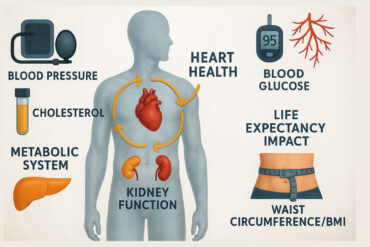
The materials describe CKM through its risk factors and complications rather than a fixed set of symptoms. The separate conditions can worsen each other and lead to serious outcomes like heart attack, stroke, heart failure, and abnormal heart rhythms. This is one reason awareness matters. People may have high blood pressure, abnormal cholesterol, high blood glucose, excess weight, or reduced kidney function without recognizing how those factors work together.
Measurement relies on routine checks that many adults already get, evaluated in combination.
- Blood pressure
- Cholesterol and triglycerides
- Blood glucose or A1c
- Weight, body mass index, and waist circumference
- Kidney function, often using estimated glomerular filtration rate
Using these measures, researchers define CKM stages that run from early risk to clinical cardiovascular disease. In national health data, stage 0 means no CKM-related risk factors. Stage 1 includes overweight or obesity and impaired glucose control. Stage 2 adds metabolic risk factors or moderate to high chronic kidney disease. Stage 3 marks subclinical cardiovascular disease with CKM risks. Stage 4 includes clinical cardiovascular disease, such as coronary heart disease, heart failure, stroke, peripheral artery disease, or atrial fibrillation, often alongside kidney failure.
How Common the Risks Are
Prior analyses cited by the American Heart Association indicate that nearly 90 percent of adults meet criteria for at least stage 1 and that about 15 percent are already in advanced stages. Adults 65 and older are more likely to have the syndrome. Nearly 80 percent of young adults ages 20 to 44 already carry CKM risk factors, and men are more likely to have the syndrome than women.
The Association offers a simple picture of how the systems interact. The heart pumps blood to the body. The metabolic system turns blood glucose into energy and creates waste. The kidneys filter that waste and balance fluids, which helps regulate blood pressure. Blood pressure, in turn, affects how the heart pumps. When one part is struggling, it can burden the others. The interplay of these risks raises the chance of heart attack, stroke, and heart failure more than any single factor alone.
What CKM Means for Health and Life Expectancy
CKM syndrome is linked to worse clinical outcomes and shorter lives as stages advance. In a large U.S. analysis using national health and nutrition data, estimated life expectancy at age 50 was 37.5 years for people in stages 0–1, 32.6 years in stage 2, 27.1 years in stage 3, and 25.1 years in stage 4. That is a difference of about 12.4 years between early and advanced CKM. About 26.7 percent of the life expectancy gap at age 50 between stages 0–1 and stage 4 was due to higher cardiovascular mortality. These patterns were seen in both men and women and across racial and ethnic groups that were analyzed.
During an average of 6.8 years of follow-up in the same national cohort, higher CKM stages were tied to higher mortality. Compared with stages 0–1, all-cause mortality risk rose stepwise at each higher stage, and cardiovascular mortality risk rose even more sharply. These findings were consistent after adjusting for age, sex, education, income, lifestyle factors, and diet quality, and they remained robust in sensitivity analyses.
Among people with atrial fibrillation, having more CKM domains was linked with a higher risk of major adverse cardiovascular events and all-cause death. This dose-response pattern underscores how CKM complexity can change management and outcomes when heart rhythm disorders are present.
In the American Heart Association survey, people said they most want to learn how CKM is diagnosed and treated. The Association emphasizes that coordinated care is better than treating single conditions in isolation. It also notes that, for most people, CKM risks are reversible with changes to eating patterns, physical activity, and appropriate treatment. Sanchez said it was reassuring that once CKM was explained, nearly three-quarters of respondents recognized its importance and wanted to learn more.
The Bottom Line
CKM syndrome gives a name and a structure to a problem that affects nearly everyone. Most adults carry at least one risk factor. Many do not know how their heart, kidneys, and metabolism are linked. As CKM stages advance, the risk of death rises and life expectancy falls, largely because of cardiovascular disease. Regular checks of blood pressure, cholesterol, weight, blood sugar, and kidney function, along with coordinated care, can help people act earlier and reduce the chance of heart attack, heart failure, or stroke.
HNZ Editor: Seems to me that this is a bit too broad to be panic time. Given the “risk” factors, one would have to be in nearly perfect shape to not have any of them. I’m predicting that this massively general criteria will fall into the dustbin of history, in favor of something more specific and useful.