

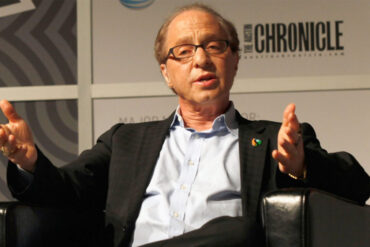
Ray Kurzweil, a renowned computer scientist and futurist, has spent decades forecasting how technology will reshape the human experience. Known for his uncanny accuracy in predicting innovations such as the rise of portable computers, cloud computing, and artificial intelligence, Kurzweil has now turned his attention to a bold new frontier: reversing the effects of aging itself. He believes that within the next few years, humanity will cross a critical threshold he calls “longevity escape velocity.”
The Vision of Longevity Escape Velocity
Longevity escape velocity is the idea that scientific and medical advancements will soon progress so rapidly that life expectancy will increase by more than one year every year. In other words, people will gain time faster than they lose it. Kurzweil describes it as the moment “you’ll get back more than a year – go backwards in time.” This doesn’t mean literal time travel, but rather that aging could be biologically reversed or indefinitely delayed. The result would be an era where each passing year adds more life than it takes away.
Kurzweil has predicted that this point could arrive as early as 2029, only four years away. His optimism is rooted in how quickly medical science has evolved in recent years. “We got the COVID vaccine out in ten months,” he said, noting that it only took two days to create the genetic sequence. “We sequenced through several billion different mRNA sequences in two days.” He points to breakthroughs like simulated biology and AI-driven medical design as signs that progress is accelerating exponentially.
The Basis of His Predictions
Kurzweil’s predictions rest on a pattern he has observed throughout his career: the exponential growth of technology. He argues that progress in computing, genetics, and biotechnology doesn’t move in a straight line – it doubles in speed as new discoveries build on previous ones. The same computational power that now designs complex molecules could, in his view, soon outpace nature itself in repairing and rejuvenating the human body.
He envisions a world where medical nanobots circulate through the bloodstream repairing cells, where genetic therapies correct aging at the molecular level, and where AI-guided medicine tailors treatments to individual biochemistry. These technologies, he believes, will soon extend life expectancy faster than aging reduces it.
What the Critics Say
Despite Kurzweil’s compelling record as a futurist, many experts caution that his prediction of achieving longevity escape velocity by 2029 may be overly optimistic. While medicine and technology have made remarkable strides, they argue that extending life expectancy beyond the rate of aging involves complex biological, social, and ethical challenges.
Even if the technology exists, global implementation is another matter entirely. Diseases such as tuberculosis, which has been treatable for decades, still kill more people each year than any other infectious disease except during the height of COVID-19. Access to advanced therapies would likely be limited to those with wealth or proximity to elite medical centers, raising questions about inequality in the age of engineered longevity.
Scientists also emphasize that extending life expectancy does not eliminate the unpredictability of death. Kurzweil himself acknowledges this limitation, saying that even if a 10-year-old is projected to live many decades, “he could die tomorrow.” Accidents, genetic randomness, and environmental risks would continue to pose threats that no technology can fully eliminate.
A Futurist’s Track Record
Kurzweil’s predictions have long inspired both admiration and skepticism. He foresaw the rise of smartphones, WiFi, and computers beating human chess champions, yet some of his forecasts—such as the early arrival of fully human-like artificial intelligence—have missed their marks. Nonetheless, his central idea of exponential growth has proven accurate in many fields, giving weight to his broader vision.
Whether or not humanity reaches longevity escape velocity by 2029, Kurzweil’s ideas reflect an undeniable trend: medicine and technology are converging in ways that could radically redefine aging. Artificial intelligence, gene editing, and biological simulation are already transforming healthcare faster than most experts expected. Kurzweil’s prediction may ultimately prove too soon, but it underscores a future where extending human life is no longer science fiction.
For now, death and taxes remain constants. Yet if Kurzweil is right, one of those may soon fall off the list.
HNZ Editor: Kurzweil doesn’t have the greatest track record of predictions, but he has his point of view and he is a smart guy. 2029? Maybe. In my lifetime? Almost certainly.