


Scientists at Stanford University School of Medicine and Universidad Europea de Valencia used artificial intelligence to do something no human team could ever do. They fed 461,789 aging research abstracts published between 1925 and 2023 into advanced AI systems and asked the computers to map the entire field without human bias. The research was led by Jose Perez Maletzki and Jorge Sanz Ros.
Instead of starting with assumptions about what matters, the AI used natural language processing, topic modeling, TF IDF analysis, and clustering to group papers by how scientists actually talk about aging. What emerged was not just a map of the field, but a clear picture of what is missing. The AI revealed major gaps where important areas of aging biology and medicine are not being connected, even though they should be.
Lab Science and Clinical Medicine – Two disconnected worlds
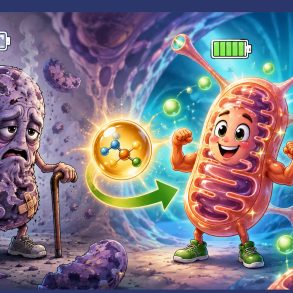
The most striking gap the AI found is between laboratory science and clinical medicine. One large cluster of papers focuses on cells, proteins, mitochondria, telomeres, and oxidative stress. Another large cluster focuses on patients, treatments, healthcare, and geriatrics. The AI showed that these two worlds barely overlap.
Even though huge amounts of funding are meant to move discoveries from the lab into real therapies, the computers found that the language of molecular aging almost never appears in the same papers as the language of patient care. This creates a massive blind spot where powerful discoveries about how cells age never become treatments for real people.
What 461,789 papers revealed about missing connections
The AI sorted the aging literature into 30 major clusters. Some clusters were highly connected, but many were isolated. This allowed the system to measure which areas of science talk to each other and which ones are strangely silent.
Well known links like cancer and senescence or mitochondria and oxidative stress are studied often. But the AI found that many equally important relationships are barely explored. Senescence and mitochondria rarely appear together. Oxidative stress and epigenetics almost never overlap. Telomeres and Alzheimer’s disease are mostly studied in separate worlds. Autophagy and epigenetics, metabolism and telomeres, and mitochondrial dysfunction and senescence all sit in different silos.
These are not small gaps. Each of these systems controls how cells age, how tissues fail, and how disease develops. The AI suggests that some of the biggest breakthroughs in anti aging may be hiding in these unstudied connections.
The AI also showed that aging research has become more concentrated over time. While the number of papers keeps growing, scientists are clustering around fewer ideas. This means new ways of thinking have a harder time entering the field.
At the same time, government funding has pushed huge resources toward Alzheimer’s and dementia. Brain research now dominates aging science, leaving other organs like the heart, skin, kidneys, liver, digestion, and reproduction far behind. The AI revealed that this imbalance does not reflect the full biology of aging, but the way money flows.
Researchers often use lists called the hallmarks of aging to organize the field. These include things like DNA damage, telomere shortening, epigenetic change, mitochondrial dysfunction, and cellular senescence.
But when the AI compared its own data driven clusters to these hallmarks, they did not line up. Some hallmarks matched real research communities, but others were spread across multiple clusters. The AI also found several strong areas of research that do not fit into any hallmark at all. This shows that current frameworks may be hiding important biology instead of revealing it.
The authors argue that the biggest gap is the failure to connect molecular aging to real human health. Lab scientists and doctors are trained in separate systems, use different language, and are reviewed by different funding panels. This makes it very hard to study how cellular aging actually affects patients.
They propose building shared databases that connect molecular markers, animal studies, and clinical outcomes. They also suggest creating standardized vocabularies that let doctors and biologists recognize when they are studying the same problem from different sides.
As the global population ages, the need to extend healthy life becomes more urgent. The AI analysis shows that the problem is not a lack of data. It is that science is leaving huge gaps between fields that should be working together.
By stripping away human assumptions and scanning nearly 100 years of research, the AI revealed where the blind spots are. Those blind spots may be exactly where the next major anti aging breakthroughs are waiting to be found.
HNZ Editor: Science, investment, sport, business, marketing and many other fields are subject to lemming effects, meaning that they following each other around in flocking or herding patterns. This means that isolated, unconnected research may be ignored because it is not “fashionable” and research journals may not accept research that is so unique that other researchers won’t be interested. But unique research is always the most impactful, and the missing interconnections as described above need to be researched.