


For years, scientists have believed that memory loss and cognitive decline were caused by a complex mix of factors. But new research suggests the answer may be far simpler. A team at the University of California, San Francisco has identified a single protein, called FTL1, that may play a central role in driving cognitive decline.
If that finding holds up, it could represent a major breakthrough. Instead of trying to fix dozens of things going wrong in the aging brain, scientists may only need to target one.
FTL1 is an iron-related protein found in brain cells. When researchers compared young and old mice, this protein stood out as the only one that consistently changed with age.
Older mice had much higher levels of FTL1. At the same time, they showed weaker connections between brain cells and performed worse on memory tests. That combination made researchers take a closer look.
How One Protein Can Impact the Brain
To test whether FTL1 was actually causing the problem, scientists increased it in young mice. The results were clear. Their brains began to function like older ones, with fewer neural connections and worse memory performance.
At the cellular level, the changes were just as striking. Brain cells with high levels of FTL1 became simpler and less connected. Instead of forming strong, branching networks, they produced shorter and weaker connections. This directly affects how well the brain can store and process information.
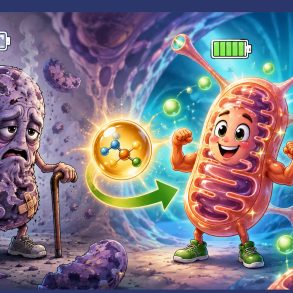
FTL1 also slows down how brain cells produce energy. Since the hippocampus depends on steady energy to function, this slowdown may be a key reason memory begins to fade with age.
Reversing the Damage
The most exciting part of the research came when scientists reduced FTL1 in older mice.
Instead of just slowing decline, the brain began to recover. Connections between neurons improved, and the mice performed better on memory tests.
“It is truly a reversal of impairments,” said Saul Villeda, associate director of the UCSF Bakar Aging Research Institute. “It’s much more than merely delaying or preventing symptoms.”
That is what makes this discovery stand out. It suggests that cognitive decline may not be permanent.
Researchers also found another way to counteract the effects of FTL1. Because the protein slows brain metabolism, they tested compounds that boost energy production in cells.
Those compounds helped offset the damage caused by high FTL1 levels.
This creates two possible paths for treatment. One is to reduce FTL1 directly. The other is to restore the brain’s energy systems so it can function normally again.
Why This Feels Like a Breakthrough
What makes this discovery so compelling is its simplicity. Out of all the changes that happen in the aging brain, one protein stood out as the consistent difference between young and old.
If future studies confirm this in humans, it could change the way we approach aging entirely. Instead of managing symptoms, doctors may be able to target a single cause.
Researchers are optimistic but careful. As Villeda put it, “We’re seeing more opportunities to alleviate the worst consequences of old age. It’s a hopeful time to be working on the biology of aging.”
For now, the work is still in early stages. But the idea that one protein could be responsible for much of cognitive decline, and that lowering it could reverse damage, is an exciting step forward.