


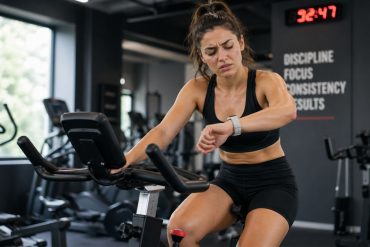
Staying consistent with exercise sounds simple in theory, but in real life it can feel nearly impossible. Between demanding schedules, fatigue, and competing priorities, even the best intentions often fall apart. Yet the evidence is clear that physical activity is essential, not optional, for long term health. The challenge is not knowing that exercise matters. The challenge is figuring out how to actually do it when life gets in the way.
Global health experts are clear about what is needed. The World Health Organization recommends “at least 150 minutes of moderate intensity physical activity throughout the week, or do at least 75 minutes of vigorous intensity physical activity, or an equivalent combination of both.”
Why It’s So Hard to Stick With Exercise
As people age, responsibilities increase and energy levels often decrease. Busy schedules and accumulated fatigue make it harder to find both the time and motivation to work out. Even when the desire is there, the body and mind may resist.
A key insight from experts is that motivation itself is often misunderstood. As one specialist explains, “It’s not something you wait for, it’s something you build through structure and habit.”
This explains why many people struggle. They rely on feeling motivated rather than creating systems that make exercise automatic. When energy is low or schedules are packed, that approach breaks down.
There is also a difference between real fatigue and simply not feeling like exercising. As noted, “It’s important to differentiate between true fatigue and perceived low motivation.” This distinction matters because many people skip workouts when they are capable of doing at least something.
How to Exercise Even When You’re Tired
One of the most powerful strategies is to lower the barrier to entry. Instead of committing to a full workout, start small.
“A practical strategy is to reduce the barrier to entry. Instead of committing to a full workout, start with 5 to 10 minutes of light activity.”
This simple shift changes everything. Once movement begins, the body often responds with increased energy. In fact, “starting with low intensity movement can actually improve energy levels through increased blood flow and neurochemical responses.”
The key is to begin, not to be perfect.
It is also important to recognize that even low effort activity has real benefits. Walking, stretching, or simple bodyweight exercises still contribute to overall health and can build momentum for longer sessions.
Finding the Best Time to Exercise
Timing matters more than many people realize. Research suggests that aligning exercise with your natural rhythm can improve both performance and consistency.
“The concept of aligning exercise with your chronotype, whether you’re naturally more of a morning or evening person, is gaining traction.”
Some people perform best in the morning, while others feel stronger later in the day. However, the most important takeaway is simple: “For most individuals, the best time to exercise is the time they can consistently commit to.”
Consistency outweighs optimization.
Practical Ways to Motivate Yourself to Exercise
There is no single solution, but several proven strategies can make a major difference. These approaches come directly from expert advice and real world experiences.
Create a system, not reliance on willpower
“The most effective approach is to create a system rather than relying on willpower.”
Scheduling workouts, setting measurable goals, and tracking progress help turn exercise into a habit rather than a decision.
Start small and build momentum
“Small wins compound over time and reinforce adherence.”
Short sessions still count and often lead to longer ones.
Make exercise part of your routine
Some people treat exercise like a non negotiable appointment. One person explained, “I make it the same priority as eating and sleeping.”
This mindset removes the daily debate.
Find your best time
“I know that’s a loaded suggestion, but starting around 6 a.m. is when I have the most free time.”
Others prefer lunch breaks or evenings. The key is choosing a time that fits your life.
Use flexibility to your advantage
Busy schedules require adaptability. Some people squeeze in workouts near events or shift plans when needed rather than skipping entirely.
Make it fun
Enjoyment increases consistency. Whether it is dancing, using a bike desk, or combining exercise with watching TV, making it enjoyable reduces resistance. One person shared, “It’s so much fun that it doesn’t feel like I’m exercising.”
Use short time windows
“If I know I only have 15 minutes, I filter for 10 to 15 minute workouts.”
This removes the excuse of not having enough time.
Schedule movement into your day
“Schedule exercise like you’d schedule a meeting. Fit it in and treat it like an important meeting you can’t miss.”
Build accountability
Social pressure can be powerful. “Social accountability… is one of the most powerful adherence tools we see.”
Friends, classes, or even financial penalties for missing sessions can help.
Make it social
“Get a friend involved. This way, it’s a social and healthful experience.”
Connect exercise to a bigger purpose
“When exercise has meaning, consistency follows.”
Whether it is long term health, independence, or daily performance, purpose drives action.
Real world experiences highlight how people make exercise work despite busy lives. Many focus on integrating movement into existing routines rather than adding something new.
Some use walking breaks during work, others exercise during meetings, and many rely on short bursts of activity throughout the day. One person described using a walking pad while working, while another fits in movement during lunch or after work.
A common theme is letting go of perfection. As one individual put it, shifting away from rigid expectations and accepting that “any exercise is good exercise” makes consistency easier.
Is It Okay to Miss a Day?
Even with the best systems, there will be days when exercise does not happen. That is not failure. It is part of the process.
“Taking occasional breaks… is often beneficial.”
Recovery is essential for progress, and lighter activity like walking or stretching can still support overall health. The goal is not perfection. The goal is sustainability.