


For decades, scientists believed that cognitive decline was an unavoidable part of aging. Memory loss, brain fog, and slower thinking were seen as the natural result of a lifetime of wear and tear. But a groundbreaking discovery from Texas A&M University is now challenging that assumption in a dramatic way.
Researchers have developed a simple nasal spray that appears to reverse key aspects of brain aging, reduce inflammation, and restore cognitive function. Even more surprising, the effects were achieved with just two doses.
This is not a marginal improvement. It is a potential redefinition of what aging means.
What Is Neuroinflammaging
At the center of this discovery is a process scientists call neuroinflammaging. It refers to a slow, chronic form of inflammation inside the brain, particularly in areas responsible for memory and learning.
Over time, this inflammation acts like a series of small internal fires. These fires disrupt communication between brain cells, reduce energy production, and gradually impair cognitive function. The result is what many people experience as brain fog, difficulty forming new memories, and reduced mental sharpness.
For years, neuroinflammaging was considered inevitable. The assumption was that once it began, it could only be slowed, not reversed.
That assumption is now being overturned.
The Breakthrough: A Two-Dose Nasal Spray
The research team, led by Ashok Shetty along with Madhu Leelavathi Narayana and Maheedhar Kodali, developed a non-invasive nasal spray designed to deliver therapeutic compounds directly into the brain.
Unlike most drugs, which struggle to cross the blood-brain barrier, this spray bypasses that obstacle entirely. It travels through the nasal cavity along the olfactory pathways, reaching deep brain regions where inflammation is active.
“The mode of delivery is one of the most exciting aspects of our approach,” Kodali explained. “Intranasal delivery allows us to reach, and treat, the brain directly without invasive procedures.”
Within weeks of treatment, the results were clear. Brain inflammation dropped significantly, cellular energy systems were restored, and cognitive performance improved. Even more striking, these benefits lasted for months after only two doses.
What Is Inside the Spray
The spray is built around microscopic biological carriers known as extracellular vesicles. These tiny structures act like delivery vehicles, transporting powerful genetic material into brain cells.
Inside these vesicles are microRNAs, small molecules that regulate gene activity. These molecules function as what researchers describe as “master regulators.”
“MicroRNAs act like master regulators,” Narayana said. “They help modulate and regulate many gene and signaling pathways in the brain.”
Once inside the brain, these microRNAs target and suppress key inflammatory systems, including the NLRP3 inflammasome and the cGAS–STING signaling pathway. These systems are known drivers of chronic inflammation in aging brains.
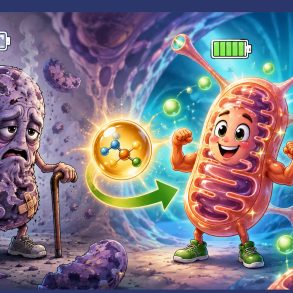
At the same time, the treatment restores mitochondrial function. Mitochondria are the energy-producing structures inside cells, and their decline is a major contributor to aging.
“We are giving neurons their spark back by reducing oxidative stress and reactivating the brain’s mitochondria,” Narayana said.
Measured Results and Cognitive Recovery
The improvements were not theoretical. They were measurable and behavioral.
In controlled testing, treated subjects regained the ability to recognize familiar objects and respond to changes in their environment. These are core functions tied directly to memory and cognitive flexibility.
Compared to untreated models, the difference was significant. The treated group showed restored mental sharpness that closely resembled younger individuals.
The therapy also demonstrated consistency across both sexes, which is rare in biomedical research.
“It’s universal,” Shetty said. “Treatment outcomes were consistent and similar across both sexes.”
On a biological level, the treatment reduced markers of inflammation, lowered oxidative stress, and increased the expression of genes responsible for maintaining healthy cellular energy systems.
A New Approach to Brain Aging
The implications of this research extend far beyond memory improvement.
“Brain age-related diseases like dementia are a major health concern worldwide,” Shetty said. “What we’re showing is brain aging can be reversed, to help people stay mentally sharp, socially engaged and free from age-related decline.”
Researchers believe this approach could eventually be adapted to treat a wide range of neurological conditions. These include Alzheimer’s disease and even recovery from stroke.
The idea is not just to slow decline, but to actively restore function.
“We are seeing the brain’s own repair systems switch on, healing inflammation and restoring itself,” Shetty said.
When Will It Be Available
Despite the promising results, the therapy is still in the research phase. A U.S. patent has already been filed, signaling a move toward clinical development, but it has not yet reached human trials.
Because the treatment is non-invasive and has shown consistent results, researchers expect strong interest as it moves toward clinical testing.
The long-term goal is clear.
“As we develop and scale this therapy, a simple, two-dose nasal spray could one day replace invasive, risky procedures or maybe even months of medication,” Shetty said.
Redefining What It Means to Age
The broader vision behind this work goes beyond treating disease. It is about redefining aging itself.
“Our approach redefines what it means to grow old,” Shetty said. “We’re aiming for successful brain aging: keeping people engaged, alert and connected. Not just living longer, but living smarter and healthier.”
For the first time, researchers are not just slowing the clock on brain aging. They are showing that it may be possible to turn it back.
If these findings hold in human trials, a simple nasal spray could become one of the most important medical breakthroughs of the modern era.