

A long-theorized breakthrough in anti-aging science is about to face its first real test in humans, and it is happening through work tied directly to Harvard Medical School.
Researchers connected to Harvard, including famed aging scientist David Sinclair and his former student Yuancheng Ryan Lu, are moving a controversial but promising idea into clinical trials. The goal is simple to state but profound in implication. They want to reverse the age of human cells.
The trial, led by the Boston-based biotech Life Biosciences, will test whether damaged retinal cells in patients with glaucoma can be restored to a younger, healthier state.
What Harvard Researchers Are Actually Testing
Scientists will deliver three specific genes into one eye of patients suffering from optic nerve damage caused by glaucoma. These genes are part of a set originally discovered by Shinya Yamanaka, who showed they could reset adult cells back to a youthful, stem-like condition.
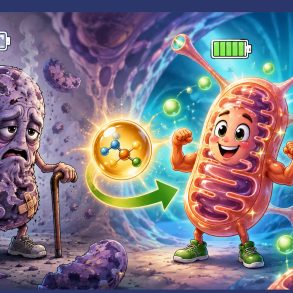
Instead of fully resetting the cells, which would destroy their identity, the Harvard-linked team is attempting something more precise. They are trying to partially rewind the cells’ biological clock, making them younger while keeping them functional.
The genes will be activated using a controlled genetic switch that responds to an antibiotic. This allows researchers to turn the process on and off, limiting the risk of overcorrection.
Patients will be monitored for at least five years, making this not just a proof-of-concept experiment but a long-term safety study.
Why Glaucoma Is the First Battlefield
The decision to focus on glaucoma is strategic.
The eye provides a contained and measurable environment. Researchers can treat one eye while leaving the other untouched, giving them a built-in control. The optic nerve is also well understood, and damage to it leads to clear, measurable vision loss.
If the therapy works, it would not just slow the disease. It could restore lost vision by rejuvenating the underlying nerve cells.
That is why this trial is being watched so closely. It is one of the cleanest ways to test whether age reversal at the cellular level is actually possible in humans.
Prior Work
The concept behind the trial has been building for more than a decade.
In 2010, researchers including Prim Singh proposed that cells might be made younger by briefly activating reprogramming genes and then shutting them off before the cells fully reset.
Later work at institutions like the Salk Institute for Biological Studies, led by Juan Carlos Izpisúa Belmonte, showed that cycling these genes in mice could extend lifespan and improve tissue repair.
Over time, studies demonstrated rejuvenation effects in multiple tissues, including muscle, skin, heart, pancreas, and even the brain.
The Harvard-linked work builds directly on these findings but pushes them into human testing for the first time.
The anticipated outcome is not immortality or full-body rejuvenation. The immediate goal is more focused.
Researchers hope to see damaged retinal nerve cells regain function, showing signs of renewed growth and improved performance. In earlier lab work, Lu described the moment he first saw evidence of this kind of regeneration as nerve-wracking, saying, “I was so nervous.”
If similar results appear in human patients, it would confirm that aging cells can be functionally restored, not just preserved.
If the trial succeeds, the implications extend far beyond the eye.
The same approach could theoretically be applied to organs such as the liver, kidneys, and heart. Some studies have already shown early success in these tissues in animal models. There is even evidence suggesting benefits in the brain, including improved memory performance in aged mice.
This is why the field has attracted billions in investment and the attention of major technology figures. Companies like Altos Labs, backed by investor Yuri Milner, and Retro Biosciences, supported by Sam Altman, are pursuing similar approaches.
As one researcher put it, there is “the feeling of something big.”
Some Risks
Despite the excitement, the risks are real.
If cells are pushed too far toward a stem-like state, they can lose their identity or become cancerous. Researchers have tried to reduce this risk by removing one of the original reprogramming factors, c-Myc, which is linked to tumor formation.
Still, some scientists remain cautious. Tamir Chandra warned that when cells lose their identity, “that comes with some forms of danger.”
Others, like Daniel Ives, have compared the process to handling something powerful but unpredictable, saying it may not be wise to fully trust what is created.
For the first time, a Harvard-linked research effort is testing whether human cells can be made younger inside the body, not just in a laboratory dish.
If it works, it will not just validate a theory. It could redefine aging itself, turning it from an unavoidable decline into a condition that can be treated.
HNZ Editor: We have covered this story before, the fame of the scientists makes it compelling, and the possibility of a powerful new anti-aging method makes us optimistic. But Harvard is not a magical place, and we will have to see how it turns out.