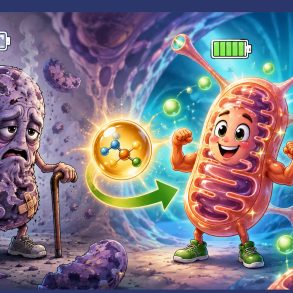


For decades, autism has been viewed mainly as a disorder of brain wiring. But a growing body of research suggests something more fundamental may be at work. The brain may not be getting enough energy to develop properly. At the center of this idea is the mitochondrion, the structure inside cells that produces energy.
Scientists have explored the link between autism and mitochondria since 1985, when early cases showed both autism and signs of impaired energy production. Since then, research has expanded, pointing to mitochondrial dysfunction as a major factor in many cases of autism.
Why Mitochondria Matter
Mitochondria produce ATP, the energy currency that powers nearly all cellular activity. The brain consumes about 20 percent of the body’s total energy, making it especially vulnerable when energy production falls short. When mitochondria do not work properly, the effects can be widespread. Studies in animals show that mitochondrial dysfunction alone can produce autism-like behaviors, even without visible structural changes in the brain.
As neurologist Richard Frye explained, “The mitochondria are very, very sensitive to environmental changes.”
How Common Is the Problem
The numbers are significant. Up to 80 percent of children with autism show signs of mitochondrial dysfunction. Broader estimates suggest that between 15 percent and 96 percent of children with autism have measurable mitochondrial abnormalities. Only about 5 percent have classic mitochondrial disease caused by specific genetic mutations, meaning most cases involve more subtle dysfunction that cannot be traced to a single gene.
Research from Robert Burrier found multiple metabolic patterns in children with autism, all pointing toward disrupted pathways tied to mitochondrial function. In a separate study, Cecilia Giulivi found that children with autism showed reduced enzyme activity, higher oxidative stress, and clear differences in energy metabolism compared to healthy controls.
Why Mitochondrial Dysfunction Matters
Mitochondrial dysfunction affects more than energy levels. It increases oxidative stress, which damages cells, and interferes with the production of glutathione, the body’s main antioxidant. Without enough energy, the body cannot control this stress effectively. It also affects inflammation. Anti-inflammatory cells require healthy mitochondria, while inflammatory cells do not, creating an imbalance that can lead to chronic inflammation commonly seen in autism.
Frye explained the connection clearly: “If the mitochondria aren’t working, you’re going to make less glutathione and not be able to control that oxidative stress.” These combined effects can interfere with brain development during critical early years.
Genetics, Environment, and Mitochondria
Mitochondrial dysfunction in autism appears to come from a mix of genetic and environmental factors. Certain genes can make mitochondria more vulnerable, but environmental stressors often play a key role. These include infections, antibiotics, air pollution, nutritional deficiencies, and autoimmune conditions. Many of these exposures can begin before birth and continue into early childhood, placing sustained stress on developing systems.
The Three-Hit Model
A major framework for understanding autism is the three-hit model developed by Robert K. Naviaux. This model proposes that autism develops when three conditions align: a genetic predisposition that increases sensitivity, an early environmental trigger that activates a cellular stress response, and prolonged activation of that response that disrupts development.
At the center of this process is the cell danger response, a metabolic reaction that shifts the body into defense mode. When this response becomes chronic, it diverts energy away from growth and toward protection. Naviaux explained, “Autism is not the inevitable result of any one gene or exposure, but the outcome of a series of biological interactions.” Because the second and third steps involve modifiable factors, this model suggests that some cases may be preventable or treatable.
Regression and Timing
Many children with autism experience regression after a period of normal development. About 30 percent lose language skills, and about 40 percent lose social skills. Most of this regression occurs between 15 and 30 months of age, when the brain’s energy demands are especially high. Mitochondrial dysfunction often remains hidden until the system is stressed, which may explain why symptoms appear suddenly after a period of normal growth.
What Can Be Done
There is no single cure for mitochondrial dysfunction in autism, but several approaches aim to support energy production. Common treatments include supplements such as CoQ10, levocarnitine, and alpha-lipoic acid, which support mitochondrial function and have shown improvements in some metabolic and behavioral measures.
B vitamins are also important because they are directly involved in energy production. Other approaches include ketogenic diets and exercise, which may improve mitochondrial efficiency. Still, treatment options are limited. As geneticist Frances Kendall noted, “We have very little definitive treatment for these patients.”
A More Optimistic Outlook
Despite the challenges, the emerging research offers hope. The three-hit model suggests that 40 to 50 percent of autism cases could be prevented or significantly improved with early detection and intervention. This includes identifying high-risk children early and reducing exposure to environmental stressors while supporting metabolic health. Researchers are also exploring new therapies that target cellular signaling and mitochondrial function more directly.
A Shift in Understanding
Autism research is moving away from a narrow focus on genes toward a broader view that includes metabolism, environment, and cellular function. Mitochondria sit at the center of this shift, connecting genetic vulnerability with environmental stress and helping determine how the brain develops. As Naviaux put it, understanding autism through metabolism “changes what we can do about it.”
This new perspective does not provide all the answers, but it opens the door to earlier detection, better treatment, and possibly prevention for many children.