


For many people, the idea of exercise still brings to mind long runs, heavy lifting, and exhausting gym sessions. But for those dealing with stiff joints, pain, or simply the realities of aging, that approach can feel unrealistic. Increasingly, both doctors and fitness experts are pointing toward a different path, one that emphasizes consistency, efficiency, and respect for the body.
In rehabilitation and fitness settings, there is a growing recognition that traditional movement is not always the best answer. As one practitioner explains, the goal is often “trying to get them stronger and more independent without provoking unnecessary or unwanted discomfort.” This has led to a focus on exercises that minimize strain while still delivering meaningful results.
Why Gentle and Low-Impact Exercise Matters
Low-impact and minimal-movement exercises are gaining traction because they allow people to stay active without worsening pain or risking injury. These approaches are especially valuable for individuals with arthritis, joint stiffness, or limited mobility.
Doctors emphasize that effective exercise does not have to be intense or time-consuming. Research shows that even small amounts of activity can make a real difference. One expert put it simply: “How much do you have to do to get health benefits? Any amount.”
This idea is reinforced by the concept of “minimum effective dose” training, where just a few minutes of focused effort can improve strength, reduce disease risk, and enhance overall health.
Low-impact movement also offers broader benefits. It can help control weight, improve balance and flexibility, strengthen bones, protect joints, and even support memory and mental well-being. As one Harvard physician noted, swimming is “less weight-bearing,” making it ideal for people with joint pain.
Easy but Effective Exercises Anyone Can Do
Many of the most beneficial exercises are also the simplest. They require little equipment, can be done at home, and are accessible to nearly all fitness levels.
- Walking
Walking is simple but powerful. It helps regulate weight, improve heart health, strengthen bones, and boost mood and memory. Starting with just 10 to 15 minutes a day and gradually increasing time can lead to meaningful improvements. - Swimming
Swimming provides a full-body workout while taking pressure off the joints. The buoyancy of water supports movement, making it especially helpful for people with arthritis or discomfort. - Tai chi
Tai chi combines slow, controlled movement with relaxation. Often described as “meditation in motion,” it improves balance and coordination, which are critical as people age. - Yoga
Yoga blends flexibility, strength, and mindfulness. Even a short routine can improve mobility, posture, and core stability while reducing stress. - Strength training (light weights)
Using light weights helps maintain muscle mass and supports metabolism. As Dr. I-Min Lee explains, “If you don’t use muscles, they will lose their strength over time.” - Kegel exercises
Kegel exercises strengthen pelvic floor muscles, helping prevent bladder control problems. They are simple, discreet, and effective for both men and women.
These exercises are approachable and sustainable, making them easier to incorporate into daily life.
Stronger With Less Movement: Static Exercises That Deliver Results
For those who struggle with movement itself, static or hold-based exercises offer a powerful alternative. These exercises rely on sustained muscle engagement rather than repetition.
- Plank
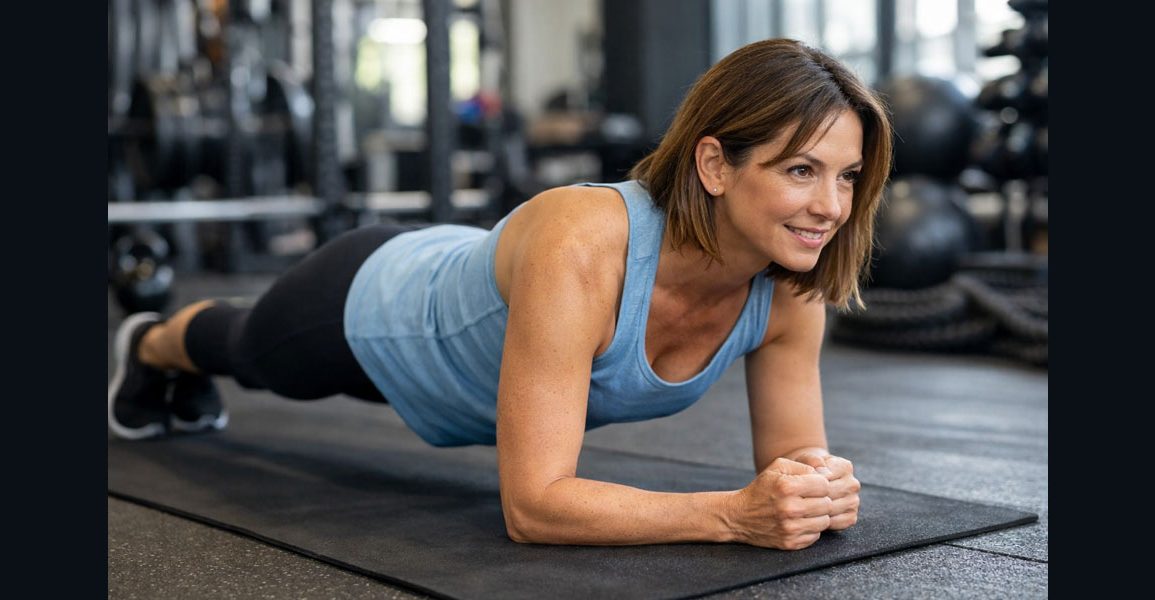
The plank is a full-body exercise that strengthens muscles from shoulders to feet. Holding the position builds core strength and improves posture in a short amount of time. - Side plank
The side plank targets different muscle groups than the standard plank. It helps create balanced core strength and stability. - Wall sit
The wall sit focuses on the quadriceps and core. Holding a seated position against a wall strengthens the muscles used for standing and stability. - Weighted glute bridge hold
This exercise strengthens the hips, lower back, and core. It is particularly useful for addressing certain types of back pain related to stiffness. - Bear crawl hold
The bear crawl hold activates the entire body. By holding a lifted position on hands and feet, it challenges strength, coordination, and endurance.
These exercises show that strength can be built without constant movement. They provide “functional strengthening while minimizing the repetitive movements that some people’s joints don’t like.”
A Smarter Approach to Fitness
The message from both science and experience is clear. Exercise does not have to be punishing to be effective. For many people, the most sustainable path to health is one that is gentle, consistent, and thoughtfully designed.
Whether it is a short walk, a few minutes of strength work, or a series of static holds, these approaches prove that meaningful results can come from simple efforts. The key is consistency and working with the body, not against it.
In the end, the best exercise is not the hardest one. It is the one you can keep doing.