

A single night of poor sleep is often dismissed as a minor inconvenience. Many people assume they can simply “catch up” the next day. But emerging research suggests something far more serious is happening beneath the surface. According to a 2025 study highlighted in The Epoch Times, even one night of sleep loss can trigger a biological chain reaction that affects the brain, metabolism, and immune system at the cellular level .
At the center of this research is Jennifer Tudor, an associate professor of biology in Philadelphia and co author of the study. Her findings challenge a long held belief that sleep is simply a passive state. Instead, sleep is an active and essential biological process that keeps the body functioning properly.
“Sleep deprivation hurts,” Tudor said. “The data shows that regular, consistent sleep deprivation is harmful for long term health” .
The Study That Reframes Sleep
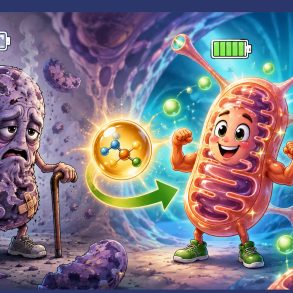
The report Tudor helped produce explains that when sleep is cut short, the body does not just feel tired. It enters what researchers describe as a cellular energy crisis. Cells begin burning fuel inefficiently, generating less usable energy and more damaging byproducts. At the same time, they reduce repair functions and prioritize survival over performance.
This shift happens quickly. The study emphasizes that “the effects start after a single bad night,” reframing sleep as a biological maintenance system rather than a lifestyle choice .
Under normal conditions, the body alternates between breaking down energy during the day and repairing itself at night. Sleep allows cells to rebuild tissue, restore energy reserves, and strengthen brain connections. Without it, that balance breaks down almost immediately.
What Happens Inside the Body
At the cellular level, the consequences are striking. Mitochondria, the structures responsible for producing energy, become less efficient. They burn more fuel while producing less energy, creating a deficit. This inefficiency also increases oxidative stress, which can damage cells.
Neurons are especially vulnerable because they require constant energy. When supply drops, the brain begins shutting down non essential functions like memory formation and complex thinking.
As Tudor explained, survival takes priority over performance. The brain sacrifices clarity and learning ability to preserve basic function.
Alberto Ramos, a professor of clinical neurology and research director of a sleep disorders program, reinforces how quickly these effects appear.
“You might notice stronger cravings for high calorie foods, difficulty focusing, low energy, and a greater reliance on caffeine to stay alert,” Ramos said. “These are all signals that your body is struggling to keep its energy balance intact” .
He also warns that quick fixes like caffeine or naps do not solve the underlying problem. They mask symptoms without restoring the body’s energy balance.
Immediate Effects of One Night of Poor Sleep
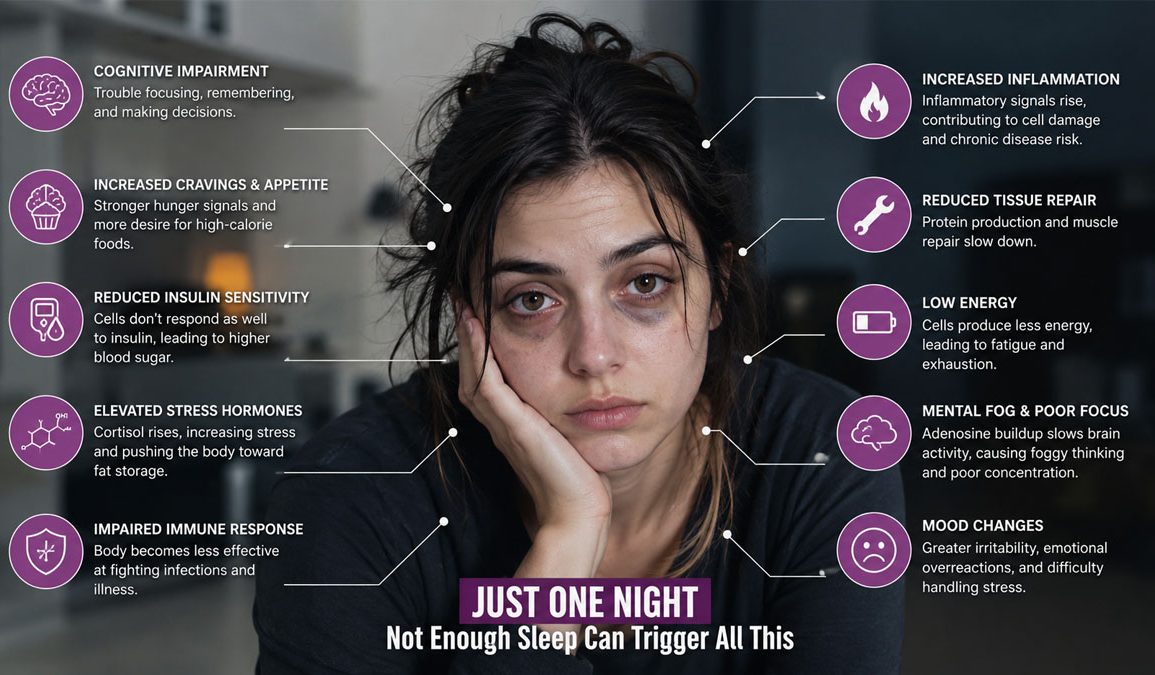
Research and expert observations point to a wide range of immediate consequences. Each of the following effects can begin after just one night:
- Cognitive impairment
Brain energy shortages slow neural activity, reducing memory, learning ability, and decision making as the brain shifts into conservation mode instead of optimal performance. - Increased cravings and appetite
Sleep loss disrupts hunger signals and activates reward centers, making high calorie foods more appealing and harder to resist while weakening impulse control. - Reduced insulin sensitivity
Cells respond less effectively to insulin after sleep loss, leading to higher blood sugar levels and early signs of metabolic dysfunction. - Elevated stress hormones
Cortisol levels rise, pushing the body toward energy storage and increasing physiological stress, which can affect multiple systems including metabolism and cardiovascular health. - Impaired immune response
The immune system becomes less effective, reducing the body’s ability to fight infections and increasing vulnerability even after a short period of sleep loss. - Increased inflammation
Inflammatory signals rise while repair processes slow, contributing to tissue damage and setting the stage for chronic disease if sleep loss continues. - Reduced tissue repair
Protein production and muscle repair decline as the body diverts energy away from rebuilding functions to maintain essential survival processes. - Mental fog and poor focus
Rising adenosine levels slow brain communication, leading to the familiar feeling of foggy thinking and reduced ability to concentrate.
There is also evidence that emotional regulation suffers. Without proper sleep, the brain struggles to determine what is important, causing overreactions and poor decision making.
Metabolic experts point to the rapid onset of insulin resistance, while immune researchers highlight immediate declines in the body’s ability to defend against illness. Together, these findings reinforce a consistent message. The body does not tolerate sleep loss well, even in the short term.
Why This Matters More Than People Think
Many people assume that the real danger lies in chronic sleep deprivation. While that is true, the research shows that the process begins much sooner. Each night of poor sleep adds to a cumulative burden on the body.
The idea that you can fully recover from a bad night may not be entirely accurate. Some biological changes, particularly those related to metabolism, may linger and accumulate over time.
That is why researchers increasingly argue that sleep should be treated as a fundamental biological requirement, not an optional habit.
The evidence is clear. A single night of poor sleep is enough to disrupt the body’s energy systems, impair brain function, and trigger metabolic and immune changes. These effects are not subtle, and they begin almost immediately.