


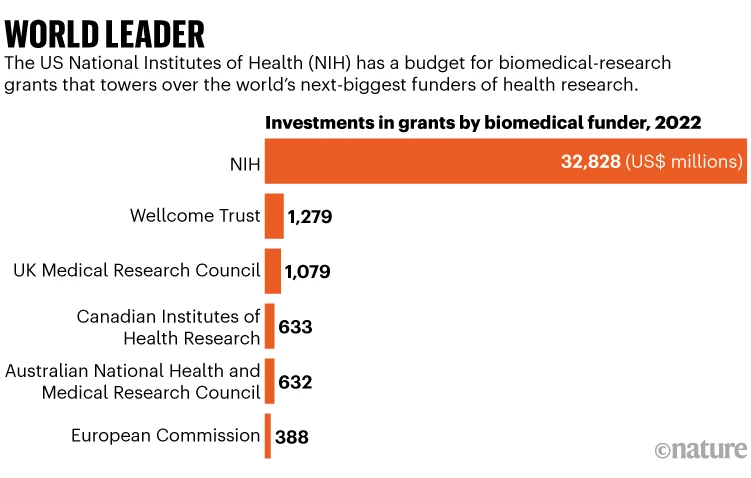
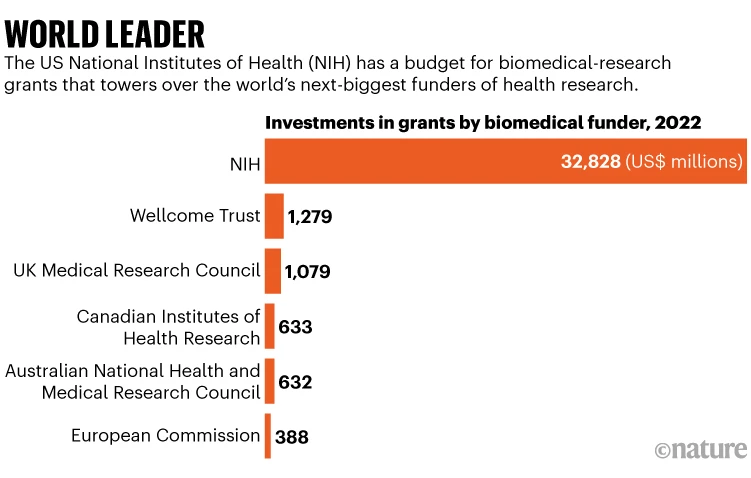
For decades, the National Institutes of Health (NIH) has been the backbone of American and global biomedical research. With an annual budget of approximately $47 billion, the NIH stands as the world’s most significant public funder of health science. According to the World RePORT project, the NIH invests 25 times more in medical research than the next-largest funder, the London-based Wellcome Trust. This extensive support fuels cutting-edge discoveries, from life-saving medications to innovative treatment approaches, solidifying the United States’ role as a leader in scientific advancement.
The NIH’s influence extends far beyond financial contributions. Its research underpins nearly every major medical breakthrough of the past century. A recent study found that NIH-funded research contributed to 354 out of 356 drugs approved by the U.S. Food and Drug Administration (FDA) between 2010 and 2019. “Without NIH, there would be no cancer immunotherapy, no anti-overdose medication, no anti-heart attack or stroke medication, no cutting-edge treatments,” said addiction researcher Olivier George at the University of California, San Diego. This comprehensive funding strategy allows for pioneering developments that shape the future of medicine.
Transformative Medical Breakthroughs
The NIH has been at the forefront of scientific discovery, funding research that has led to monumental medical advancements. Some of the most groundbreaking achievements include:
- Cancer Immunotherapy: NIH-supported research has driven revolutionary treatments that harness the immune system to fight cancer. These therapies have transformed survival rates for diseases once considered incurable.
- mRNA Vaccines: The rapid development of COVID-19 vaccines was made possible by NIH-funded research into mRNA technology, which had been in progress for years before the pandemic.
- Gene Therapy: NIH-funded studies have helped refine CRISPR gene-editing technology, opening doors to potential cures for genetic disorders like sickle cell disease and cystic fibrosis.
- Neurological Research: Studies funded by the NIH have deepened our understanding of Alzheimer’s disease, Parkinson’s disease, and ALS, paving the way for new treatments.
- HIV/AIDS Treatments: The NIH has played a crucial role in advancing antiretroviral therapies, significantly reducing the global impact of HIV/AIDS.
- Stroke and Heart Disease Prevention: Landmark studies have led to the development of cholesterol-lowering drugs, clot-busting treatments for strokes, and better protocols for preventing heart attacks.
Miriam Merad, a cancer immunologist at the Icahn School of Medicine at Mount Sinai, highlights the NIH’s unparalleled impact: “US biomedical science dominates the world in terms of papers, discovery, and drugs.”
A Driving Force in Scientific Literature and Collaboration
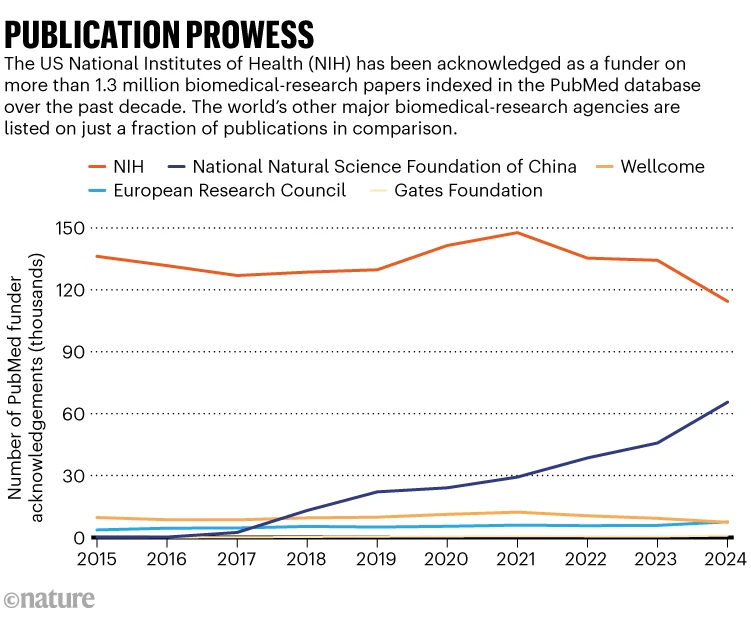
Beyond funding transformative treatments, the NIH has an unmatched presence in scientific literature. Over the past decade, more than 1.3 million biomedical-research papers indexed in PubMed have acknowledged NIH funding. In comparison, other major research agencies are mentioned in only a fraction of those studies. This vast output underscores the NIH’s role in advancing medical knowledge on a global scale.
Moreover, the NIH fosters collaboration among leading scientists, universities, and research institutions worldwide. Through programs like the Human Genome Project, which revolutionized our understanding of genetics, and partnerships addressing global health crises such as Ebola and COVID-19, the NIH ensures that medical progress is both far-reaching and inclusive.
Advancing Public Health and Economic Growth
The NIH’s contributions extend beyond scientific breakthroughs; they have a profound economic and societal impact. In 2023 alone, NIH funding generated nearly $93 billion in economic activity across the United States, with $8 billion of that directly benefiting New York. Investments in medical research not only improve public health outcomes but also drive job creation, stimulate local economies, and position the U.S. as a leader in medical innovation.
The agency’s commitment to public health is exemplified by its support of major epidemiological studies and disease prevention initiatives. At Stony Brook Medicine, for example, NIH-funded research is examining the long-term effects of 9/11 exposure on first responders, identifying early indicators of dementia and Alzheimer’s disease. Meanwhile, other NIH-backed studies are investigating emerging infectious diseases, such as the Powassan virus, a tick-borne illness with severe neurological implications.
The Future of NIH and Medical Innovation
As biomedical science advances, the NIH remains committed to supporting high-risk, high-reward research that can transform healthcare. Its unique funding model allows scientists the freedom to explore bold, uncharted territories in medicine. “They trust the brain, the mind, the intellect of the people they fund,” Merad explains. “In industry, you don’t have the luxury to pivot, you are constantly constrained.”
Moving forward, the NIH is poised to lead in several key areas, including:
- Personalized Medicine: Tailoring treatments to individuals based on their genetic makeup and lifestyle.
- Artificial Intelligence in Healthcare: Utilizing AI to enhance diagnostics, treatment plans, and drug discovery.
- Regenerative Medicine: Advancing stem cell therapies and tissue engineering to repair or replace damaged organs.
- Infectious Disease Preparedness: Strengthening global response efforts for pandemics and emerging health threats.
The NIH’s unwavering commitment to medical progress ensures that future generations will benefit from its groundbreaking discoveries. As the agency continues to fund critical research, its impact on public health, scientific knowledge, and economic growth will remain profound.
Conclusion
The NIH stands as a beacon of scientific excellence, driving medical innovation, improving patient outcomes, and solidifying the United States’ position as a leader in global health research. Its legacy is one of transformative discoveries that have saved millions of lives and shaped modern medicine. By continuing to invest in cutting-edge research and fostering global collaboration, the NIH ensures a healthier future for all.