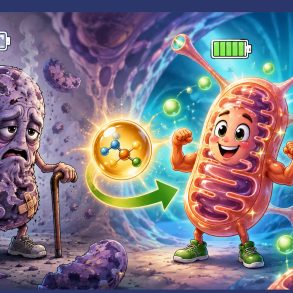


A torn muscle reconnecting after catastrophic injury. A dialysis patient gaining stronger blood vessel support that may delay the need for a transplant. A person with knees so damaged he could barely walk returning to a bicycle only weeks later. Stories like these explain why stem cells have become one of the most exciting frontiers in medicine.
For decades, doctors have treated symptoms. Stem cell therapy raises a more ambitious possibility: helping the body repair itself.
Stem cells are often described as the body’s master repair cells. Unlike ordinary cells that perform one specific task, stem cells can transform into different cell types and help replace or repair damaged tissue. Researchers are studying them for injuries, inflammation, degenerative disease, neurological disorders, immune dysfunction, tissue regeneration, and even healthier aging. In some areas, such as blood disorders and immune diseases, stem cells are already firmly established in medicine. In others, they remain an exciting and rapidly evolving frontier.
The Recovery That Turned Heads
Few stories capture the imagination quite like that of former professional athlete Greg Novacheck.
In 2010, Novacheck suffered what many considered a devastating injury. His hamstring muscle, the biceps femoris, tore completely in half with a 10-centimeter retraction, leaving a visible gap in the back of his thigh. Surgeons reportedly warned him that surgery was unlikely to restore normal function.
Instead, he underwent stem cell therapy combined with platelet-rich plasma, or PRP, a treatment derived from a patient’s own blood that concentrates healing factors. Just sixteen days later, MRI imaging reportedly showed something remarkable: the separated portions of his muscle had reconnected.
“For me, it was life-changing,” Novacheck said. “But I’m also very aware that my outcome may not be typical.”
His recovery highlights what many patients hope stem cells can accomplish: helping damaged tissue heal when conventional medicine offers few good options.
Stories of rapid improvement are not uncommon in regenerative medicine. We spoke with a man suffering from severe knee problems who said he could barely walk before treatment. Within three weeks, he was back riding a bicycle. Anecdotes are not scientific proof, but they help explain why so many patients are seeking these therapies when pain, immobility, and declining quality of life begin to feel permanent.
What are Stem Cells?
Stem cells function as a biological repair system. Through a process called differentiation, they can transform into different kinds of cells needed by the body. Yet their greatest power may not simply be replacing tissue.
Scientists increasingly believe many stem cells work like tiny biological signaling centers. Rather than physically rebuilding damaged tissue themselves, they release proteins, signaling molecules, and microscopic messengers called exosomes that help calm inflammation and stimulate healing.
Sports medicine physician Dr. David Woznica explained it this way: “In reality, most of their benefit comes from releasing signaling proteins and exosomes that reduce inflammation and promote tissue growth.”
This may explain why many patients experience reduced pain, improved mobility, and faster recovery even when complete tissue regeneration does not occur.
The Four Main Types of Stem Cells
Modern regenerative medicine generally focuses on four categories of stem cells, each with different strengths and uses.
Adult stem cells are the workhorses of stem cell medicine today. These include hematopoietic stem cells, used in bone marrow and blood-related treatments, and mesenchymal stem cells, commonly taken from bone marrow or fat tissue. Mesenchymal stem cells are especially important in orthopedic and regenerative medicine because they can develop into bone, cartilage, tendon, and fat tissue and are widely used for joint pain and injury recovery.
Perinatal stem cells come from umbilical cord blood, placentas, and related birth tissues that are usually discarded after delivery. Cord blood stem cells have long been used for blood and immune disorders, while scientists are increasingly exploring their regenerative and anti-inflammatory potential.
Embryonic stem cells are derived from very early embryos and possess extraordinary regenerative potential because they can become nearly any type of tissue. Ethical concerns and regulatory restrictions have largely confined them to research settings.
Induced pluripotent stem cells, or iPSCs, begin as ordinary adult cells that scientists reprogram to behave more like embryonic stem cells. Researchers are exploring their potential for degenerative diseases, heart conditions, tissue repair, and regenerative medicine because they offer remarkable flexibility without relying on embryonic tissue.
Why Inflammation May Be the Real Story
One of the most important discoveries in stem cell science is that inflammation may be central to why these therapies work.
Mesenchymal stem cells, particularly those derived from fat tissue or bone marrow, appear to release healing growth factors and anti-inflammatory signals that calm damaged tissue and support recovery.
Dr. Sanjay Misra of the Mayo Clinic believes this may have implications far beyond injuries.
“Mesenchymal stem cells have anti-inflammatory properties,” Misra said. “Inflammation is a significant problem, especially in Western society, because it’s a hallmark of a lot of medical problems: heart disease, vascular disease, hypertension, high cholesterol and cancer. They are all driven by inflammation.”
That anti-inflammatory power may be one reason stem cells are drawing attention not just for sports injuries and joint pain, but also for chronic illness and organ support.
Stem Cells and Organ Repair
One particularly promising application involves kidney disease.
Millions of patients with end-stage kidney disease depend on dialysis, yet many experience failure of the blood vessels needed for treatment because inflammation causes narrowing and poor healing.
Researchers at the Mayo Clinic studied whether stem cells could help. Using patients’ own fat-derived mesenchymal stem cells, researchers found that many treated patients experienced stronger healing and greater durability in the blood vessels used for dialysis. These stem cells appeared to reduce inflammation and support tissue repair, potentially extending how long patients can tolerate dialysis before needing transplantation.
“This approach has the potential to improve outcomes for millions of patients with kidney failure,” Misra said.
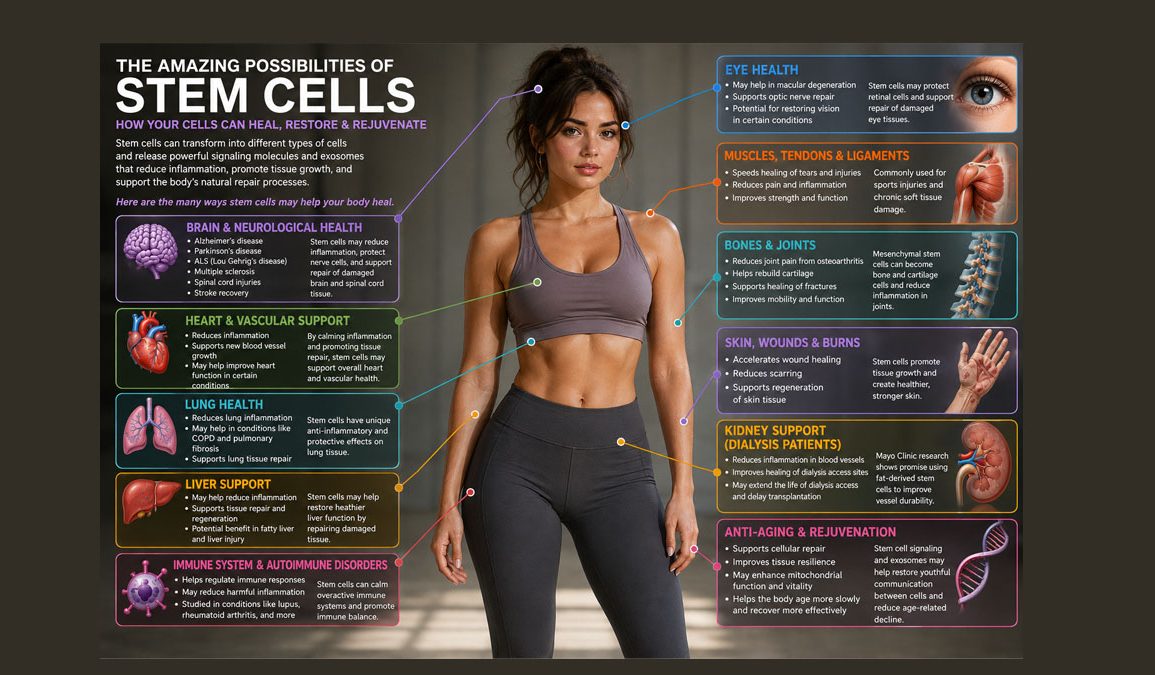
Researchers are also investigating stem cells for neurological diseases such as Parkinson’s disease, Alzheimer’s disease, ALS, spinal cord injuries, and multiple sclerosis. While much remains experimental, early work suggests regenerative and anti-inflammatory pathways may someday support healing in tissues long considered impossible to repair.
Could Stem Cells Help Us Age Better?
Scientists are increasingly exploring how stem cells may influence aging itself.
As people age, tissue repair slows, inflammation increases, and recovery becomes harder. Researchers studying stem-cell-derived extracellular vesicles, microscopic repair signals released by stem cells, believe these messengers may help restore healthier cellular communication, improve tissue repair, regulate inflammation, and support resilience. Some researchers even describe these signals as biologically “younger” instructions that may help tissues function more effectively.
Stem cells are not magic. Even experts caution that healing still follows biological timelines and outcomes vary widely depending on age, health, injury severity, and disease stage. Yet stories like Greg Novacheck’s, the growing evidence in organ support, and the emerging science of anti-inflammatory healing suggest something profound may be happening.
Medicine may be entering an era where the body is not simply treated, but taught to heal itself.