


A Groundbreaking Operation in California
In a historic medical breakthrough, surgeons from UCLA and USC have successfully performed the world’s first human bladder transplant. The procedure, carried out on May 4, 2025, at Ronald Reagan UCLA Medical Center, marks a major milestone in transplant surgery and offers new hope to patients suffering from severe bladder dysfunction.
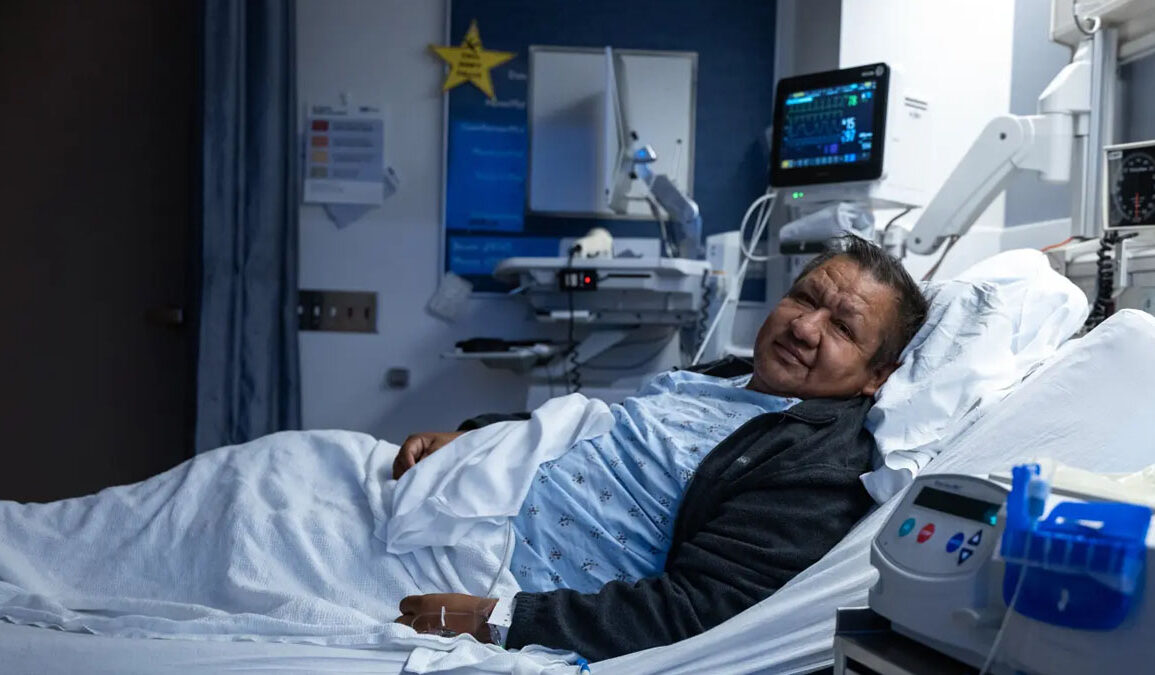
The recipient, 41-year-old Oscar Larrainzar, had lost most of his bladder and both kidneys due to urachal adenocarcinoma, a rare form of bladder cancer. He had been on dialysis for seven years and had extremely limited bladder capacity—just 30 milliliters compared to the average male capacity of over 300.
“I was a ticking time bomb,” Larrainzar told The New York Times. “But now I have hope.”
A Decade in the Making
The surgical team was led by Dr. Nima Nassiri of UCLA and Dr. Inderbir Gill of USC. The doctors spent more than four years developing and refining the techniques necessary to make this transplant possible. They practiced first on pigs, then moved on to human cadavers and brain-dead donors to test their methods.
The biggest challenge was the bladder’s complex vascular system, which sits deep in the pelvis. To solve this, the surgeons connected the bladder’s right and left arteries (as well as the veins) while the organ was on ice. This meant only two vascular connections had to be made during the actual transplant, simplifying the operation.
“This surgery is the realization of a dream,” said Dr. Gill. “We’ve opened a potential door for patients with debilitating pelvic pain, infections, and bladder failure that didn’t exist before.”
The Surgery and Recovery
The team retrieved both a kidney and a bladder from an organ donor and transported them to UCLA. The eight-hour surgery involved attaching both organs inside Larrainzar’s body. The kidney began functioning immediately, producing urine without the need for dialysis.
In a remarkable twist, just two days after discharge, Larrainzar was able to urinate on his own—something he hadn’t done in seven years.
“He peed!” Dr. Nassiri said in disbelief. He quickly called Dr. Gill, who responded, “No way! What the hell?”
Dr. Gill later drove to UCLA to witness it for himself. “It’s the first time he has been able to pee in seven years. For all of us, this is huge,” he said.
Larrainzar has already shed 20 pounds of fluid weight and reports feeling stronger every day.
A Carefully Selected Candidate
Doctors say Larrainzar was an ideal first patient. His prior kidney and bladder loss, combined with scarring that made traditional bowel-based bladder reconstruction difficult, meant he was already a candidate for immunosuppressive drugs. These drugs are required for all transplant recipients to prevent organ rejection, but they come with serious side effects. Because Larrainzar already needed a kidney transplant, the bladder transplant did not add to his medication burden.
“This first attempt at bladder transplantation has been over four years in the making,” said Dr. Nassiri. “For the appropriately selected patient, it is exciting to be able to offer a new potential option.”
Why This Matters
Until now, the only alternative to a non-functioning bladder involved using intestinal segments to create a urinary reservoir. This method often leads to infections, kidney damage, and digestive problems in up to 80 percent of patients.
“This new method avoids introducing bacteria-rich bowel tissue into the urinary system,” Dr. Gill explained. “It could reduce complications and improve long-term outcomes.”
Dr. Despoina Daskalaki, a transplant surgeon at Tufts Medical Center, praised the innovation. “They’re asking: Why do we have to put up with all the complications? Why don’t we try and give this person a new bladder?”
Still, not everyone is convinced the procedure should become routine. Dr. Rachel Forbes of Vanderbilt University cautioned that unless a patient already needs immunosuppressive therapy, a bladder transplant might not be worth the risk. “You might be exchanging some complications for others,” she said.
The transplant team plans to conduct four more surgeries as part of a small clinical trial. If the outcomes are similarly successful, the trial could expand. Millions of people around the world suffer from bladder dysfunction, and if future transplants prove reliable, the technique could transform treatment options.
“This surgery is a historic moment in medicine,” said Dr. Gill. “It stands to impact how we manage carefully selected patients with terminal bladder conditions that are no longer functioning.”
As for Larrainzar, the success of the operation has given him a new lease on life. Sitting in his hospital gown with his wife by his side, he reflected on the journey.
“This is a miracle,” he said. “I didn’t think I’d live to see a day like this.”