


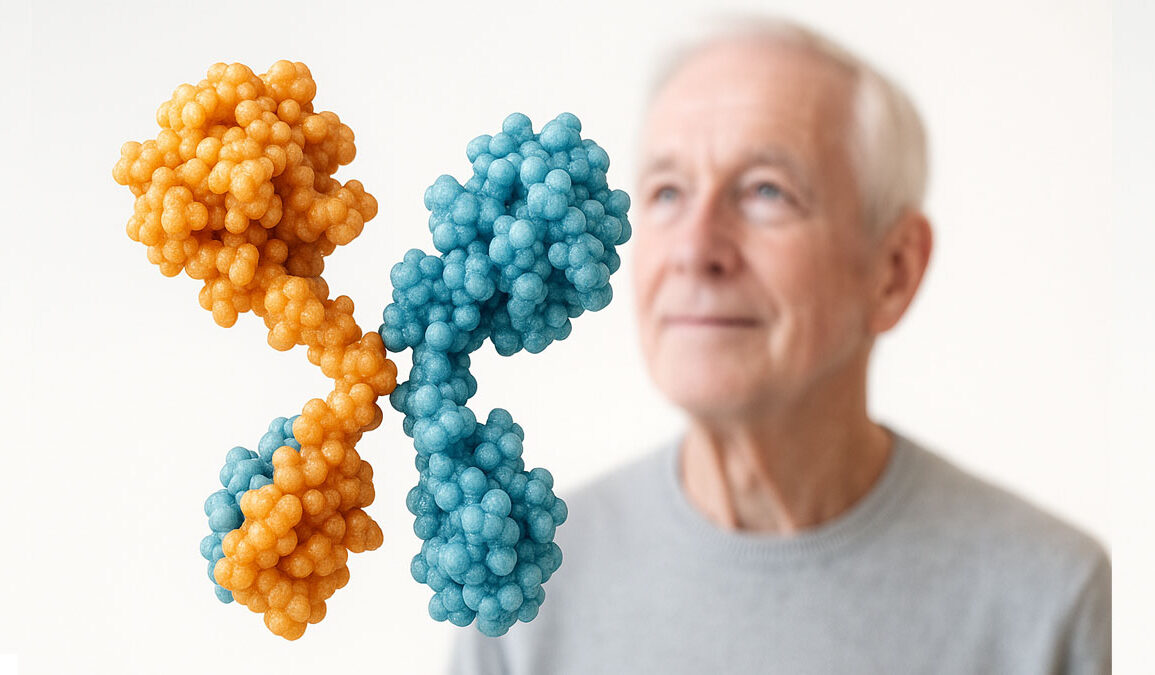
In a major development that could reshape the future of brain disease treatment, researchers at Johns Hopkins University have discovered that a drug already approved to fight cancer may also stop the progression of Parkinson’s disease. The drug, called Opdualag, is used to treat melanoma, but new studies reveal that it blocks a specific biological pathway in the brain—one responsible for spreading the harmful proteins that cause Parkinson’s.
The discovery is especially important because Parkinson’s disease has no known cure. Current medications only help manage symptoms such as tremors, stiffness, and slow movement. They do nothing to halt the spread of the disease, which affects more than 8.5 million people worldwide and is expected to become even more common as the population ages.
The Protein That Wreaks Havoc
At the heart of Parkinson’s disease is a protein called alpha-synuclein. In healthy brains, it helps nerve cells communicate. But in people with Parkinson’s, this protein misfolds and clumps together into structures known as Lewy bodies. These clumps slowly travel from neuron to neuron, damaging cells that produce dopamine—a chemical that controls movement.
The Johns Hopkins research team uncovered a major clue to how this toxic spread happens. They found that a surface protein called Aplp1 works alongside another protein, Lag3, to pull alpha-synuclein into brain cells. When both are present, the harmful protein spreads more rapidly.
“Now that we know how Aplp1 and Lag3 interact, we have a new way of understanding how alpha-synuclein contributes to the disease progression of Parkinson’s,” said Dr. Xiaobo Mao, associate professor of neurology at Johns Hopkins.
Opdualag Breaks the Chain
Opdualag, a combination of the immune-activating drugs nivolumab and relatlimab, was originally created to help the body fight cancer. It works by targeting Lag3, one of the proteins involved in allowing cancer to escape immune detection. But the same drug has now shown promise in a totally different arena: stopping the spread of toxic brain proteins.
In animal studies, giving this drug to normal mice completely blocked the interaction between Lag3 and Aplp1. This meant that alpha-synuclein could no longer enter neurons as easily, and its damaging chain reaction was stopped in its tracks.
“The anti-Lag3 antibody was successful in preventing further spread of alpha-synuclein seeds in the mouse models and exhibited better efficacy than Lag3 depletion because of Aplp1’s close association with Lag3,” explained Dr. Ted Dawson, a neuroscientist who co-led the study.
To test how important these proteins were, researchers used genetically engineered mice that lacked Aplp1, Lag3, or both. These mice were exposed to alpha-synuclein fibrils—essentially, Parkinson’s in a test tube. The mice without both proteins absorbed 90 percent less of the toxic protein. As a result, their brain cells stayed healthier and formed far fewer Lewy bodies.
When normal mice were given Opdualag, they showed nearly identical protection. Their dopamine levels stayed higher, and their performance on motor function tests—like grip strength and pole climbing—was noticeably better.
“These findings suggest that targeting this interaction with drugs could significantly slow the progression of Parkinson’s disease and other neurodegenerative diseases,” said Dr. Mao.
Cracking the Code on Protein Spread
The scientists went further, analyzing exactly how Aplp1 and Lag3 bind to alpha-synuclein. They identified a specific seven-amino-acid stretch in both proteins that appears critical for the process. When this segment was altered, alpha-synuclein could no longer bind or enter cells effectively.
The team also used nuclear magnetic resonance (NMR) imaging to confirm that Aplp1 and Lag3 physically link together on the surface of neurons. When that connection is broken—by either deleting the proteins or introducing the Opdualag antibody—the pathway for protein spread collapses.
Alzheimer’s Too?
What’s especially promising is that Lag3 is not just involved in Parkinson’s. It also binds with tau, a protein that plays a major role in Alzheimer’s disease. Tau, like alpha-synuclein, misfolds and spreads from cell to cell. Blocking Lag3 could potentially disrupt that process as well.
“This research has potential applications in treating other neurodegenerative conditions that have no cures,” Dr. Mao said. “In Alzheimer’s research, for example, scientists could try to target Lag3 with the same antibody.”
Because Opdualag is already FDA-approved for cancer, scientists are optimistic that it could be fast-tracked for testing in Parkinson’s patients. Human trials could begin sooner than usual since safety data already exists.
The next step is to test Opdualag in mice that already show Parkinson’s symptoms. If the drug works even after symptoms begin, it may not just delay disease—but reverse it.
Could This Actually Reverse the Disease?
While much of the current excitement centers on stopping the disease, it can be speculated that reversal might be possible too.
Here’s the logic: in mice already exposed to toxic alpha-synuclein, treatment with Opdualag protected dopamine neurons, preserved motor skills, and reduced brain inflammation. This wasn’t just a preventative effect—it showed the drug can rescue damaged brain systems already under attack.
In fact, the effect was so strong that treated mice performed nearly as well as healthy ones on coordination tests.
“This suggests a potential for not just halting Parkinson’s progression, but undoing some of its damage,” said Dr. Dawson. “We’re eager to test this in models that already exhibit the disease.”
If this same effect holds true in humans, it could mean a future where a person diagnosed with early-stage Parkinson’s receives an antibody infusion – and not only does the disease stop advancing, but some of their lost function may return.
And the same hope extends to Alzheimer’s. Since Lag3 interacts with tau, blocking it might reduce existing tau buildup. No current treatments offer that possibility.
The research community is watching closely. Trials in humans will be the ultimate test, but so far, the data from animal studies is some of the most hopeful yet seen in the fight against neurodegenerative diseases.
“Our findings indicate that both Aplp1 and the Aplp1-Lag3 interaction play major roles in the cell-to-cell transmission of alpha-synuclein,” the Johns Hopkins researchers wrote in Nature Communications. “Blocking this pathway may provide a new strategy for therapies aimed at preventing neurodegeneration in Parkinson’s disease.”
If proven true, this discovery could change everything—from how Parkinson’s is diagnosed to how doctors treat it. It might even bring renewed hope to Alzheimer’s patients too. A new chapter in brain health could be beginning—and the medicine is already sitting in hospital pharmacies.