

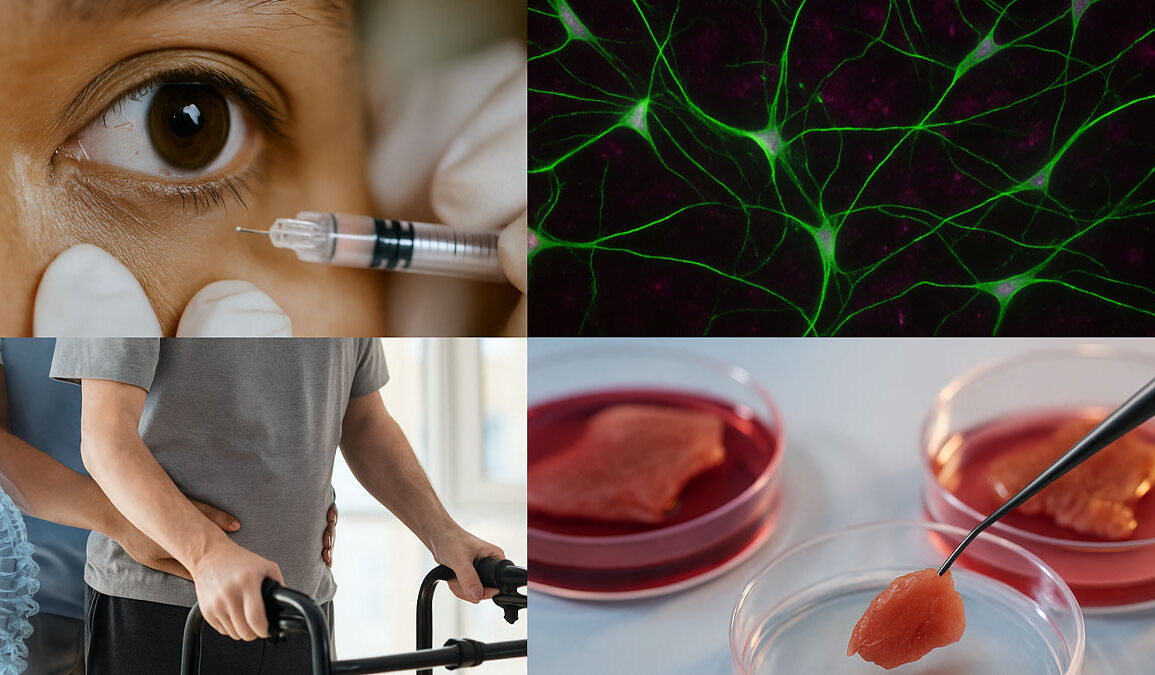
Japan has spent nearly two decades building the world’s most ambitious program to harness the power of stem cells. Now, the country stands on the verge of bringing treatments for blindness, paralysis, Parkinson’s disease and heart failure to patients both at home and abroad.
The Pioneers Driving Japan’s Stem Cell Revolution
The momentum began in 2006 when Shinya Yamanaka at Kyoto University discovered that ordinary adult cells could be “reprogrammed” to act like embryonic stem cells. These induced pluripotent stem cells, or iPS cells, can turn into nearly any tissue type without using embryos, avoiding major ethical debates. Yamanaka’s work earned him the 2012 Nobel Prize in Physiology or Medicine.
Since then, the Japanese government and private investors have poured more than ¥110 billion (around $760 million) into regenerative medicine. Several institutions and companies now lead the charge:
- Kyoto University’s Center for iPS Cell Research and Application (CiRA): Directed by Jun Takahashi, this center focuses on treatments for Parkinson’s and stroke.
- Kobe City Eye Hospital and Vision Care: Led by Masayo Takahashi, these teams pioneered iPS-cell treatments for vision loss.
- Keio University in Tokyo: Hideyuki Okano’s group has focused on spinal cord injuries.
- Osaka University: Kohji Nishida’s team works on corneal regeneration.
- Companies like Sumitomo Pharma, Cuorips, Heartseed, and Raymei: These firms are scaling production and commercial development.
Major Achievements and Promising Results
Many of these teams have moved beyond lab experiments and into clinical trials:
- In 2014, Masayo Takahashi transplanted iPS-derived retinal cells into a patient with macular degeneration. The cells survived ten years and halted vision loss.
- Jun Takahashi’s Parkinson’s trials showed improvements in tremors and mobility for several patients after cell transplants.
- Hideyuki Okano’s spinal cord trial helped one man stand unaided after paralysis.
- Kohji Nishida restored corneal vision in three out of four patients in an early trial.
- Heartseed and Cuorips have treated heart failure patients with cardiac muscle cells, showing encouraging early results.
List of Potential Treatments in Development
Here are some of the key therapies and who is pursuing them:
- Macular Degeneration: Retinal cell sheets to prevent vision loss (Masayo Takahashi, Vision Care).
- Corneal Blindness: Donor-derived corneal cells to repair the eye’s surface (Kohji Nishida, Osaka University, Raymei).
- Parkinson’s Disease: Neural progenitor cells injected into the brain to restore dopamine production (Jun Takahashi, Kyoto University, Sumitomo Pharma).
- Spinal Cord Injury: iPS-derived neural stem cells transplanted to repair damaged nerves (Hideyuki Okano, Keio University).
- Heart Failure: Cardiac muscle patches or injections to strengthen weakened hearts (Cuorips, Osaka University; Heartseed).
- Stroke Recovery: Research underway to develop neural cells to restore brain function (Kyoto University).
Outlook and Remaining Challenges
Japan’s fast-track approval system allows treatments to reach patients earlier if they show safety and early signs of benefit. Parkinson’s disease therapies could be formally approved within a year. However, hurdles remain. Personalized treatments are expensive and slow to produce, while donor-derived therapies risk immune rejection or mutations.
Critics also warn that some therapies might not prove effective in larger trials. Two regenerative treatments approved earlier were later withdrawn after failing to show clear benefits. Still, many experts believe the risks are justified for conditions with no other options.
Japan is preparing for a future where stem cell therapies become routine. Sumitomo Pharma has built a large manufacturing plant in Osaka. Takahashi’s team uses robot-assisted labs to produce hundreds of cell batches for eye treatments. Clinics near Tokyo’s Haneda Airport are getting ready to offer these therapies to medical tourists, though costs remain high.
In a country facing an aging population and economic pressures, regenerative medicine is more than a scientific effort. It has become a national project to restore health and strengthen Japan’s role as a leader in advanced medicine. While not every promise will be fulfilled, the steady march of clinical results suggests that some breakthroughs are finally within reach.