

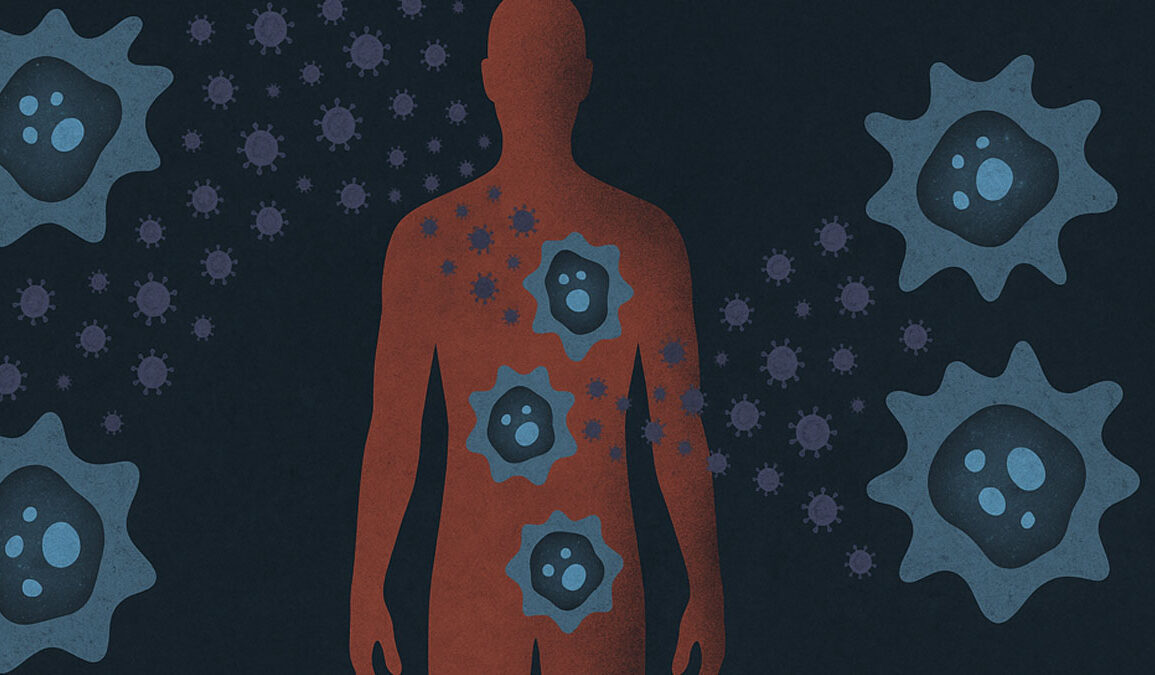
A groundbreaking discovery from Korea University College of Medicine may rewrite how we understand aging. According to new research led by Professor Ok Hee Jeon, aging is not just something that happens cell by cell. Instead, it may spread through the body like an infection, driven by a protein called HMGB1. This revelation could eventually lead to treatments that slow or even reverse aging.
The Protein Behind the Spread: HMGB1
HMGB1, short for High Mobility Group Box 1, is a protein typically found inside the nucleus of cells, where it helps organize DNA. But when cells become stressed or aged—also known as “senescent”—they release HMGB1 into the surrounding tissue. The team found that this protein doesn’t always behave the same way. Only one particular form of it, called “reduced HMGB1,” seems to trigger aging.
When released into the bloodstream, this reduced form sends signals to nearby healthy cells, causing them to stop dividing, show signs of aging, and release inflammatory molecules. The oxidized form, exposed to more oxygen, has no such effect. This suggests that the chemical environment plays a crucial role in how HMGB1 functions.
To explore this process, the researchers treated human lung, kidney, muscle, and skin cells with both reduced and oxidized HMGB1. Cells exposed to the reduced form began to show classic signs of aging, such as halted growth and the release of inflammatory chemicals. The same didn’t happen with the oxidized form. These results were consistent across multiple cell types.
In live animal testing, young mice injected with reduced HMGB1 began to show signs of aging within just one week. Their muscles weakened, and their blood tests showed elevated inflammation. Older mice with muscle injuries who were treated with antibodies to block HMGB1 healed faster, regained more strength, and experienced less inflammation than untreated mice.
The Mechanism: How Aging Travels
Digging deeper, the scientists discovered that reduced HMGB1 activates two major aging pathways in cells: JAK/STAT and NF-κB. These are well-known for causing inflammation and cellular aging. When these pathways were blocked using existing drugs, the aging effects disappeared. This confirmed that reduced HMGB1 is a key trigger of aging that travels through the bloodstream.
This also means that aging could spread in a chain reaction. As more cells become senescent, they release more reduced HMGB1, which in turn causes even more cells to age. In this way, one small source of aging could eventually affect the entire body.
What This Could Mean for Anti-Aging Treatments
The findings have opened up exciting new possibilities for slowing down aging. One idea is to create drugs that block HMGB1 from binding to its target receptor, called RAGE. Another option is to develop treatments that force HMGB1 into its inactive, oxidized form. Drugs already used to treat autoimmune diseases, such as JAK inhibitors, might also help stop this aging signal from spreading.
“This study reveals that aging signals are not confined to individual cells but can be systemically transmitted via the blood,” said Professor Jeon. This is a major shift in how scientists think about aging.
The scientific community has praised the study for its insight into a long-standing mystery. The idea that aging can move through the bloodstream could explain why some organs fail faster than others and why damage in one area seems to lead to widespread decline.
While the research is still in early stages and hasn’t yet been tested in human clinical trials, it shows strong promise. Blood samples from people aged 70 to 80 showed much higher levels of reduced HMGB1 compared to those in their 40s, suggesting that the protein plays a role in real-world human aging.
A Glimpse Into the Future
If further studies confirm these findings, treatments targeting HMGB1 could become a new frontier in anti-aging medicine. The ability to slow or block the spread of aging across the body could improve healing, reduce inflammation, and help people maintain physical function later in life.
For now, the research offers hope that aging is not a fixed fate. Instead, it may be something we can better control with the right scientific tools.