

Why Infections May Be Aging Us Faster
For years, scientists believed the aging process happened in a kind of “sterile bubble,” free from the influence of outside infections. The new research says otherwise. It shows that viruses, bacteria, fungi, and even parasites can quietly set up shop in our bodies and change how we age. As the study explains, “humans sustain infection with viral, bacterial, fungal, and parasite pathogens across the course of a lifetime, many of which are capable of long-term persistence in host tissue and nerves.” These organisms are not just hitchhikers; they can interfere with our immune system, damage the tiny power plants in our cells called mitochondria, and even alter how our genes work. Over time, this can push our cells toward aging faster, with more inflammation, energy loss, and even brain decline.
How These Pathogens Get Into Our Bodies
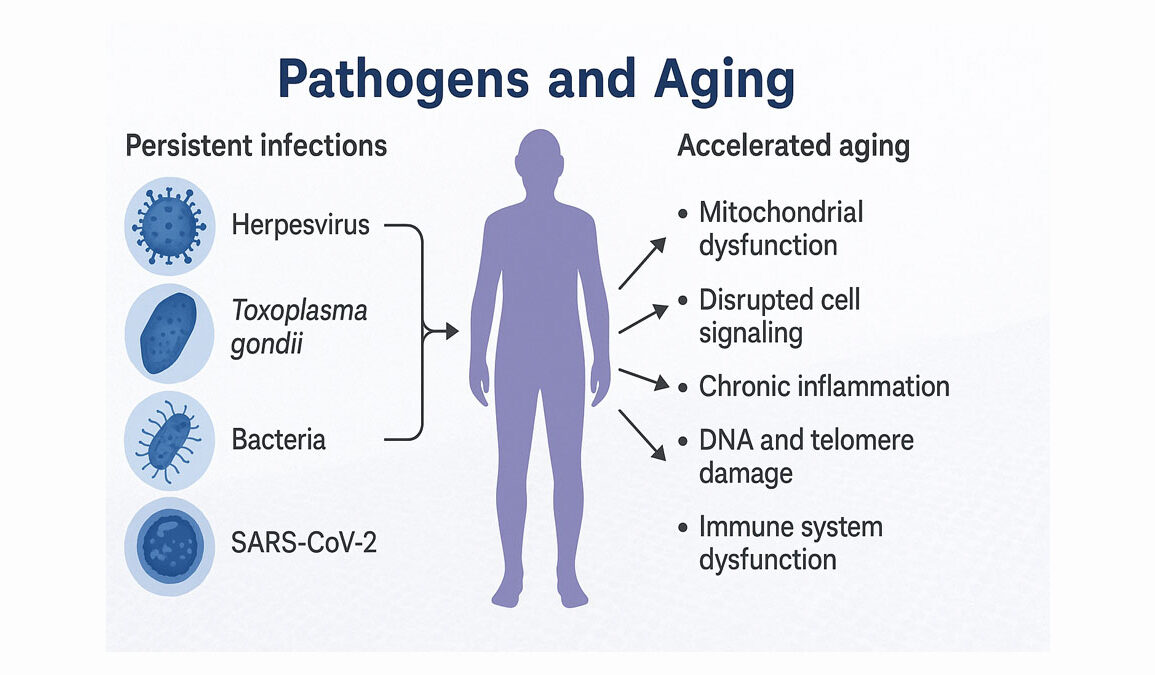
We pick up many of these microbes in everyday life. Some, like herpesviruses, infect us when we are young and then stay hidden for decades. Others, like the parasite Toxoplasma gondii, can be caught from undercooked meat or contaminated soil. Viruses such as SARS-CoV-2 can linger in tissues long after the initial infection is over. Bacteria like Borrelia burgdorferi (the cause of Lyme disease) can live in our systems for years. The paper notes that “over 90 percent of humans harbor at least one species of herpesvirus” and that parasites like Toxoplasma are found in up to half the population in some parts of the world. Once inside, these pathogens can hide in the nervous system, organs, and even the immune cells meant to destroy them.
How Infections Speed Up Aging
Persistent infections attack our health in multiple ways:
- Mitochondrial hijacking – Many pathogens literally steal our cellular fuel supply. The study describes how “viruses… rely entirely on the metabolic capacity of host cells to provide raw materials” and can push those cells into an unhealthy energy mode that produces more inflammation and less efficient power.
- Disrupting cell signals – Pathogen proteins can mimic human proteins, a trick called “molecular mimicry,” allowing them to bind to important receptors and change how our cells grow, repair themselves, or die.
- Chronic inflammation, or inflammaging – This is low-level, ongoing inflammation that damages tissues over time. As the authors put it, “every human pathogen can trigger inflammation via a complex interplay of immune activation and cellular damage.”
- Damage to DNA and telomeres – Some viruses, like human herpesvirus-6, can actually integrate into our telomeres, the protective caps on chromosomes, making them “shorter and more unstable.”
- Immune system exhaustion – Fighting off long-term infections drains the immune system, wearing down the body’s ability to respond to new threats. Cytomegalovirus alone can take up about 10 percent of an infected person’s T cells, leaving less room for other immune responses.
These changes don’t just make us feel older; they are linked to real diseases of aging, including Alzheimer’s, Parkinson’s, heart disease, and diabetes. In Alzheimer’s, for example, the well-known amyloid-β plaques may actually form as part of the brain’s immune defense against infection. As the study notes, “amyloid-β has been shown to act as an innate immune system antimicrobial peptide.”
Can We Get Rid of These Pathogens?
Completely removing these infections is often difficult. Many are masters of disguise, hiding deep in tissues or inside our own cells. But the research shows we may be able to control them. Antiviral drugs can lower dementia risk in people with herpes infections. The authors point out that even some popular “longevity” treatments might work partly because they suppress infection. Low-dose rapamycin, metformin, and glutathione all appear to interfere with the ability of pathogens to reproduce or survive. Herbal medicines like cat’s claw have been shown to have antiviral and antibacterial effects, while boosting the body’s own defenses. Vaccines also play a role by preventing infections that might otherwise become lifelong burdens.
Why Better Testing Matters
A major roadblock is that most medical testing cannot detect these hidden infections. Standard blood tests often look for antibodies, but as the paper warns, “IgG antibody responses cannot be accurately used to diagnose persistent infection.” Advanced tools are now being developed that can detect tiny traces of pathogen DNA, RNA, or proteins in the blood. Others analyze immune cells for signs of recent battles with specific microbes. These tools could one day be included in biological age tests, giving people a clearer picture of whether infections are secretly pushing their bodies to age faster.
The Potential for Future Treatments
Experts believe that treating persistent infections could be a powerful new way to slow aging. In some cases, combining treatments might work best. For example, senolytic drugs, which remove old, damaged cells, could be used alongside antivirals to also remove the infections causing those cells to go bad in the first place. As the authors conclude, “age-associated changes… cannot be fully studied, tracked, or understood without taking pathogen activity into account.”
The takeaway is simple but powerful: aging is not just about time passing. It is also about what is living in us, often without our knowledge. By better detecting and controlling these invisible passengers, we may be able to live not just longer, but healthier lives.