

What a sex recession means
Researchers say the United States is in a sex recession, a long slide in how often people have sex across most age groups. The Institute for Family Studies analyzed the latest General Social Survey data collected in 2024 and reported that “just 37% of people age 18-64 reported having sex at least once a week, down from 55% in 1990.” The shift is sharpest among young adults. “Almost a quarter of people age 18-29, or 24%, said they had not had sex in the past year,” which is double the level in 2010. The new report, “The Sex Recession,” argues that this is not only a youth story. The same downward trend appears among adults up to age 64, regardless of orientation or marital status.
Why sexual activity is falling
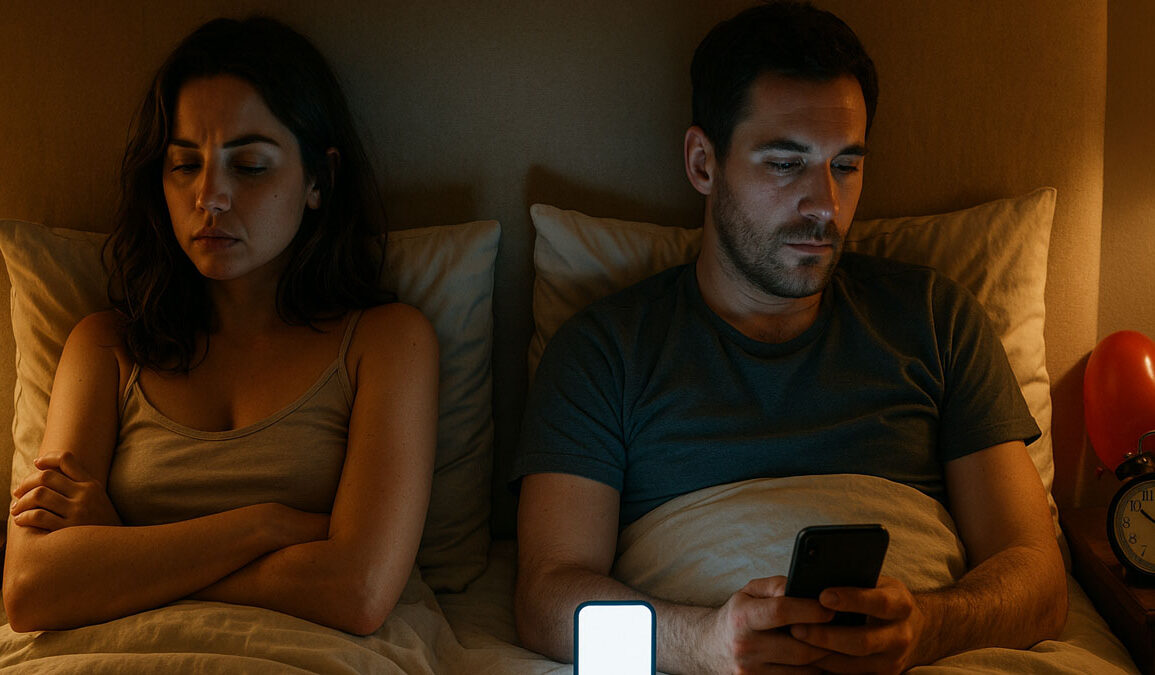
The long arc includes fewer marriages and less cohabitation. Partnered adults tend to have more sex, so fewer partnerships mean less intimacy. Daily life has also changed. Many of us are glued to screens. As Brad Wilcox of the University of Virginia puts it, people are “bedrotting,” a habit of staring at phones instead of each other. Therapists see the consequences. “We’re experiencing a long-term atrophy of the skills it takes to maintain relationships,” says sex and relationship therapist Shadeen Francis. Lee Phillips, a sex therapist in New York, links it to a stress response. “We’re in a heightened fight-or-flight response because of all the chaos.” Justin Garcia of the Kinsey Institute adds the simple question that hits home. “If you are exhausted and distracted, do you want to have sex tonight? NO!”
Many people also cite the pressures of modern life. Some would “rather catch up on their sleep than have sex.” Others point to worries about money, the daily news, and the cost and disappointment of dating. One single biochemist in San Francisco said apps feel exhausting and expensive, so she is focusing on book clubs, volunteering, and in-person events because “these things have a more immediate and positive effect on my emotional well-being.”
Gen Z at the center of the decline
Gen Z grew up inside the digital shift and through the pandemic. Their story is not about a lack of interest. Carter Sherman says “many of them are very horny” but feel blocked by anxiety, politics, and isolation. She adds that young people are “outsourcing a lot of their sexuality to the internet,” including porn and online communities, while missing key real-life milestones that teach flirting and connection.
The timing matches a structural change in daily life. The IFS brief notes that between 2010 and 2019 “the average time young adults spent with friends in a given week fell by nearly 50%, from 12.8 hours to just 6.5 hours.” During the pandemic it dropped to 4.2 hours. In 2024 it recovered only to 5.1 hours. The authors connect this to what Jonathan Haidt calls the “Great Rewiring,” a period from 2010 to 2015 when smartphones and social media became all-pervasive. The brief states that more time on “smart phones, social media, pornography, and gaming” leaves fewer chances to develop social skills, fewer parties, and fewer dates. It even notes research that “declining earnings and increasing use of computer games also play important roles.”
Partnership patterns also changed. From 2014 to 2024, “the share of young adults, ages 18–29, who reported living with a partner… fell 10 percentage points, from 42% to 32%.” Sexlessness among young adults shows a “hockey-stick” rise. It held near 15 percent up to 2010, then “from 2010 to 2024, the share doubled, from 12% to 24%.”
How politics and culture shape fear
Sherman says many straight young people feel “petrified” about pregnancy in a post-Roe environment. One young woman told her that ending a pregnancy after Roe fell “felt like punishment for having sex.” The #MeToo era also changed the climate. Tobias Hess recalls that the discourse “was so fraught and so scary that there was no sort of signal that sex was something that young people did for pleasure or for fun or to connect.” Sherman argues that institutions failed to provide clear help, saying Title IX has become “completely unusable for survivors” according to one expert she interviewed, which leaves young people more anxious, not less.
Porn fills the education gap when sex ed is abstinence-only. Sherman notes that the federal government poured billions into programs that “cannot acknowledge that sexual desire exists,” so teens turn to porn to see what pleasure looks like. Young people told her that porn “normalized ‘rough sex’,” especially choking, which some disliked but felt pressured to accept. Her point is not moral panic. It is a call for consent and safety, and for honest education that reflects real behavior.
Not everyone is in a sex recession
Older adults feel the slump too, but one group is trending the other way. Vox highlights Gen X women, arguing that many are having “the best sex of their lives.” Writer Mireille Silcoff describes “something new in the air,” with middle-aged women reporting more confidence, stronger relationships, and a late blooming of desire. This exception shows that the sex recession is uneven and shaped by life stage, gender, and relationship context.
Marriage still matters for frequency
The IFS brief emphasizes that married people report more frequent sex than unmarried peers. “Forty-six percent of married men and women, ages 18-64, have weekly sex compared to about 34% of their unmarried peers.” Even so, married couples are not immune. From 1996 to 2008, “59% of married adults… reported having sex once a week or more.” From 2010 to 2024 that fell to 49 percent. Digital media use inside relationships matters. A 2023 IFS study found that when spouses replace couple time with phones or computers, “lower sexual frequency” follows. The brief adds that bedtime procrastinators can spend “two hours” on digital media within three hours of sleep, which squeezes intimacy.
Social media’s grip and the cost to health
WSJ columnist Elizabeth Bernstein reports that Americans briefly had more sex after lockdowns eased, then the trend reversed, and now rates “have dropped even lower than during the lockdown period.” Therapists warn against letting intimacy fade. Sex “boosts our immune system, relieves stress, and helps us sleep.” It “connects us to our partner and makes us happier.” Michelle Drouin, who studies tech and relationships, offers a memorable rule. “You want the first thing you touch when you get into bed to be your partner, not your phone.”
The cultural fallout is visible too. Hess connects sexlessness to “resentment,” adding that the rise of incel and femcel identities reflects isolation and “a general sense of solitude and hopelessness among young men,” with growing alienation between genders. Sherman says the narrative is already political, including calls to lift the birth rate and restore traditional sexual roles.
What people say about their own choices
Some singles accept a slow period. A technology writer in Vermont admits, “I definitely miss sex,” but she “does not want to give up… independence and freedom for a relationship.” Others leave the apps and rebuild real-life social habits through clubs, volunteering, and frequent local events, because those bring immediate emotional rewards.
Long-term couples also describe slumps, then recovery through intention. Psychologist Laurie Mintz says her libido fell during a stressful family period. She reorganized her schedule, exercised daily, and recommitted to weekly dates. Her takeaway is simple. “Sex is like going to the gym. Sometimes you feel like you don’t want to do it, but you always feel better afterwards.”
Practical suggestions that help
The advice from researchers and therapists is specific.
- If you are single, meet people in real-life settings that you actually enjoy. Treat social time as a habit, not a one-off fix.
- If you are partnered, go to bed at the same time. “Opportunity fuels action.”
- For everyone, reduce screens in the hours before sleep. Drouin’s rule about what you touch first in bed is a good daily check.
- Treat sex as a health habit. Mintz suggests putting it on the calendar the way you would exercise or sleep.
The larger lesson
The IFS brief closes with a reminder that humans are “real embodied creatures who flourish from real world interactions.” Bernstein’s reporting echoes the same theme. The sex recession is about sex, but it is also about connection. If Americans want a rebound, the path runs through time with friends, dates in person, phones on the nightstand instead of in the hand, and a renewed effort to see one another face to face.