


What is sarcopenia
Sarcopenia is the age-related loss of skeletal muscle mass, strength, and function. It raises the risk of falls, disability, hospitalization, and even death. International groups define it with low muscle strength as the primary sign, confirmed by low muscle quantity or quality, and judged severe when physical performance is also poor. Typical screening includes grip strength, walking speed, and imaging such as DXA.
Symptoms and day-to-day impact
Common symptoms include weakness, fatigue, slower walking, balance problems, difficulty rising from a chair, and trouble with daily activities. People with sarcopenia are more likely to fall and to stay longer in the hospital. As muscle strength drops, independence declines.
Prevalence varies by the criteria used and the population studied. Studies often find 5 to 13 percent among adults ages 60 to 70, with higher rates after 80. Some cohorts report around one in five older adults meeting criteria, and rates differ across regions and between men and women.
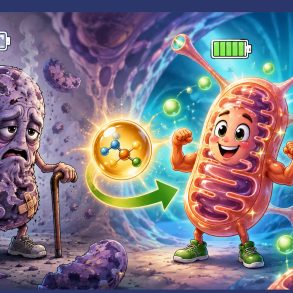
Multiple pathways drive sarcopenia. Aging muscle shows fewer and smaller fibers, reduced satellite cell repair capacity, hormonal shifts, chronic inflammation, and protein turnover imbalances. Oxidative stress and mitochondrial damage play central roles, activating signaling cascades such as NF-κB and MAPKs that increase proteolysis and apoptosis. These changes outpace anabolic responses, so protein breakdown exceeds synthesis.
Who is researching vitamin D and what they have found
Ran Uchitomi, Mamoru Oyabu, and Yasutomi Kamei reviewed evidence linking vitamin D to muscle health. Low serum 25(OH)D levels are common in older adults and correlate with poorer strength, slower gait, and more falls. Randomized trials using about 800 IU per day reduced falls compared with lower doses or placebo in several cohorts. Mechanistic studies show vitamin D acts through the vitamin D receptor (VDR) in muscle to:
- suppress atrophy programs by reducing FOXO-driven genes like atrogin-1 and cathepsin L
- support protein synthesis via mTORC1 signaling and increase fiber size
- improve mitochondrial respiration and ATP production
- modulate calcium handling genes and dystrophin-complex components
Not every trial shows functional gains, likely due to differences in baseline vitamin D status, dose, duration, and populations. Benefits are most consistent when deficiency is present.
By raising deficient 25(OH)D levels, vitamin D can lower fall risk, may improve strength, and supports cellular pathways that counter muscle loss. It is not a cure on its own, but it is a rational part of prevention and treatment, especially when combined with resistance exercise and adequate protein.
Who is researching vitamin E and what they have found
Shy Cian Khor, Norwahidah Abdul Karim, Wan Zurinah Wan Ngah, Yasmin Anum Mohd Yusof, and Suzana Makpol reviewed vitamin E’s role. Vitamin E includes tocopherols and tocotrienols, potent lipid-phase antioxidants that also influence signaling. Key findings:
- Lower circulating vitamin E has been linked to frailty and weaker knee extension in older cohorts without supplementation.
- Animal and cell studies show vitamin E deficiency accelerates mitochondrial damage and muscle abnormalities, while supplementation limits oxidative injury.
- Vitamin E helps repair myoblast membranes during stress, stabilizes lipid bilayers, and can reduce markers of muscle damage after strenuous exercise.
- It dampens inflammatory signaling by suppressing NF-κB and cytokines such as IL-6 and TNF-α, and it can blunt proteolysis by lowering MuRF-1 and atrogin-1 activity.
- Tocotrienol-rich fractions sometimes outperform α-tocopherol in oxidative models, suggesting isomer choice may matter.
Human results are mixed. Some trials show less oxidative damage and soreness after exercise, while others show little change in performance. Differences in dose, isomer, duration, and participant health likely explain the inconsistency.
Vitamin E targets the oxidative stress and inflammatory components that drive muscle wasting. By limiting ROS damage, stabilizing membranes, and dialing down catabolic pathways, it may slow atrophy and support recovery. Strongest evidence comes from mechanistic and animal work; clinical benefits in everyday function are promising but not yet uniform.
Will vitamins D and E together prevent or lessen sarcopenia
Direct head-to-head combination trials are limited. The biology suggests complementary actions: vitamin D pushes muscle toward synthesis, better mitochondrial function, and anti-atrophy signaling, while vitamin E reduces oxidative and inflammatory drivers of breakdown and helps membrane repair. Antioxidant combinations that include vitamin E have improved muscle oxidative indices in aged rodents, and vitamin C can recycle vitamin E, potentially enhancing its effect. Still, definitive human data for a D+E regimen preventing sarcopenia are not yet conclusive. The most reliable strategy remains a combination of resistance training, sufficient protein, correction of vitamin D insufficiency, and, where appropriate, targeted antioxidant support.
Across reviews, researchers see vitamin D as a credible, low-risk intervention when deficiency exists, with consistent reductions in falls and mechanistic support for stronger muscle. For vitamin E, scientists highlight solid mechanistic rationale and encouraging preclinical results but call current human evidence “inconclusive” for functional outcomes, urging more trials that test specific isomers, doses, and durations. Most agree that nutrition and exercise work best together and that personalization based on baseline status is key.
Practical takeaway
- Screen and correct vitamin D insufficiency in older adults, aiming for levels associated with better muscle function.
- Consider vitamin E as part of a broader plan that includes protein and resistance exercise, with attention to form and dose.
- Expect the combination to be supportive rather than standalone. Evidence favors benefit, especially in those who are deficient or under high oxidative stress, but more targeted clinical trials are needed.