

Scientists at the Icahn School of Medicine at Mount Sinai have uncovered a way to reverse aging in blood-forming stem cells by repairing a hidden problem inside the cell’s recycling machinery. The work, published in Cell Stem Cell, shows that fixing defects in lysosomes can restore old stem cells to a youthful, healthy state. The discovery could open the door to new anti-aging therapies and treatments for age-related blood disorders.
The research was led by Dr. Saghi Ghaffari, Professor of Cell, Developmental, and Regenerative Biology and a member of the Black Family Stem Cell Institute. Her team collaborated with Dr. Mickaël Ménager and colleagues at the Imagine Institute in Paris, with support from major scientific agencies including the National Institutes of Health and INSERM.
Dr. Ghaffari’s group focused on hematopoietic stem cells, or HSCs, which live in the bone marrow and create all blood and immune cells throughout life. These cells are vital to immune function, cancer resistance, and overall health. As people age, HSCs lose their ability to renew and repair the blood system. Older adults become more vulnerable to infections and can develop clonal hematopoiesis, a silent but risky condition that increases the likelihood of blood cancers and inflammatory diseases.
The team discovered that aged stem cells suffer from severe lysosomal dysfunction. Lysosomes act as the cell’s recycling centers, breaking down proteins, fats, and other biological waste so the cell can reuse them. They also help regulate metabolism.
In old blood stem cells, lysosomes become hyper-acidic, damaged, depleted, and overly activated. This disruption affects the stability of the cell’s metabolism, mitochondria, and epigenetic programming. It also causes the cells to send harmful inflammatory signals.
Using single-cell transcriptomics and functional assays, the researchers identified that lysosomal hyperactivation is a core driver of stem cell aging.
How Scientists Reversed the Aging Process
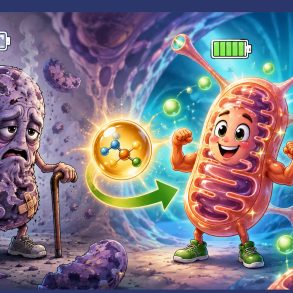
The key breakthrough came from slowing down the overly active lysosomes. The team used a specific vacuolar ATPase inhibitor that suppresses lysosomal hyperactivation. When applied to aged stem cells, this treatment restored lysosomal integrity and returned the cells to a youthful state.
Old stem cells began to behave like young ones. They regained their ability to regenerate blood and immune cells, improved their metabolism and mitochondrial performance, and reduced inflammatory signaling.
Dr. Ghaffari explained, “Our findings reveal that aging in blood stem cells is not an irreversible fate. Old blood stem cells have the capacity to revert to a youthful state; they can bounce back.”
The results were dramatic. Ex vivo treatment, where old stem cells were removed, treated, and returned to the body, increased their blood-forming capacity more than eightfold. The treatment also reduced activation of the cGAS-STING pathway, a major driver of inflammation and aging.
What This Means for Anti-Aging Science
This breakthrough suggests that lysosomal dysfunction is a central cause of stem cell aging. Restoring lysosomal health may one day help maintain strong immune systems in older adults, prevent age-related blood disorders, and improve the success of stem cell transplants and gene therapies.
Dr. Ghaffari noted, “Targeting this pathway may one day help maintain healthy blood and immune systems in the elderly, improve their stem cells for transplantation, and reduce the risk of age-associated blood disorders and perhaps have an effect on overall aging.”
The work also raises the possibility that lysosomal dysfunction contributes to the formation of leukemic stem cells, potentially linking the biology of aging to cancer development.
Researchers in the field see this as a major step forward. The study suggests that aging is far more reversible than once believed, and that cellular recycling systems may hold the key. Supporters say the findings reinforce the idea that targeted cellular repair can produce big improvements in healthspan.
Others note the exciting clinical possibilities. If the approach works in humans, it could transform treatments for older patients who need stem cell transplants or gene therapy but currently face high risks due to weakened stem cells.
The discovery that stem cells can be restored to a youthful state by fixing lysosomal problems is a major milestone in regenerative medicine. By identifying a reversible cause of stem cell decline, the Mount Sinai research team has opened new directions for anti-aging therapies and disease prevention. Their next steps, including studying how these mechanisms relate to leukemia, may reveal even deeper connections between aging and cancer.
This work suggests a future where aging is not simply accepted but treated, repaired, and possibly reversed at the level of the body’s most essential cells.