


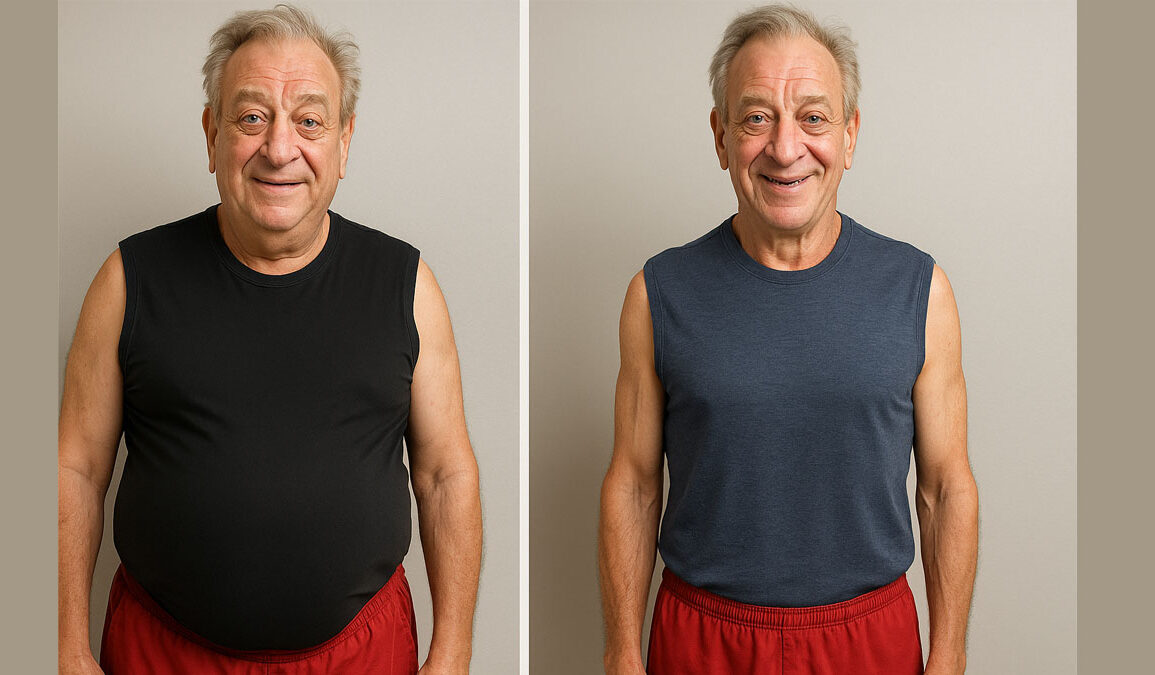
Scientists have spent years trying to understand why some people age faster than others. One pattern keeps emerging across study after study. Excess belly fat, especially the fat stored deep around the organs, is strongly tied to faster aging and a shorter life. New research shows that reducing this hidden fat may be one of the most effective anti-aging strategies available today.
Below are the key studies, the researchers behind them, the findings, and how each contributes to our understanding of how belly fat affects longevity.
The NHANES study linking visceral fat to premature death
A major 2025 analysis of twenty years of data from the National Health and Nutrition Examination Survey followed people for a median of 9.2 years. Researchers recorded 3,187 premature deaths, defined as death before age 80. They found that people with the highest levels of visceral fat had a 68 percent higher risk of dying early than those with the lowest levels. For women the risk was even worse. Women in the highest visceral fat group faced a 136 percent higher risk of dying prematurely.
The study also used Mendelian randomization, which uses genetic evidence to show causality. The conclusion was firm. Visceral fat directly contributes to a shorter lifespan. Subcutaneous fat, the fat you can pinch under the skin, did not show this relationship.
The AGES-Reykjavik study showing fat type matters
The AGES-Reykjavik Study added more detail. In women, visceral fat raised mortality risk, while abdominal subcutaneous fat actually appeared protective. Women with more subcutaneous fat sometimes lived longer despite not being thin. This showed that the location of fat is more important than total weight alone.
Why visceral fat accelerates aging
Researchers now view visceral fat as an active endocrine organ. It releases inflammatory chemicals like TNF alpha and IL 6. It increases blood pressure by releasing precursors to angiotensin. It interferes with normal insulin activity. These effects create chronic inflammation, insulin resistance, and metabolic strain that speed up the aging process in many organs.
This matches findings from a major study published in 2025 in the European Heart Journal. Led by Professor Declan O’Regan of the MRC Laboratory of Medical Sciences in London, researchers analyzed MRI scans from 21,241 people in the UK Biobank. Using artificial intelligence, they calculated each person’s “heart age.” People with more visceral fat consistently had older heart ages than their actual age. Blood tests showed elevated inflammation in people with more hidden fat.
O’Regan explained that hidden fat around the organs directly accelerates aging in the heart and blood vessels. Fat around the hips and thighs in women, however, tended to slow aging.
Heart aging, inflammation, and sex differences
The UK Biobank study also revealed large differences between men and women. Men tended to carry more visceral fat and saw it increase sharply with age. Women often stored more subcutaneous fat in their hips and thighs, which may release substances that reduce inflammation. The researchers also found that higher estrogen levels in premenopausal women were linked to slower heart aging.
Professor Bryan Williams of the British Heart Foundation pointed out that visceral fat has long been known to raise blood pressure and cholesterol, and now appears to drive aging itself.
Exercise studies showing how to reduce visceral fat
Multiple studies point toward exercise as the most reliable way to reduce hidden fat.
A randomized controlled trial involving 160 older adults tested three approaches: aerobic exercise, resistance training, and a combination of both. Each group lost about 10 percent of their weight. The combination group reduced visceral fat by 36 percent. Aerobic exercise alone reduced it by 19 percent. Resistance training alone reduced it by 21 percent. The combination group also saw the biggest improvement in insulin sensitivity.
A review of 58 trials confirmed that resistance training does reduce visceral fat, but combining it with aerobic work produces the strongest results.
Intensity matters as well. A study in older adults compared moderate exercise to high intensity activity. Both groups burned the same number of calories each week. Only the high intensity group saw visceral fat reduction.
Experts reviewing the UK data noted that physically fit people with obesity often had younger cardiovascular ages than unfit people of normal weight. Exercise changes how the body stores fat and makes visceral fat less harmful.
Dietary strategies, soluble fiber, and protein pacing
A five year study of more than 1,100 people found that eating an additional 10 grams of soluble fiber per day slowed visceral fat accumulation by 3.7 percent. When combined with moderate exercise, visceral fat accumulation slowed by 7.4 percent. This effect was specific to visceral fat.
Intermittent fasting studies show mixed results. A meta analysis of 24 long term trials found that fasting does reduce visceral fat. But a major 2025 Nature Medicine study found fasting was no better than normal calorie reduction for visceral fat specifically. Some studies showed stronger results when fasting was combined with protein pacing, which means eating four to six smaller meals per day, each containing 20 to 40 grams of protein.
A well known Johns Hopkins study found that a moderate low carbohydrate diet led to more fat loss than a low fat diet, even with equal calories. Participants on the low carb plan lost more belly fat and improved heart health. The main change was reducing refined carbohydrates like bread, bagels, and soda and replacing them with vegetables, beans, and protein.
Sleep quality, stress, and cortisol
Poor sleep quality also increases visceral fat. Researchers using the Pittsburgh Sleep Quality Index found that people with poor sleep had significantly more visceral fat even though their total body fat was similar.
Stress contributes as well. Visceral fat has more cortisol receptors than other types of fat. Women with higher waist to hip ratios release more cortisol during stress, even when thin. This can create a cycle. Stress increases visceral fat, and visceral fat increases inflammation and stress signals.
What people are saying about these findings
Experts say belly fat should now be viewed as a major aging factor. Professor O’Regan emphasized that the goal of this research is to increase healthy lifespan, not just reduce weight. Cardiologists say that fat distribution will likely become more important than BMI when evaluating risk.
Many clinicians are warning that even people who appear slim may carry dangerous amounts of hidden fat. Simple tools like waist circumference and waist to hip ratio can help people estimate their visceral fat levels.
Public health leaders like Bryan Williams note that lifestyle changes, especially exercise, lower visceral fat and protect the heart from premature aging.
How reducing belly fat supports longevity
The studies show clear and consistent evidence. Reducing visceral fat lowers the risk of early death and slows signs of aging in the heart, blood vessels, and metabolic systems. The NHANES study showed up to a 68 percent reduction in premature death risk among people with low visceral fat. The UK Biobank study showed that visceral fat directly ages the heart.
Reducing this hidden fat appears to improve insulin response, lower inflammation, reduce blood vessel damage, and protect organs from metabolic stress.
Visceral fat is a powerful predictor of aging and early death. The research shows that even small reductions can improve vascular health, slow heart aging, and reduce mortality risk. The most effective strategies are combining resistance and aerobic exercise, increasing soluble fiber, reducing refined carbohydrates, managing stress, improving sleep, and following any sustainable eating pattern that reduces overall calories.
Reducing hidden belly fat is not about appearance. It may be one of the most effective ways to extend lifespan and slow the aging process itself.