


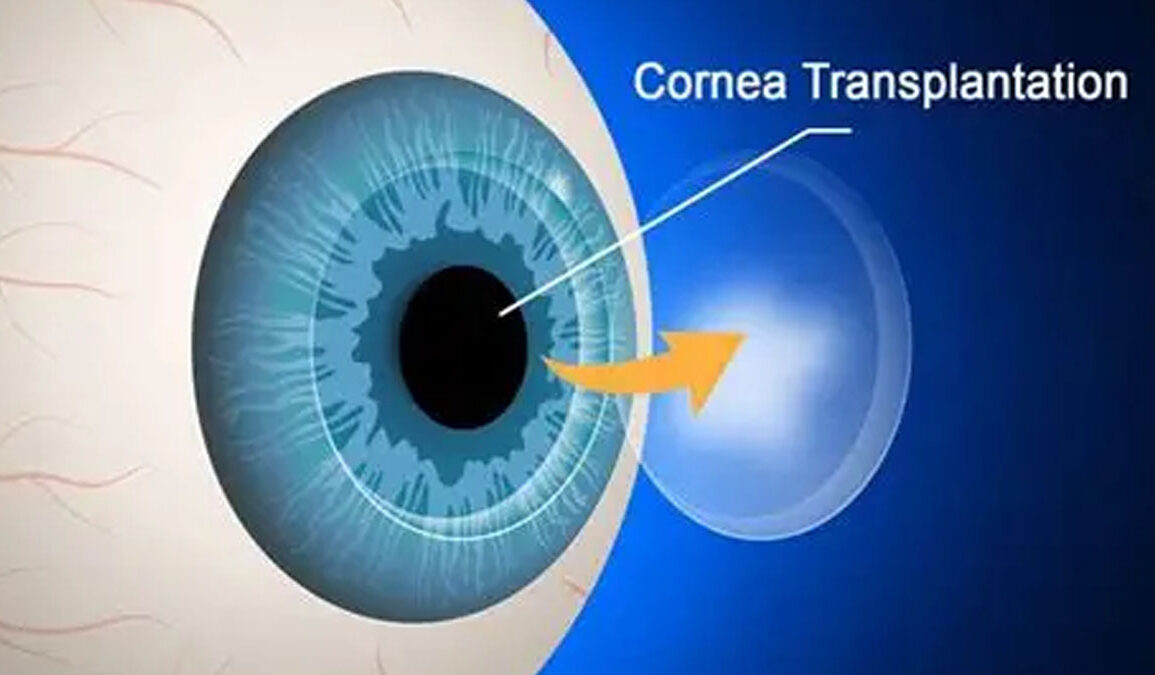
Surgeons at the Rambam Eye Institute have achieved a world first that could change the future of eye care. They restored vision to a legally blind patient using a fully 3D printed corneal implant grown entirely from cultured human corneal cells. It is the first time a corneal implant that does not rely on donor tissue has ever been transplanted into a human eye.
Who Produced the Cornea
The implant was created by Precise Bio, an Israeli regenerative medicine company that specializes in bio fabricated tissues. The company used a healthy donor cornea as the starting point. Researchers multiplied the cells in the lab and used them to print about 300 transparent corneal implants. Their platform builds a layered and structured cornea that looks and functions like a natural one, offering clarity and long-term strength.
This approach responds to a major global shortage. While patients in countries like the United States may only wait days for a transplant, millions of others face long delays because donor tissues are scarce. A single donor cornea that can be expanded into hundreds of implants could change that reality.
The printed cornea came from cultured human corneal cells. Scientists took a single healthy donor cornea and expanded the cells until they had enough material to print hundreds of implants. Precise Bio’s system uses these cells to build a layered structure that mimics the real cornea. It provides transparency, physical strength, and the potential for long-term function once implanted.
The original 3D printed cornea design dates back to 2018, when it was first created at Newcastle University in the United Kingdom. Precise Bio has since advanced the technology with clinicians worldwide, showing how long it takes to move from invention to real treatment.
Who Performed the Surgery
The procedure was led by Professor Michael Mimouni, director of the Cornea Unit at the Rambam Eye Institute. He described the moment as unforgettable because a lab grown cornea restored vision to a human patient for the first time.
Professor Mimouni said that the platform shows that it is possible to expand human cells in the lab and print them into new layers that become functional tissue. He believes this could eventually reduce waiting times for patients needing many different kinds of transplants.
The transplant was part of a Phase 1 clinical trial designed to evaluate safety and tolerability for patients with corneal endothelial disease. The early success marks the result of years of scientific development and coordination between researchers, surgeons, and industry partners.
How Successful Was the Procedure
The success was immediate. The patient, who had been legally blind in the treated eye, regained sight after the transplant. This proof of concept shows that engineered corneal tissue can survive, function, and restore vision in the human eye.
Corneal transplant surgeries typically have a high success rate, around 97 percent, but they depend on donor supplies. A system that multiplies donor tissue hundreds of times could provide a new solution for countries with limited access to eye banks.
The first reports suggest that the implant is stable and performing as hoped. More detailed results will come as the trial continues.
Professor Mimouni called the procedure a game changer. He said it was the first time a cornea made entirely in the lab brought sight back to a person, and he described witnessing this as an unforgettable moment in medical history. Researchers at Rambam say the achievement reflects years of collaboration and marks a shift toward treating blindness at scale.
Experts note that this breakthrough shows the promise of regenerative medicine. Precise Bio says the same platform might eventually print cardiac muscle, liver tissue, and kidney cells. Those possibilities remain far off, but the path from concept to patient care now feels more realistic.
Looking ahead, the Rambam Eye Institute plans to bring future discoveries into the Helmsley Health Discovery Tower, where research and clinical care will combine under one roof to push new treatments into practice faster.
For patients with corneal disease, the success of this surgery brings new hope. The limits of donor supply may no longer decide who gets sight saving care. With more trials underway, this technology may soon widen access to transplants for people around the world.