

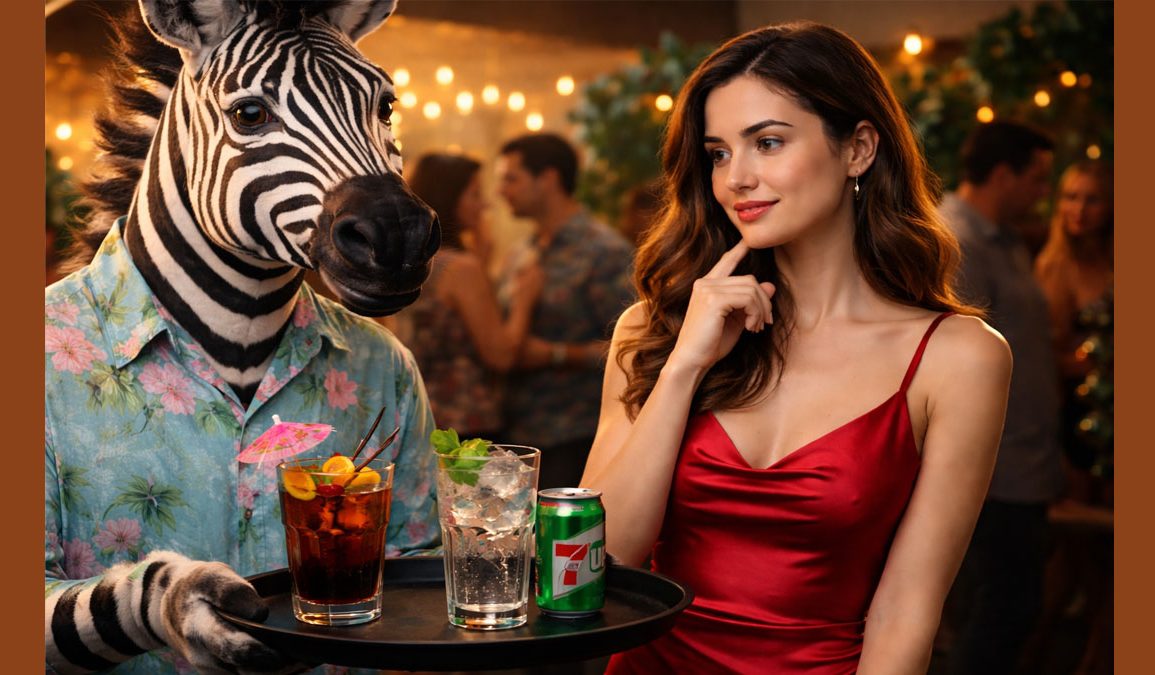
Zebra striping is the latest term to enter the ever growing vocabulary of modern drinking habits. At its core, it simply means alternating between alcoholic and non alcoholic drinks during a social event. One beer, then a mocktail. One glass of wine, then water or soda. The idea is to keep the night moving while quietly cutting alcohol intake in half.
The name comes from the visual pattern itself, light drink, dark drink, light drink, dark drink. It sounds clever, maybe a little trendy, and very much like something that needed a name so people could talk about it on social media.
The concept did not emerge from a medical lab or a government guideline. It grew out of a broader cultural shift around drinking, especially among younger adults. Gen Z and Millennials are drinking less than previous generations, with Gen Z consuming about 20 percent less alcohol than Millennials, according to data from the research firm IWSR.
Rather than quitting entirely, many people are choosing moderation. This has been fueled by the sober curiosity movement, Dry January challenges, and the explosion of non alcoholic beers, wines, and spirits that actually taste decent. Zebra striping became shorthand for this flexible, in between approach.
As Barry Thomas of Kantar put it, earlier generations often went out to forget. Younger adults, he said, are more interested in having a night they can remember.
Why People Are Doing It
Health concerns are a major driver. A recent review found that alcohol significantly increases the risk of several types of cancer. Add in the short term effects on judgment, reaction time, and impulse control, and alcohol starts to look less like a harmless indulgence and more like something that deserves at least a little restraint.
Chris Reed, founder of the Northern Illinois Recovery Center, does not mince words about alcohol’s impact. He says it affects the frontal lobe, impairs nerve cells, and over time can contribute to cognitive decline and even dementia. From his perspective, reducing intake is not just trendy, it is sensible.
Zebra striping offers a way to do that without sitting alone at a party holding a glass of water and answering awkward questions.
Mocktails and the Illusion of Participation
A big reason zebra striping works socially is the rise of mocktails. These are non alcoholic drinks designed to look and feel like cocktails, complete with garnishes, fancy glassware, and complex flavors. Virgin mojitos, non alcoholic margaritas, and sparkling fruit blends let people feel like they are part of the celebration without the alcohol.
For people who find it unrealistic to avoid events where alcohol is present, especially during the holidays, this approach provides a middle ground. Reed notes that staying socially connected is important, and zebra striping can make that easier for those trying to cut back.
The shift toward moderation is not subtle. Around the start of 2025, 39 percent of American adults said they planned to drink less alcohol, while another 20 percent took part in Dry January, according to Ipsos. Nielsen IQ data shows that 93 percent of non alcoholic beverage buyers also continue to buy alcohol. This is not an all or nothing crowd.
Maggie Frerejean Taittinger of French Bloom describes the change as a move toward flexibility rather than sobriety. One glass of Champagne, one glass of non alcoholic sparkling wine. Not never, just not always.
The Slightly Ridiculous Part
Here is where things get a little funny. At some level, zebra striping is just pacing yourself. It is the kind of thing parents used to tell their kids without giving it a catchy name. Drink some water. Slow down. Do not have five drinks in a row.
Now we have a striped metaphor, branded beverages, and detailed hosting strategies. One could argue that if we truly had discipline, we would not need a strategy at all.
But that might be asking too much of humans at holiday parties.
A Strategy for an Undisciplined Species
Zebra striping exists because self control is hard, social pressure is real, and alcohol is deeply woven into celebrations. If alternating drinks helps someone avoid overdoing it, waking up miserable, or saying something they regret, then the silliness of the name is a small price to pay.
Reed points out that even short breaks from alcohol can make a difference. Cutting back in December and abstaining in January can help reset habits and support long term health.
So yes, it may be a bit ridiculous that we need a formal plan to not drink too much. But if a black and white pattern helps people drink less, feel better, and still enjoy themselves, then maybe zebra striping is less about stripes and more about accepting human nature as it is.