

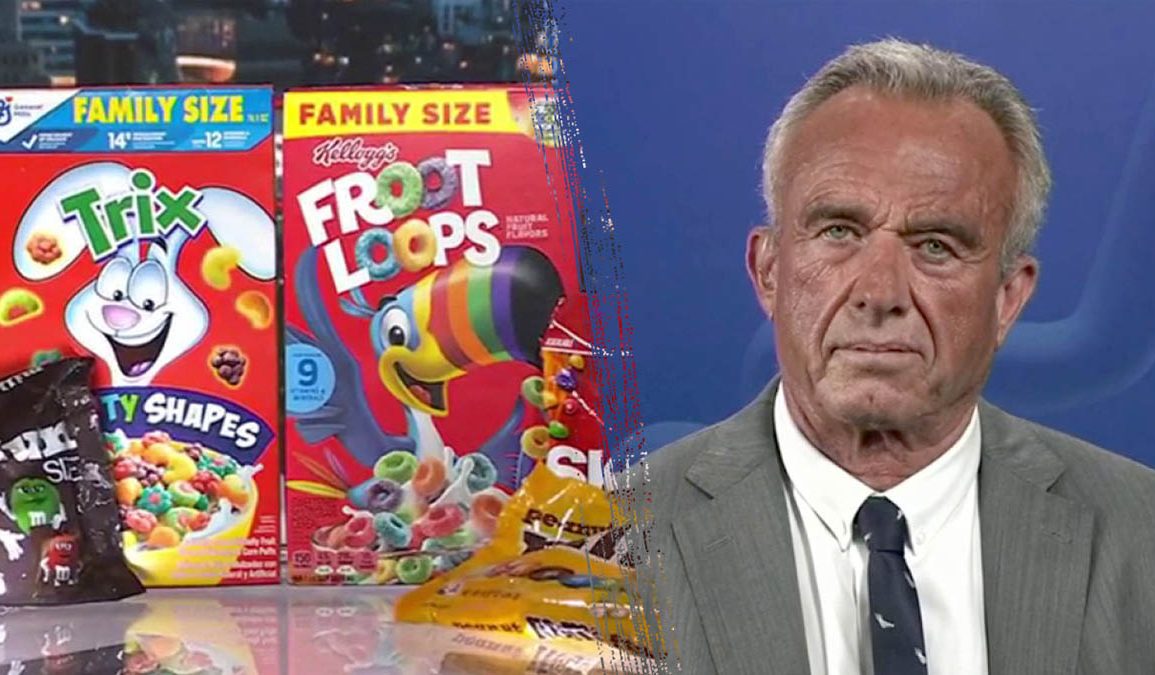
Health and Human Services Secretary Robert F. Kennedy Jr. has made eliminating artificial food dyes a centerpiece of his effort to “Make America Healthy Again.” He believes that synthetic food colorings contribute to serious health problems in children, from ADHD and behavioral issues to long-term disease risks, and he has been pushing both the federal government and individual states to take action. But a major part of that plan was temporarily stopped when a federal judge halted West Virginia’s effort to ban several widely used artificial dyes.
From the beginning of his time leading America’s health agencies, Kennedy has argued that food dyes are unnecessary chemicals that only make products more colorful while exposing children to potential harm. During a visit to Martinsburg, West Virginia, Kennedy spoke alongside Governor Patrick Morrisey as the state prepared to enforce HB 2354, a law banning foods and medicines “adulterated” with a list of well-known artificial dyes. These included Red 3, Red 40, Yellow 5, Yellow 6, Blue 1, Blue 2, Green 3 and compounds such as butylated hydroxyanisole.
Kennedy connected this effort to a broader public health problem. He said that today’s rising childhood health challenges are not accidental trends. He linked dyes to modern behavioral and mental health struggles, saying, “The crises we have in mental health, in suicide, in ADD, ADHD are all linked. And particularly to the dyes. It is very clear the dyes that Governor Morrisey is banning are linked in very strong studies to ADHD and to cancers.” To Kennedy and his supporters, removing dyes is about protecting children before more harm is done.
The Judge Who Stopped the Ban
The biggest immediate obstacle came from Judge Irene Berger of the Southern District of West Virginia. She was appointed during the Obama administration and issued a 30-page ruling that temporarily blocks West Virginia from enforcing HB 2354. The lawsuit was brought by the International Association of Color Manufacturers, which represents dye producers. The group claimed the law would damage their businesses, interfere with interstate commerce, and allow a state to override what they argue should be federal food safety authority.
Judge Berger agreed to put the law on hold, issuing a preliminary injunction. This decision prevents Charleston from enforcing the ban while the legal fight continues.
Judge Berger did not simply focus on whether dyes are harmful. Instead, she pointed to problems with how the law was written. She argued that while the law names certain dyes, it also uses vague phrases like “poisonous and injurious” without clearly defining what that means or how it would be determined.
She even questioned how enforcement would work in real life. “If a parent notifies the West Virginia Department of Health that they believe their child is sensitive to a color additive, is that a sufficient basis for a color additive to be deemed poisonous and injurious, or must the WVDOH conduct a further investigation? It is far from clear,” she wrote. To her, that lack of clarity could unfairly punish manufacturers and create confusion rather than safety.
She also noted that the law had not yet taken effect, so it did not currently harm public health authority in the state. While she rejected the dye industry’s claim that the law was an unconstitutional punishment targeting them, she still chose to halt the policy.
Why These Dyes Matter to RFK Jr.
Kennedy’s focus on these particular dyes is tied to studies and previous government actions. Red 3 is already banned by the FDA for certain uses after lab tests in rats showed thyroid problems and cancer concerns. Other reviews and studies cited in national debates over dyes have linked synthetic colors to behavioral problems, especially ADHD in children. Kennedy has consistently emphasized that these links are strong enough to justify taking action now rather than waiting for years of additional argument.
Supporters in West Virginia stressed that this is about children, not politics. West Virginia House Health and Human Resources Committee Chairman Evan Worrell said the goal was to protect kids from “unnecessary chemical additives” that other countries have already rejected.
Strong Reactions to the Ruling
West Virginia leaders were angered by the decision. Governor Patrick Morrisey said he “respectfully disagrees” with the ruling and called it “premature and incorrectly decided.” He vowed to continue pushing forward, adding, “West Virginia will continue to defend its authority to protect the health and well-being of our citizens, especially children. We are reviewing our legal options and will continue to press forward with our efforts to get harmful crap out of our food supply.”
Others went even further in their criticism of the dye industry. Delegate David Elliott Pritt accused companies of valuing profits over children’s safety. “Imagine being so addicted to profit that you would go to court to fight for your company’s ability to willingly and knowingly continue to poison the kids of this state and nation because you refuse to alter your formulas,” he said, calling that stance “pretty evil.”
Even with this setback, Kennedy’s campaign has had national impact. Several major food companies have already agreed to begin removing petroleum-based dyes. Retailers like Walmart are planning to eliminate synthetic dyes from their store-brand foods, reflecting growing public pressure and consumer concern. Meanwhile, more states are considering laws similar to West Virginia’s, and some are focusing on school lunches and children’s food.
Judge Berger’s ruling means the legal fight is far from finished. But it also shows that changing America’s food system will involve science, law, economics, and politics all at once. Kennedy has made clear he does not plan to step back, and state leaders like Morrisey insist they will continue pressing forward.
For now, brightly colored foods remain on shelves, but the battle over what they contain is accelerating. Whether courts, states, companies, or federal agencies end up shaping the future of synthetic food dyes, the debate has already forced the country to confront an uncomfortable question: should something that makes food look fun be allowed to stay if it may come with hidden costs to children’s health?