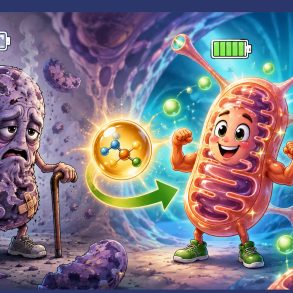



Aging, memory loss, and diseases like Alzheimer’s are not just random events. They are driven by physical damage happening inside brain cells. One of the biggest causes of that damage is a protein called tau. In January 2026, scientists at the University of New Mexico announced a discovery that could change how we fight brain aging and dementia by removing toxic tau directly from human neurons.
This research is not just about understanding disease. It is about protecting memory, independence, and quality of life as people grow older.
What Is Tau and Why It Becomes Harmful
Tau is a protein that normally helps brain cells keep their shape and transport nutrients. Inside every neuron, tau acts like support beams that keep everything running smoothly.
But as people age, tau can become chemically altered. When this happens, it stops working properly and starts sticking to itself. These clumps, called tangles, build up inside neurons and block the movement of vital materials. Over time, this chokes the cell and causes it to fail.
These toxic tau tangles are found in Alzheimer’s disease and more than 20 other brain disorders. They are strongly linked to memory loss, confusion, personality changes, and the slow decline people fear most as they get older.
Why Tau Matters More Than Amyloid
For years, drug companies tried to treat Alzheimer’s by removing amyloid plaques from the brain. But most of those drugs did not stop people from losing memory or thinking ability.
That failure pushed scientists to focus on tau. Unlike amyloid, tau lives inside neurons and directly damages the cells that store memories and control thinking. If tau can be removed or stopped, neurons may survive much longer.
Researchers at the University of New Mexico found that a single enzyme called OTULIN controls how much tau neurons make.
OTULIN was previously known for helping regulate inflammation and cellular cleanup. But the scientists discovered it also acts like a master switch for tau production.
When they blocked OTULIN, tau stopped being produced. Even more important, tau that had already built up inside neurons was cleared away.
This was tested in human brain cells, including cells taken from a person who had Alzheimer’s.
The Most Important Finding
The most shocking result was not just that tau disappeared.
The neurons stayed healthy.
“Neurons can survive without tau,” said Dr. Karthikeyan Tangavelou, one of the lead scientists. “They are looking healthy, even with the tau removed.”
This means toxic tau is not only harmful, it is not even necessary for adult brain cells to survive. Removing it may allow neurons to function normally again.
What This Means for Brain Health and Aging
Tau buildup is a major driver of brain aging. As tau accumulates, inflammation rises, protein cleanup slows down, and neurons begin to fail.
By turning off OTULIN, the scientists also changed many genes involved in inflammation and cellular repair. This suggests that stopping tau production may also calm brain inflammation and restore balance between protein buildup and protein cleanup.
The researchers believe OTULIN may be one of the main switches that controls how fast the brain ages.
If this approach works in future studies and in people, it could lead to therapies that:
• Slow or stop Alzheimer’s disease
• Protect memory and thinking
• Reduce brain inflammation
• Delay or reverse brain aging
• Preserve independence in older adults
Instead of treating symptoms, doctors may one day remove the toxic protein that causes the damage in the first place.
This discovery opens the door to an entirely new way of protecting the brain. Rather than trying to clean up damage after it happens, scientists may be able to prevent it by shutting down the production of toxic tau.
The University of New Mexico team is now working on further studies to understand how OTULIN behaves in different brain cells and how it can be safely targeted.
Their long term goal is bold but simple.
To help people keep healthy, sharp, and independent minds for much longer than ever before.