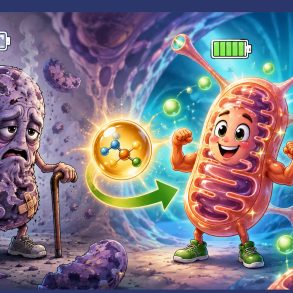



For decades, scientists believed the adult brain could not make meaningful numbers of new neurons. That idea has steadily changed. New research now suggests that even aging brains may be able to restore their ability to generate new brain cells, if the right biological switches are turned back on.
Two major research efforts, one from Asia and one from the United States, are shedding light on how aging neural stem cells lose their regenerative power and how that decline might be reversed.
One major study comes from researchers at the National University of Singapore, working at the Yong Loo Lin School of Medicine. The research was led by Assistant Professor Ong Sek Tong Derrick, with Dr. Liang Yajing as first author, and was published in Science Advances.
A second line of research comes from Stanford Medicine. This work was led by geneticist Anne Brunet and published in the journal Nature. Together, these studies explore different biological pathways that influence whether aging brains can still produce new neurons.
Restoring Aging Neural Stem Cells
Neural stem cells are specialized cells that can divide and give rise to new neurons. In young brains, these cells help support learning, memory, and repair after injury. As the brain ages, neural stem cells become less active and stop dividing at healthy levels.
The Singapore team identified a key protein called cyclin D binding myb like transcription factor 1, or DMTF1. In aging neural stem cells, levels of DMTF1 drop sharply. The researchers found that restoring DMTF1 expression was enough to rescue the regenerative capacity of these aged cells.
Their experiments used neural stem cells from humans and laboratory models designed to mimic accelerated aging caused by telomere dysfunction. Telomeres, which cap the ends of chromosomes, shorten over time and serve as a biological marker of aging. When telomeres became dysfunctional, neural stem cells lost their ability to multiply. Raising DMTF1 levels reversed that defect.
How This Relates to Brain Cell Regeneration
New neuron production, also called neurogenesis, depends on neural stem cells being able to divide, survive, and mature. When stem cells fail, neuron production falls. This decline is linked to memory loss, slower learning, and higher risk of neurodegenerative disease.
By restoring DMTF1, the Singapore researchers showed that aged neural stem cells could once again proliferate. This directly connects the health of stem cells to the brain’s ability to replace neurons that are lost or damaged over time.
The Stanford team approached the same problem from a different angle. Instead of focusing on transcription factors, they studied metabolism. Using CRISPR gene editing, they searched for genes that keep old neural stem cells in a dormant state. One standout was GLUT4, a glucose transporter protein. When GLUT4 was knocked out in aged neural stem cells, those cells became active again and began producing new neurons.
The Biological Mechanism Behind the Effect
DMTF1 works as a transcription factor, meaning it controls which genes are turned on or off. The Singapore study found that DMTF1 regulates helper genes such as Arid2 and Ss18. These genes help open tightly packed DNA so that growth related genes can be activated. Without this DNA opening process, neural stem cells lose their ability to renew.
In aged cells, DMTF1 repression shuts down this entire system. Restoring DMTF1 reopens access to growth programs and restarts cell division.
In the Stanford research, excess glucose uptake appeared to keep old neural stem cells inactive. By blocking GLUT4, glucose levels inside the cells dropped, triggering reactivation. The results suggest that metabolism and energy sensing play a major role in stem cell aging.
What the Results Show
The Singapore study demonstrated statistically significant improvements across multiple laboratory measures. Restored DMTF1 increased cell proliferation, neurosphere formation, and DNA replication markers. The experiments used established statistical testing, with significance defined as P less than 0.05, and involved both mouse models and human derived cells.
The Stanford team observed strong in vivo results. In old mice, knocking out glucose transporter genes led to more than a twofold increase in newly generated neurons. These new cells migrated correctly and matured in the olfactory bulb, showing that they were not just dividing, but functioning as intended.
Together, these findings suggest that aging related decline in neuron production is not permanent. Instead, it may be actively enforced by molecular brakes that can be released.
Assistant Professor Ong noted that impaired neural stem cell regeneration has long been linked to cognitive decline, learning problems, and memory loss. He emphasized that understanding the mechanisms behind regeneration provides a stronger foundation for studying age related cognitive decline.
Dr. Liang said the findings are early but important. He explained that the work offers a framework for understanding how aging associated molecular changes affect neural stem cell behavior and may guide the development of future therapies.
Anne Brunet described the Stanford findings as hopeful. She pointed out that they raise the possibility of pharmaceutical, genetic, or even behavioral interventions, including approaches that adjust glucose metabolism, to reactivate aging neural stem cells.
Looking Ahead
Both research teams stress that the work is still in its early stages. Most experiments were conducted in laboratory settings or animal models. Even so, the implications are significant. Rather than viewing neuron loss as unavoidable, scientists are beginning to map out ways to restore the brain’s natural ability to renew itself.
If these pathways can be targeted safely, future therapies may help aging brains regain lost function, improve memory, and recover more effectively from injury. The old brain, it appears, may be far more capable of renewal than once believed.