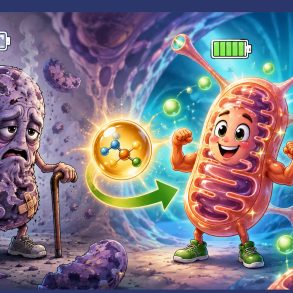



A team of international scientists has created the most detailed computer model of brain metabolism ever developed, and its findings could help reverse age-related mental decline. Built using tens of thousands of data points from both human and animal brains, the model reveals how our brain’s ability to adapt and recover becomes fragile with age. The model also shows promising new ways to restore youthful brain function—some as simple as diet and exercise.
The Most Comprehensive Brain Model Ever Created
The new model maps more than 16,800 biochemical interactions across neurons, supporting cells called glia, and the blood supply. It simulates how the brain processes energy and how that process weakens with age. This makes it the most complete map of the brain’s energy system, or metabolism, ever assembled.
Researchers from the École Polytechnique Fédérale de Lausanne (EPFL) in Switzerland led the project. Their work was part of the Blue Brain Project, an effort to create detailed simulations of the brain. The model is now available through the Open Brain Platform, allowing scientists worldwide to use it for further research.
Dr. Henry Markram, a senior neuroscientist at EPFL, described the model as “an x-ray view into the battery that powers the brain,” noting that scientists can now track how the brain’s energy systems age at the molecular level.
How the Model Was Built and What It Shows
To create the model, scientists pulled together public data on gene activity from brain cells in humans and mice. They focused on the neuro-glia-vascular (NGV) system, which includes neurons, astrocytes (a type of glial cell), and the blood vessels that supply them.
By comparing simulations of young and old brains, the team discovered major shifts in the way the brain produces and uses energy. For instance, older brains had a lower ability to generate electrical signals and struggled to recover from stress or damage. These findings suggest that the brain becomes less flexible and resilient with age because many biochemical pathways begin to fail at once.
Lead author Dr. Polina Shichkova explained, “We showed how the fragility of brain metabolism results from the collapse of many metabolic pathways, not just one.”
A Guide to Anti-Aging Strategies
The model also pointed to practical ways to improve brain metabolism in aging brains. It identified three key changes that could help:
- Lowering blood glucose levels
- Raising ketone levels, such as β-hydroxybutyrate
- Increasing blood lactate levels
These changes can often be achieved through diet and exercise. For example, ketogenic diets and caloric restriction raise ketone levels while lowering glucose. Physical activity boosts lactate levels. All three factors can improve how efficiently the aging brain uses energy.
The team also highlighted a promising supplement—nicotinamide adenine dinucleotide, or NAD. This molecule plays a critical role in cellular energy. The model suggests that boosting NAD levels may help restore energy production in brain cells.
Drug Targets and Deeper Insight
Beyond lifestyle changes, the model identified a transcription factor called estrogen-related receptor alpha (ESRRA) as a possible drug target. ESRRA regulates several genes tied to energy use in cells, especially those connected to mitochondria, the parts of cells that produce energy.
The discovery of ESRRA, along with other aging-related molecular targets, could lead to the development of new drugs aimed at helping brain cells stay healthy longer.
Shichkova emphasized that while some of the model’s predictions need further testing, many suggested treatments are already available. “Some of the suggestions of our model include already approved supplements, dietary changes, or lifestyle habits,” she said.
Accelerating the Fight Against Dementia
One of the most exciting implications of this model is its potential impact on age-related diseases like dementia. With global cases of dementia expected to rise from 57 million in 2019 to over 150 million by 2050, new approaches are urgently needed.
Traditional research methods often struggle to handle the complexity of brain metabolism. This model offers a new way to explore that complexity through simulation. By predicting how different changes—whether genetic, chemical, or lifestyle-based—affect brain function, the model can guide lab experiments and clinical trials more efficiently.
The researchers validated the model against experimental data not used in its design. The simulation correctly predicted how neurons’ biochemical behavior changes with age, confirming its usefulness as a research tool.
A New Chapter in Brain Health
This brain model marks a new era in neuroscience, where computers can help scientists explore aging at a level of detail never before possible. It offers insights into how the brain’s energy systems falter over time and how we might restore them.
Whether through diet, supplements, or future drug development, the model gives researchers a powerful new tool to understand and fight the aging process. As Shichkova put it, “Our findings go beyond what we already knew. Our model offers a detailed molecular mechanism of these practices, which will help guide researchers to develop more precise or effective interventions.”
With continued research, this innovation may not just slow brain aging—it could help prevent or delay the devastating effects of diseases like dementia.