

The remarkable case of a baby cured with a CRISPR-based therapy designed just for him could change how rare genetic diseases are treated
A Baby’s Grim Diagnosis
When Kyle and Nicole Muldoon welcomed their newborn son KJ in the summer of 2024, they were hit with devastating news. Within days of birth, doctors discovered KJ had a rare metabolic condition called CPS1 deficiency. This genetic disorder, which affects just one in every 1.3 million babies, disrupts the body’s ability to process protein, causing toxic ammonia to build up in the blood. For most infants born with the most severe form, the outlook is fatal. Half die within the first week. Those who survive often suffer lasting brain damage and require a liver transplant.
Doctors at Children’s Hospital of Philadelphia initially offered the Muldoons comfort care — an approach that would let KJ pass without painful interventions. But the Muldoons chose to fight for their son.
“We loved him, and we didn’t want him to be suffering,” Nicole said. “But we also wanted to give him a chance.”
What Is Gene Editing?
Gene editing is a technique that allows scientists to directly change the DNA in a person’s cells. The most powerful tool for this is CRISPR, which stands for “clustered regularly interspaced short palindromic repeats.” It acts like a pair of molecular scissors, enabling doctors to snip and replace tiny pieces of DNA.
For many diseases caused by a faulty gene, the idea is simple in theory: find the mutated gene and fix it. But KJ’s case required a completely personalized approach. He had two specific mutations in the CPS1 gene, one from each parent, which meant he couldn’t produce an enzyme necessary to process nitrogen from protein. The result was rising levels of ammonia that could quickly damage his brain.
Building a Cure for One
Dr. Rebecca Ahrens-Nicklas, a pediatric geneticist at Children’s Hospital of Philadelphia, had spent years studying CPS1 deficiency. Her team had been developing a version of gene editing called base editing, which allows single-letter changes to DNA without cutting the entire strand.
She and her collaborators believed they could tailor a treatment specifically for KJ’s mutation. With his parents’ permission, they set to work. In just six months, researchers from across the world, along with biotech firms and U.S. regulatory agencies, developed and tested the experimental therapy in mice and monkeys. With emergency clearance from the FDA, they delivered the personalized treatment — a single infusion directly into KJ’s liver.
The drug was designed to target the exact place in his DNA where the mutation occurred and correct it, enabling his liver to once again produce the crucial CPS1 enzyme.
A Breakthrough in Action
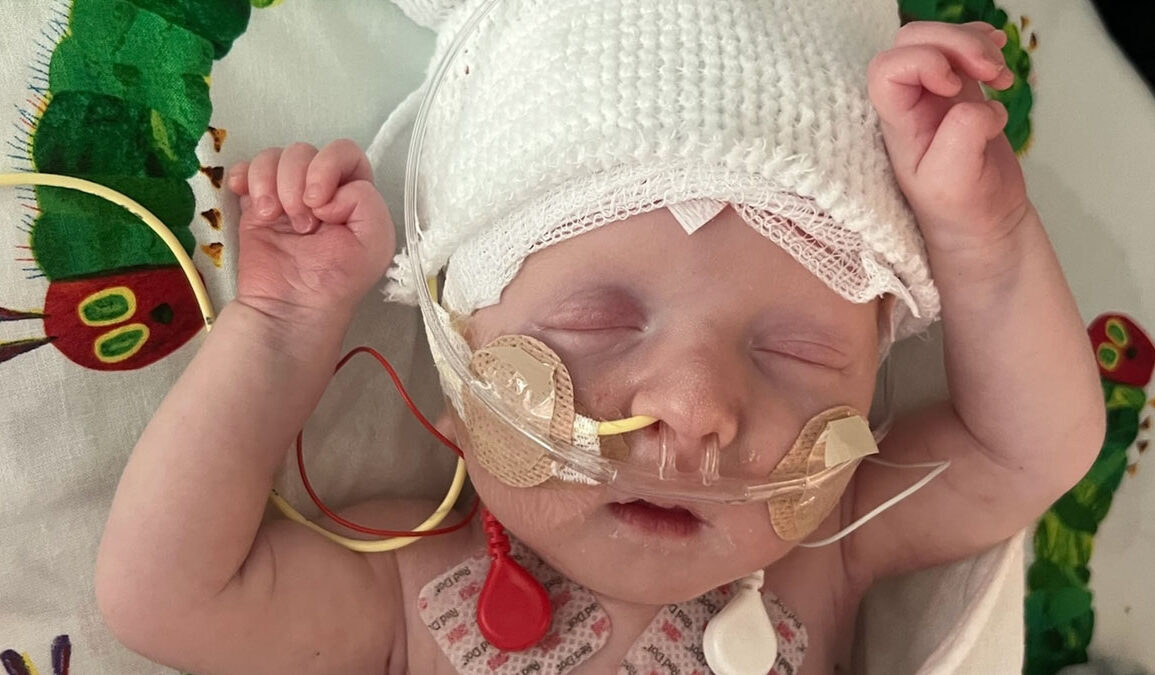
KJ received three infusions of the therapy. Today, at 9½ months old, he is gaining weight, showing no signs of serious side effects, and developing normally. He’s still under close observation at the hospital, but his progress has stunned doctors and brought hope to families around the world.
“Now, when I get to hold him, and he’s laughing and jumping around, that is… very heartwarming, because I didn’t know if that was going to happen at one point,” said Nicole.
His case was published in the New England Journal of Medicine on May 15, 2025, marking a first in medical history: a human treated with a gene-editing drug designed for just one person.
What This Means for the Future
While doctors are careful not to use the word “cure” just yet, many are calling KJ’s recovery a sign of what’s possible. Until now, CRISPR therapies have been designed to treat groups of patients with shared mutations — such as those with sickle cell disease. KJ’s case shows that truly personalized genetic medicine is possible, even for rare conditions no drug company would normally pursue.
“This is mind-blowing, and we should all be very, very excited,” said Dr. Brian Brown, director of the Icahn Genomics Institute in New York City. “We are at day one of the future of how we are going to treat different diseases.”
Though the treatment KJ received is unlikely to help another child with a different mutation, the technique used to build his therapy could. Researchers now hope that similar custom treatments could be developed quickly for thousands of other ultra-rare disorders — many of which have no cure.
Dr. Ahrens-Nicklas believes this is just the beginning.
“This truly is the future for all of these gene and cell therapies,” she said.
As KJ’s first birthday approaches, his survival is already a beacon of hope. He may never know how many lives his story could change, but for now, he’s just a baby learning to smile, laugh, and grow — with a future once thought impossible.