


A groundbreaking study by UCLA Health researchers has revealed a crucial mechanism in the brain’s repair system that could pave the way for the first effective treatment for vascular dementia, the second leading cause of dementia after Alzheimer’s disease.
Understanding Vascular Dementia and Its Challenges
Vascular dementia arises when blood flow to the brain is impaired, leading to progressive damage. It often coexists with Alzheimer’s disease in what’s called “mixed dementia.” Unlike Alzheimer’s, however, vascular dementia has no approved treatments that can reverse or repair the damage, which tends to spread beyond the initial injury sites over time.
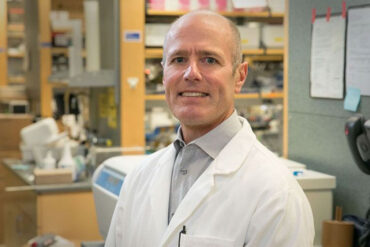
Dr. S. Thomas Carmichael, a professor and chair of neurology at UCLA’s David Geffen School of Medicine, led a multidisciplinary team to investigate why damage in vascular dementia grows and how it might be stopped.
Mapping the Brain’s Disturbed Signaling
The researchers set out to chart every molecule involved in the communication among cells near damaged brain areas, creating what they called the “interactome.” This detailed map showed how cells that usually work together begin to signal abnormally, accelerating injury.
“We reasoned that in regions where damage spreads, normal cell-to-cell interactions break down in toxic ways,” Dr. Carmichael explained. “Identifying those interactions is key to finding treatments.”
One signaling system stood out: the communication between cells lining brain blood vessels and the brain’s immune cells, known as microglia.
The CD39 and A3AR Pathway: A Promising Target
In healthy brain tissue, an enzyme called CD39 and a receptor called adenosine A3 receptor (A3AR) work together to regulate inflammation. CD39 helps produce adenosine, which then binds to A3AR to tone down harmful inflammatory responses.
In vascular dementia, especially in aging brains, both CD39 and A3AR are significantly reduced, removing this natural brake on inflammation and making damage worse.
“The fact that both disease and aging suppress this pathway suggested it plays a critical role in disease progression,” said Dr. Min Tian, the study’s lead author and a postdoctoral scholar at UCLA.
Testing a Drug Already in Human Trials
To see if restoring this pathway could heal the brain, the team tested a drug known as piclidenoson, which is already in clinical trials for psoriasis. In mouse models of vascular dementia, piclidenoson reactivated the CD39-A3AR system, reducing brain damage, improving myelination (the insulation of nerve fibers), and restoring both memory and motor function.
“The most exciting finding was that even when treatment started late, it still worked,” Dr. Tian noted. “That’s important because vascular dementia is often diagnosed after symptoms have progressed.”
The Road to Human Trials
Though these results are highly encouraging, the researchers caution that more work is needed before moving to human studies. The next steps involve refining dosing, identifying biomarkers to monitor the therapy’s effects, and ensuring safety over longer periods.
Still, the discovery marks a major milestone. For the first time, scientists have pinpointed a specific signaling pathway that not only explains how vascular dementia worsens but can be targeted to repair damage.
Dr. Carmichael emphasized that by focusing on how blood vessels and brain cells communicate, the team is addressing the disease at its roots rather than merely managing symptoms.
Vascular dementia affects millions worldwide, often robbing people of memory and independence. This research suggests that a cure—or at least a therapy to halt and reverse damage—might be closer than ever. If future studies confirm these findings, piclidenoson or related drugs could transform how vascular dementia is treated, offering new hope to patients and families.
The full study, Deconstructing the Intercellular Interactome in Vascular Dementia with Focal Ischemia for Therapeutic Applications, is published in the journal Cell and represents a collaborative effort across UCLA’s neurology, pathology, neurobiology, physiology, and psychiatry departments.