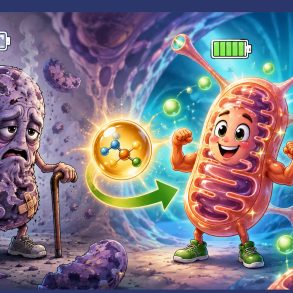



Cedars-Sinai researchers have unveiled an experimental drug called TY1 that may change how doctors treat tissue damage from heart attacks, inflammatory diseases, and other serious conditions. The work, published in Science Translational Medicine, is led by Eduardo Marbán and his team at the Smidt Heart Institute. Marbán credits this breakthrough to years spent studying how stem cell therapies heal the body. He said, “By probing the mechanisms of stem cell therapy, we discovered a way to heal the body without using stem cells.” He describes TY1 as the first exomer, a new category of drugs designed to repair injured tissue by enhancing the body’s own DNA repair systems.
What TY1 Is and How It Repairs DNA
TY1 is a laboratory-made version of an RNA molecule that naturally occurs in the body. Researchers found that the molecule plays an important role in healing after injury. TY1 boosts the activity of a gene called TREX1, which helps immune cells remove damaged DNA. When DNA damage is left behind, tissue becomes inflamed and forms scar tissue. By helping TREX1 clear that damage more efficiently, TY1 allows tissue to repair itself in a more complete way.
Ahmed Ibrahim, the first author of the study, explained that TY1 increases the production of immune cells that reverse DNA damage. This helps prevent the formation of scar tissue after events like heart attacks. Ibrahim said, “By enhancing DNA repair, we can heal tissue damage that occurs during a heart attack.”
Two Decades of Research Behind the Discovery
The story of TY1 spans more than twenty years. It began when Marbán’s lab at Johns Hopkins learned how to isolate progenitor cells from human heart tissue. These cells act somewhat like stem cells but are specialized in repairing heart muscle.
Later at Cedars-Sinai, researchers found that these progenitor cells release tiny sacs called exosomes. These sacs contain RNA molecules that help injured tissue heal. Ibrahim said, “Exosomes are like envelopes with important information.” The team sequenced the RNA inside those exosomes and discovered one RNA molecule that appeared far more frequently than others. In laboratory animals, this molecule helped repair heart tissue after a heart attack.
TY1 is the engineered version of that same RNA molecule. It was built to mimic the structure of already approved RNA drugs and to act as a stable therapeutic. The researchers confirmed that TY1 repairs DNA by enhancing TREX1 activity, which improves tissue healing.
The natural RNA molecule that inspired TY1 showed strong healing effects in laboratory animals, especially after heart attacks. Animals treated with the molecule experienced improved tissue recovery and reduced scarring. The findings were strong enough for Cedars-Sinai to classify TY1 as a prototype for a new class of tissue repair drugs.
Although the published data does not include specific numerical statistics, the studies consistently demonstrated more effective DNA repair and tissue regeneration with TY1 treatment than with untreated controls. These results were seen not only in cardiac injury but also in models of autoimmune disease.
The Potential to Repair Vital Organs
Because TY1 enhances DNA repair, researchers believe it could help protect and restore tissue in vital organs that suffer lasting damage from disease. Heart attacks are the first target. Scar tissue from a heart attack limits oxygen flow and weakens the heart. TY1 could help reverse that damage by supporting natural regeneration.
Researchers are also interested in TY1 for autoimmune diseases. These conditions cause the body to attack healthy tissue, leaving behind chronic damage. Early work suggests that TY1’s DNA repair mechanism could provide a new approach to treating these disorders and protecting vital organs from long-term harm.
TY1 is still experimental and has not yet entered human trials. The Cedars-Sinai investigators say clinical trials are the next step. If results hold up and TY1 proves safe, it could eventually become one of the first drugs specifically designed to repair DNA damage inside injured tissue.
The development timeline for new drugs varies, but early clinical testing could begin in the near future, followed by several years of trial phases before approval.
Scientists are calling TY1 an important scientific milestone because it introduces an entirely new way to heal the body. Marbán said that TY1 repairs tissue “in unexpected ways,” and the team believes it opens a new path for treating a wide range of conditions.
Ibrahim is equally optimistic. “This is an entirely new mechanism for tissue healing,” he said. “It opens new options for a variety of disorders.”
The research community is watching closely because TY1 represents something many labs have pursued for decades: a drug that can help the body fix itself at the level of DNA.
If clinical trials succeed, TY1 could become one of the most significant medical advances in regenerative therapy, offering hope to millions of patients with heart disease, autoimmune disorders, and other conditions that cause irreversible tissue damage.