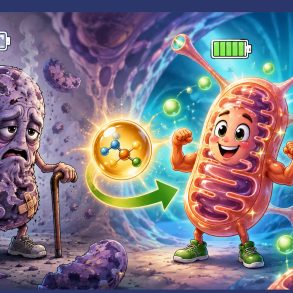



The idea that aging is nothing more than the body breaking down is being challenged in powerful new ways. In a major critical review, Zdeněk Šípek proposes a bold alternative known as the pathogen control hypothesis. He argues that aging is not simply a tragic flaw or a biological accident. Instead, it is an adaptive evolutionary strategy designed to protect families and communities from chronic, sterilizing infections. As the paper reminds us, quoting Theodosius Dobzhansky’s famous line, “Nothing in Biology Makes Sense Except in the Light of Evolution.” When aging is viewed through that evolutionary lens, it begins to look far more like a defense system than a slow collapse.
A New Way of Explaining Why We Age
For decades, scientists have relied on three broad explanations. Some said aging was entropic decay. Others said evolution simply stopped caring about organisms once they reached adulthood. Still others believed aging was the price paid for traits that help reproduction early in life. Šípek’s review shows that these theories fail to explain the reality of aging across different species.
Entropic theories argue that bodies fall apart from oxidative stress, DNA errors, and system failure. But if this were the primary cause, closely related species should age in very similar ways. Instead, creatures like tree squirrels live much longer than ground squirrels despite being almost identical. Neutral theories claim most animals die before they ever reach old age, so evolution never needed to solve aging. Yet real-world studies across mammals, birds, reptiles, and more show many wild animals do live to older ages and experience aging.
Side-effect theories like antagonistic pleiotropy and disposable soma assume the body cannot separate helpful early-life traits from harmful late-life traits. Šípek disputes this, pointing out that modern genetics shows regulatory systems are flexible and capable of evolving solutions. He shows how key predictions of these theories fail when tested in nature, calling these frameworks incomplete and often contradictory.
What It Means to Call Aging a Pathogen Control Strategy
The pathogen control hypothesis reframes aging entirely. Instead of being a mistake, aging becomes a powerful biological tool. A pathogen control strategy is anything that reduces disease spread, protects fertility, and preserves healthy bloodlines. According to Šípek, aging does exactly that.
Older individuals accumulate more infections over time. In ancient, tightly knit populations, disease spread most frequently among relatives. Chronic infections could cripple fertility or wipe out entire genetic lines. Removing older, heavily infected individuals reduced pathogen levels, giving younger kin a better chance to survive and reproduce. Šípek explains that a limited lifespan “functions as a primitive immune strategy,” something deeply built into evolution.
Aging also prevents pathogens from having long windows to adapt and become more dangerous. During population crashes, shorter lifespans may even help wipe diseases out completely, because the last infected individuals die before the population recovers. Aging, in this sense, is not just decline. It is sacrifice for genetic survival.
How Evolution Supports This Strategy
Many critics historically rejected the idea that aging could be adaptive because they believed it required group-level selection. Šípek answers that concern directly. He explains that aging benefits relatives in “viscous populations,” meaning populations where most social interaction happens among kin. Because kin share genes, reducing disease in relatives is enough to satisfy Hamilton’s rule for evolutionary success.
The review points to striking biological evidence. Some unicellular life forms commit suicide when infected to save future generations. Semelparous species like Pacific salmon die rapidly after reproduction in ways that cannot be explained by simple exhaustion. Even more striking, Šípek highlights that “key molecular repair systems are transcriptionally downregulated with age.” In other words, the body intentionally turns off repair programs. He notes that “these systems can be reactivated by interventions,” which strongly suggests aging is at least partly programmed rather than accidental.
Why This Theory Explains More Than Earlier Ones
Šípek argues that when aging is seen as pathogen control, patterns across biology suddenly make sense. Aging is nearly universal because pathogens are universal. Lifespans differ across species because pathogen pressure and social structure differ. Species without clear separation between germline and body cells, like hydra, do not age under normal conditions. But when forced into sexual life cycles under stress, they do age, fitting the model.
The hypothesis also explains why we do not see immortal mutants dominating nature. Šípek writes that long-lived mutants would eventually become “a high-prevalence reservoir for pathogens,” meaning they would collect infections and collapse. Natural selection then favors mechanisms that prevent extreme longevity, creating what he calls “evolvability suppressors.”
Caloric restriction is another powerful example. Classical disposable soma theory said more food should extend life. Reality shows the opposite. Under low-calorie conditions, lifespan often increases. Šípek explains that when reproduction slows during hard times, it is adaptive to delay aging so organisms can reproduce later when conditions improve. This matches observed biology better than earlier theories.
Social Structure, Ecology, and Lifespan
This theory also clarifies why bats and birds live longer. These animals travel more and mix with wider populations, so disease transmission is not limited to kin. Without that kin focus, there is less evolutionary benefit to early death. Eusocial species like bees show finely tuned lifespan differences. Foragers, who face high pathogen risks, die early, while queens and sheltered workers live long. Naked mole rats are an extreme case. Šípek suggests that because infected individuals are eliminated so quickly, aging becomes less necessary as a disease control tool, allowing exceptional longevity.
Even dramatic events like salmon death after spawning now look like targeted strategies to prevent disease spreading into future generations in overcrowded environments.
If aging is deeply tied to immunity, then studying that relationship could reshape geroscience. Šípek calls this “a robust and testable framework.” He urges research into separating immune defense from the aging effects of chronic immune activation. He calls for studying how population structure shapes lifespan, especially in unusual species. He also encourages testing whether species in pathogen-rich environments evolve shorter lifespans more frequently.
A Powerful New Way to Think About Aging
Šípek’s pathogen control hypothesis does not glorify aging and does not deny suffering. Instead, it argues that aging exists because it once protected our kin, preserved bloodlines, and controlled disease in ways our ancestors could never see. It turns aging from a meaningless breakdown into a survival strategy written deep into biology.
By reframing senescence as “a sophisticated, evolutionarily stable adaptation,” Šípek challenges every old assumption. His work suggests that aging and immunity are deeply linked, and that understanding this connection may shape the future of medicine and aging science in profound ways.
ACZ Editor: This is definitely food for thought. One odd point that I almost passed over is that the evolutionary theory for why fasting improves lifespan – and of course it appears to mean that your sex drive turns off during that time. Hmmm…