

A New Drug Pricing Push Takes Shape
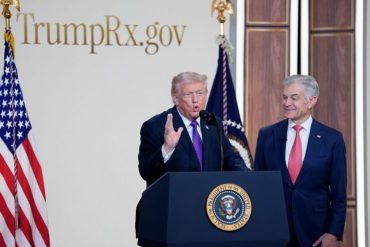
The Trump administration has officially launched TrumpRx, a new government-backed drug discount program unveiled on February 6, 2026. The initiative is designed to lower prescription drug prices for Americans who often pay far more than patients in other developed countries. Announced at the White House by Donald Trump, TrumpRx is being framed as a direct challenge to what the administration calls decades of drug price overpayment.
The program arrives during a heated midterm election year and amid ongoing cost of living pressures. Trump has argued that high drug prices are a clear example of where past administrations talked tough but failed to deliver lasting relief. TrumpRx, he says, is different because it is already producing measurable price cuts.
What TrumpRx Is and How It Works
Despite early headlines, TrumpRx is not an online pharmacy. Consumers cannot purchase drugs directly from the site. Instead, TrumpRx functions as a pricing and discount platform. Users search for a medication, print a coupon, and redeem it at a participating pharmacy or licensed stockist.
Many of the coupons are issued under the MAHA label, short for Make America Healthy Again, a campaign led by Health and Human Services Secretary Robert F. Kennedy Jr.. The goal is to reduce out of pocket costs, particularly for patients whose prescriptions are not fully covered by insurance.
At the heart of TrumpRx are what the administration calls Most Favored Nation pricing agreements. Under these deals, drugmakers agree to sell medications in the United States at prices aligned with the lowest paid in comparable high income countries.
A White House statement said the agreements will “ensure Americans pay prices aligned with the lowest in other developed nations, ending decades of overpayment and delivering immediate relief.”
Drug companies that sign on avoid potential import tariffs and, in some cases, receive temporary tariff exemptions in exchange for lower prices and commitments to invest in US manufacturing.
Real Price Cuts, Not Just Rhetoric
The administration has pointed to concrete examples of savings that are already live on TrumpRx.gov.
According to the White House, monthly prices for popular GLP 1 medications have dropped sharply. Ozempic falls from about $1,028 per month to an average of $350 and as low as $199 depending on dosage. Injectable Wegovy drops from $1,349 to an average of $350, with some doses priced as low as $199. The Wegovy pill version falls as low as $149. Zepbound drops from $1,088 per month to an average of $346.
Fertility treatments, often paid fully out of pocket, show some of the steepest cuts. Gonal F drops to as low as $168 per pen. Cetrotide falls from $316 to $22.50. Ovidrel drops from $251 to $84. The administration estimates families could save more than $2,000 per treatment cycle.
Trump’s Centers for Medicare and Medicaid Services administrator Mehmet Oz joked at the launch that the lower fertility drug prices could lead to “a lot of Trump babies with these costs.”
TrumpRx is expected to be most valuable for uninsured Americans or those facing high deductibles and uncovered medications. The program itself advises insured users to check their copays first, noting they may already pay less through their insurance plans.
Health economist Matthew Klebanoff of the University of Pennsylvania described TrumpRx as progress but not a complete solution. “We need a more fundamental overhaul of how we set drug prices in the US,” he said, noting that manufacturers can still charge what the market will bear in many cases.
Trump Did What Others Could Not
Supporters argue TrumpRx stands out because it relies on leverage rather than slow moving legislation. By tying lower prices to tariff threats and market access, they say Trump succeeded where others stalled.
The TrumpRx website declares, “Thanks to President Trump, the days of Big Pharma price gouging are over.” Backers view the program as a populist win and a rare example of immediate, visible cost reductions in healthcare.
Skeptics Question the Broader Impact
Critics remain cautious. Juliette Cubanski of the Kaiser Family Foundation said there is “a real question about the value of this for people with insurance,” warning that some out of pocket costs may remain unaffordable.
Others point out that TrumpRx focuses on brand name drugs, even when cheaper generics exist. Klebanoff cited Protonix, listed at about $200 per month, while its generic equivalent costs roughly $10.
There is also limited public transparency about the exact terms of the agreements. A previous KFF analysis noted that details of the Most Favored Nation deals remain confidential.
A Clear Feather in Trump’s Cap
Despite the skepticism, TrumpRx represents a tangible shift in how drug pricing is being tackled. Prices are already lower for dozens of high cost medications, and more drugs are expected to be added.
In a policy area where presidents have promised reform for decades, Trump has delivered something measurable and immediate. For millions of Americans paying sky high prices at the pharmacy counter, TrumpRx may not solve every problem, but it clearly moves the needle.