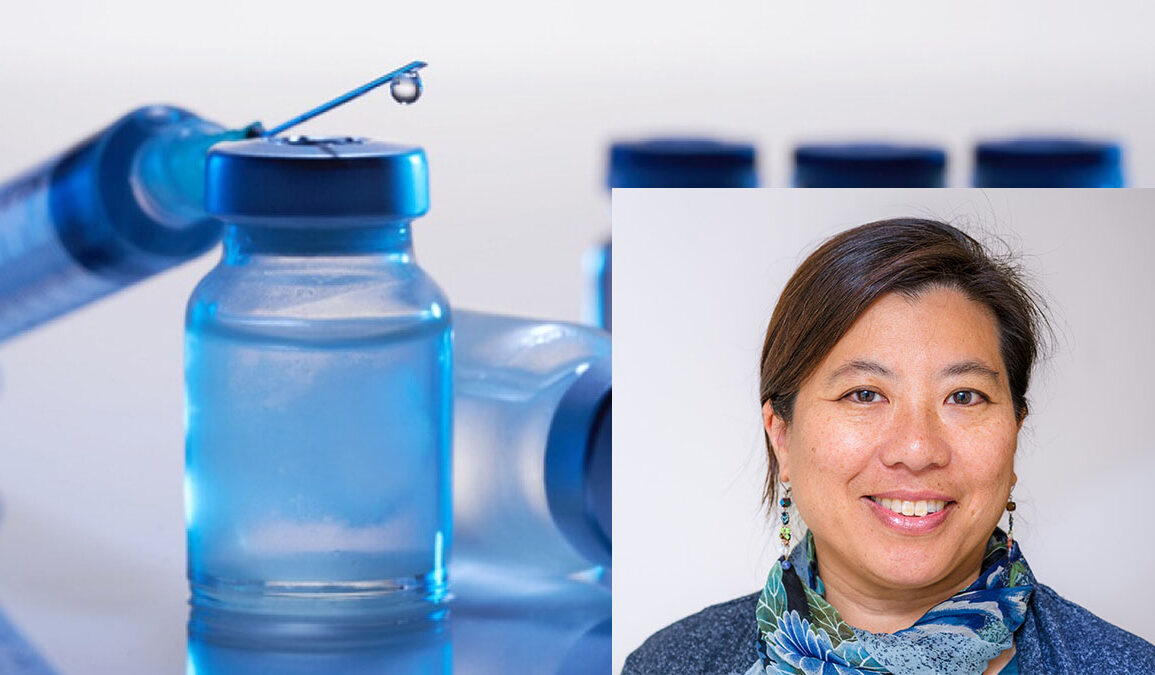
Cancer treatment may be on the verge of a major transformation, thanks to groundbreaking work led by Dr. Catherine Wu. Her innovative research into personalized cancer vaccines has delivered remarkable results, offering hope that a new era of cancer treatment is approaching. Recent trials have shown that these vaccines, designed to train the immune system to recognize and attack cancer cells, have kept patients cancer-free for nearly three years. This breakthrough raises the question: how soon will these vaccines be available to the general public?
The Science Behind Personalized Cancer Vaccines
Dr. Catherine Wu, a physician-scientist at Dana-Farber Cancer Institute, has been pioneering research into personalized cancer vaccines for over a decade. Unlike traditional vaccines that prevent disease, these therapeutic vaccines aim to treat existing cancers by harnessing the body’s immune system to target tumor-specific proteins known as neoantigens. These neoantigens arise from mutations unique to cancer cells, making them ideal targets for immune attack.
“Our innovation is that we were among the first to identify tumor-specific peptides that are recognized by the immune system—so-called antigens—through genomic approaches,” said Wu. “These ‘neoantigens’ originate from cancer mutations, setting up the possibility of specific targeting of the cancer cell and not normal tissue.”
Using advanced sequencing technology, Wu’s team identifies these neoantigens from an individual’s tumor and then manufactures a personalized vaccine that stimulates the immune system to recognize and destroy any remaining cancer cells after surgery.
Recent Trial Results: A Game-Changer
The most recent clinical trial, conducted at Dana-Farber Cancer Institute, focused on nine patients diagnosed with stage III or IV clear cell renal cell carcinoma, a form of kidney cancer. Each patient received a personalized vaccine after undergoing surgery to remove their tumors. Five of the nine patients also received an immunotherapy drug, ipilimumab, alongside the vaccine.
The results, published in Nature, have been nothing short of remarkable. At the time of data analysis—34 months after vaccination—all nine patients remained cancer-free. The vaccine effectively trained their immune systems to recognize and eliminate cancer cells before they could return.
“We’re very excited about these results, which show such a positive response in all nine patients with kidney cancer,” said Dr. Toni Choueiri, co-principal investigator of the study. “The tools we have to lower the risk of recurrence are not perfect, and we are relentlessly looking for more.”
Dr. Wu echoed this enthusiasm, stating, “We are thrilled to report these results. This study was the result of a close partnership between our NeoVax team, our colleagues at the Broad Institute of MIT and Harvard, and our colleagues at Dana-Farber.”
Challenges and the Path to Widespread Use
While the trial results are promising, there are still hurdles to overcome before personalized cancer vaccines become widely available. One of the biggest challenges is scalability. Since each vaccine is tailored to an individual’s unique cancer mutations, manufacturing them quickly and cost-effectively remains a complex process.
Dr. Wu acknowledges this issue but remains optimistic. “Given the challenge of coordinating the many parts of vaccine manufacture, this is an instance where partnering with industry is helpful. They have the resources to develop processes at scale, streamlining costs, time, and labor.”
Additionally, larger clinical trials are needed to confirm the efficacy of these vaccines across a broader population. Wu and her team are currently conducting studies on other cancers, including glioblastoma, ovarian cancer, melanoma, and chronic lymphocytic leukemia. Pharmaceutical companies have also launched large-scale, industry-sponsored trials that could provide more definitive answers within the next two years.
When Will Cancer Vaccines Be Available to the Public?
The question many are asking is: how soon can cancer patients expect to receive these vaccines outside of clinical trials? According to Dr. Wu, the answer is “sooner than we think.”
“Many large trials are ongoing now, and I do think that they’ll read out within two years,” she stated. “I hope that sometime in the not-too-distant future our patients can go to a clinic and say, ‘Order me up a vaccine personalized for my cancer,’ and we’ll be able to administer it on-site.”
If these trials continue to show positive results, personalized cancer vaccines could become a standard part of cancer treatment, reducing recurrence rates and potentially eliminating cancer in its early stages. While challenges remain, Dr. Wu’s research is setting the stage for a revolution in oncology, one where cancer vaccines are not just a possibility but a reality.
The Future of Cancer Treatment
For decades, cancer researchers have searched for ways to make treatments more effective and less harmful. Personalized cancer vaccines represent a major leap forward, offering a treatment that is not only tailored to each patient but also capable of providing long-term immunity against recurrence.
Dr. Wu’s work has already earned her the prestigious Sjöberg Prize for her contributions to the field, and her continued dedication to cancer vaccine development is bringing the medical world closer to a future where cancer is no longer a deadly disease but a treatable condition.
With large-scale trials expected to conclude within the next few years, the possibility of cancer vaccines being available at clinics is now within reach. If successful, this breakthrough could redefine how we approach cancer treatment—turning what was once a death sentence into a manageable disease.