

Wartime chemistry and an accidental discovery
Superglue began as a wartime curiosity. In 1942, Eastman Kodak scientist Harry Coover was trying to create clear plastic gunsights for soldiers. He stumbled on a compound called cyanoacrylate. It bonded so quickly and so strongly that it was shelved as “too sticky” for the job. A decade later, Coover revisited the material, recognized its unique ability to glue without heat or pressure, and patented it. What started in a defense lab soon found its way into factories and homes as an all-purpose adhesive.
The first medical use in combat
Its lifesaving role came into focus in Vietnam. An Army history recounts that “during the Vietnam War, medical teams caring for severely injured Soldiers realized the material, marketed as Super Glue, was helpful for sealing bloody wounds and to stop bleeding until the patient could be transported to a medical unit.” Coover “took great pride in the fact that his glue saved the lives of many Soldiers injured in combat.” This field improvisation showed that a fast, strong bond could create precious time between injury and surgery.
Why fast adhesion matters in emergency care
Stopping blood loss quickly is the difference between life and death in trauma. The Department of Defense has poured effort into better hemorrhage control because seconds matter. As one Mayo Clinic physician put it in recent work on next-generation glues, “We are technically capable of carrying out a lot of complicated surgeries, but we have not really advanced as fast in the ability to control especially severe bleeding expeditiously.” Adhesives can seal fast, stabilize the patient, and reduce the time to definitive care when every minute counts.
From cyanoacrylates to bioinspired pastes
Modern research is taking the idea far beyond the original cyanoacrylates by learning from nature. An MIT and Mayo Clinic team looked at barnacles, which cling to wet, dirty surfaces in pounding surf. “We found that this creature living in a marine environment is doing exactly the same thing that we have to do to deal with complicated bleeding issues,” said MIT research scientist Hyunwoo Yuk. The team created a paste by mixing medical-grade silicone oil with adhesive microparticles. The oil sweeps away blood and contaminants, and the particles latch onto tissue. Pressed onto a wound, the seal forms in roughly 15 seconds and holds for weeks, then safely dissolves inside the body. If doctors need access sooner, they can apply a special solution to break the bond without harming nearby tissue.
A seal that adapts to messy wounds
Trauma wounds are rarely neat. Flat adhesive tapes struggle with irregular shapes. MIT postdoc Jingjing Wu explained the advantage of a paste: “The moldable paste can flow in and fit any irregular shape and seal it.” In animal studies, the paste rapidly stopped liver bleeding. It worked even when strong blood thinners were used, outperforming commercial agents in tests.
Sealing a beating heart
Another group pushed glues into the hardest places to seal. A Harvard Medical School team developed a waterproof, UV-activated adhesive inspired by the way slugs stick to wet surfaces. They reported that “we have developed a surgical glue that can be used in open and more invasive procedures and seal dynamic tissues such as blood vessels and the heart, as well as the intestines.” In pig studies, the glue patched cardiac defects within seconds and withstood the constant forces inside the heart and major vessels. A British Heart Foundation scientist noted that the cardiovascular system is “a dynamic environment where there is continuous blood flow and tissue contractions,” and praised the innovative approach while calling for longer-term data.
Saving vision under fire
Modern warfare has brought a rise in eye injuries. “The rate of war-related ocular injuries has steadily increased from a fraction of a percent to as high as 10 to 15 percent,” said USC’s John Whalen. In response, USC researchers created a reversible, temperature-sensitive seal for the eye. The hydrogel is cooled to a liquid for easy application, then warms on contact into a semi-solid that stabilizes the injury. When surgeons are ready to repair the eye, cool water turns it back into a less adhesive state for gentle removal. The team also designed a field-ready syringe with a built-in cooling chamber so medics can deploy the gel quickly. The goal is to cut stabilization from “30 minutes or longer to less than five minutes,” said Mark Humayun.
Stick fast, then let go on demand
Surgeons often need a seal that is strong now but removable later. A separate line of research produced a bioadhesive that bonds instantly to wet tissue and detaches when asked. The material uses polymers such as polyvinyl alcohol and poly(acrylic acid) and a compound called NHS ester to create a mix of weak and strong bonds. A mild solution of baking soda and glutathione breaks those bonds, allowing the glue to lift off. In testing, it sealed leaks in lungs and was removed from a beating pig heart without damage. This on-demand release could make repositioning devices or reopening a wound site far safer.
From battlefield kits to operating rooms
Across these advances, the direction is clear. Early battlefield use proved the concept that fast adhesion saves lives. New materials bring precision, biocompatibility, and control to the idea. As MIT’s Xuanhe Zhao summarized, “We are solving an adhesion problem in a challenging environment, which is this wet, dynamic environment of human tissues. At the same time, we are trying to translate this fundamental knowledge into real products that can save lives.” The result could be shorter operations, fewer punctures from sutures and staples, less scarring, and faster recovery.
Superglue’s journey also shows how defense research drives civilian breakthroughs. “Every single day, people engage with DOD-funded research,” said Jeff Decker of Stanford’s Technology Transfer for Defense Program. “The core goal is knowledge.” Night vision, GPS, and blood banking came from similar efforts. As colonel-turned-engineer Bradford Parkinson reflected about spillover benefits, “They are spread around, like peanut butter.”
The promise of next-generation medical glues is practical and immediate. First responders could carry tubes of moldable paste to stop bleeding in seconds. Medics could stabilize eye injuries on the spot. Surgeons could seal a lung, then lift the adhesive cleanly when they need access. As Claudia Cohn observed about the broader pattern, “Military research has a long history of creating or developing technology that is then transferred to the civilian setting and has helped humankind.” Superglue began as a sticky problem in a defense lab. Its evolution is turning into a quiet revolution in emergency and surgical care.
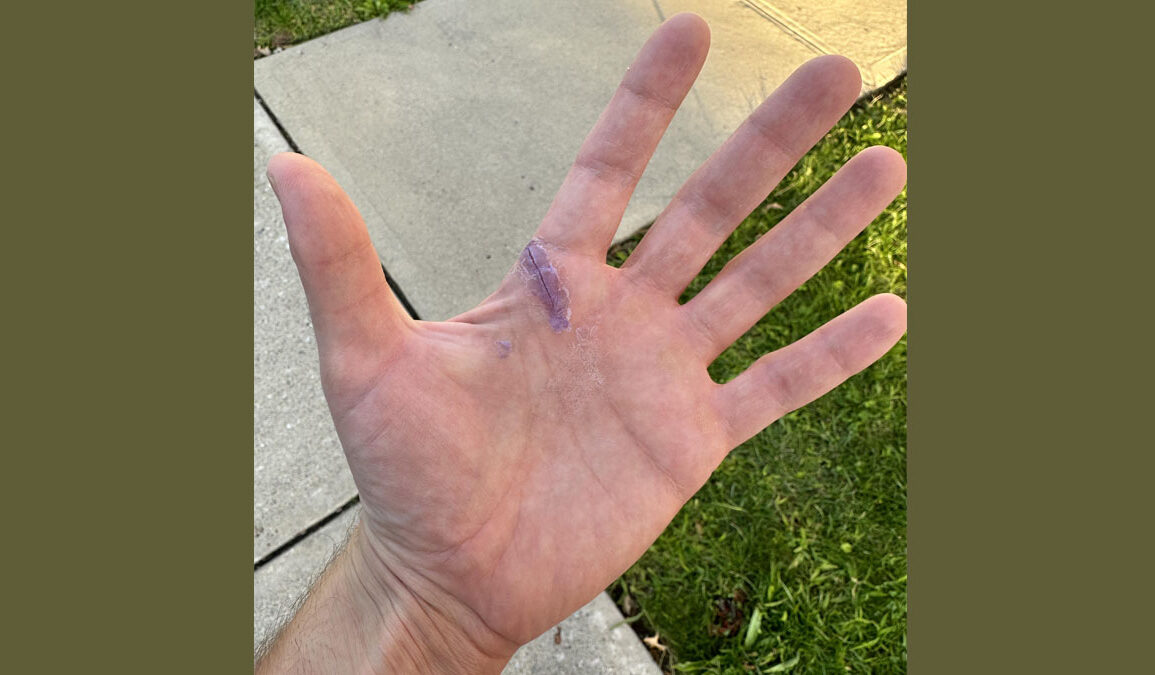
HNZ Editor: I wrote about this because I had a callus on my foot that cracked. I glued it together with super glue and it is still holding after a week. How many people have been saved by this? Thousands? Tens of Thousands? More?