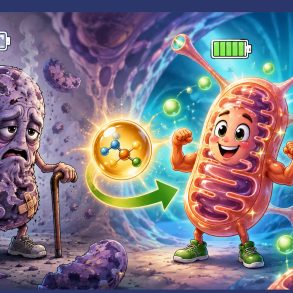



Scientists at the University of California, Berkeley have uncovered one of the most dramatic life-extension results ever recorded in mammals. In a series of studies led by first author Cameron Kato and corresponding author Irina M. Conboy, researchers found that an inexpensive two-drug combination extended the lives of extremely old male mice by more than 70 percent. Their work, published in Aging-US, suggests that certain biological pathways may be far more reversible than once believed.
This research focused on a therapy that combines two widely accessible components: oxytocin and an Alk5 inhibitor. The findings show that when these drugs work together they can reverse key aging processes, restore youthful protein patterns in the blood, and dramatically improve strength and cognition. As the authors wrote, “These findings establish the significant health-span extension capacity of OT+A5i and emphasize the differences in aging and in response to longevity therapeutics between the sexes.”
What the Drug Combination Is and How It Works
The therapy tested in the study brings together two agents with different but complementary effects. Oxytocin is a natural hormone that supports tissue repair but declines with age. The Alk5 inhibitor blocks the TGF-beta pathway, which becomes overactive with age and contributes to inflammation and cellular decline.
The researchers tested their approach on frail mice at 25 months of age, a stage comparable to about 75 years in humans. These elderly mice received regular doses of the combined therapy, known as OT+A5i. The treatment targeted the age-related increase in biological noise found in circulating proteins and aimed to restore stability in the body’s regulatory systems.
Results That Surprised Even the Scientists
The effects on elderly male mice were remarkable. Treated males lived more than 70 percent longer than untreated controls. They also showed significant improvements in agility, endurance, memory, and overall vitality. Hazard ratio analysis showed that treated males were almost three times less likely to die at any given moment compared with untreated mice.
As the researchers summarized, “Treatment of old frail male mice with OT+A5i resulted in a remarkable 73 percent life extension from that time, and a 14 percent increase in the overall median lifespan.” The therapy even restored a youthful balance in blood proteins and reduced the chaotic fluctuations that signal aging.
The visual and behavioral changes were equally striking. The treated male mice moved more confidently, behaved with greater alertness, and performed better in physical and cognitive tests. They appeared noticeably more energetic and less fragile than untreated males of the same age.
Why Female Mice Responded Differently
One of the most important findings in the study is that the treatment was far less effective in females. Female mice experienced short-term improvements, and middle-aged females showed increased fertility, but the long-term benefits in lifespan and healthspan appeared only in males.
The study emphasizes that this disparity highlights powerful sex-specific differences in aging. The authors note that the reasons for the difference are still unclear, but the research provides a valuable model for studying how longevity therapies may need to be tailored differently for men and women.
How Close Is This to Human Use
One of the most notable aspects of this discovery is that both components of the treatment are already accessible. Oxytocin is FDA-approved, and Alk5 inhibitors are currently being studied in clinical trials. This means the therapy could move relatively quickly toward human testing if further research supports its safety and effectiveness.
The researchers suggest that if similar results occur in humans, this approach could someday help extend life and improve health for frail elderly people, especially men. The fact that the therapy worked on mice equivalent to 75 years old in human terms makes the findings even more promising.
The study has generated excitement because it brings together three powerful advantages: dramatic life-extension results, improvements in physical and cognitive function, and the use of drugs that are already within reach of medical science. Scientists believe this work opens the door to new possibilities for treating age-related decline and understanding the deep biological mechanisms behind aging.
While no one knows yet how well OT+A5i will work in humans, the research provides a compelling case for continued exploration. The combination of oxytocin and an Alk5 inhibitor has proven to be one of the most promising anti-aging strategies tested in mammals to date. If future studies confirm these effects, this simple drug pair could transform the science of aging and the future of human health.