

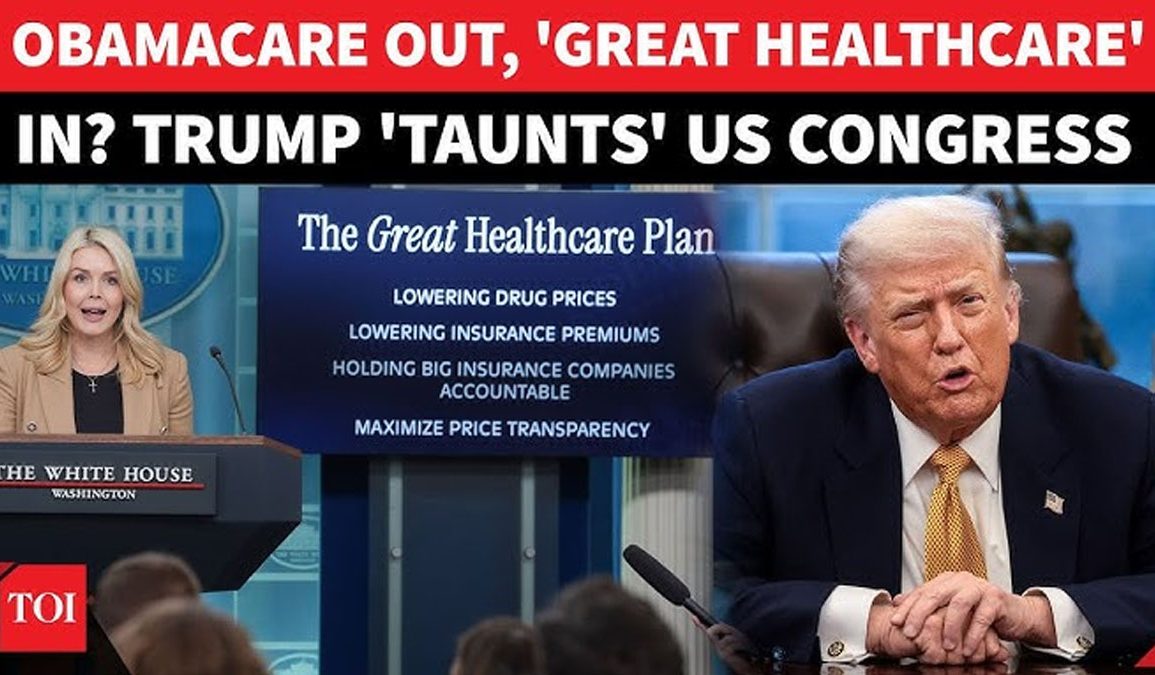
President Donald J. Trump has unveiled what he calls The Great Healthcare Plan, a sweeping framework he says is designed to finally fix a healthcare system warped by rising prices, corporate favoritism, and what he repeatedly calls the failure of Obamacare. The proposal is being framed by the White House as a direct response to soaring premiums, exploding drug prices, and voter anger over affordability.
“This is about making healthcare affordable again,” Trump said in his announcement. “We are doing things that nobody’s ever been able to do. We’re calling it The Great Healthcare Plan.”
From Trump’s perspective, the plan is not an adjustment around the edges. It is a fundamental restructuring of how healthcare money flows in the United States, shifting power away from insurers and middlemen and putting it directly in the hands of patients.
What Trump Has Proposed
The Great Healthcare Plan is built around one central promise. Government healthcare dollars should go to people, not corporations. Trump argues that for decades, and especially under Obamacare, taxpayer money has flowed to insurance companies, pharmaceutical firms, and intermediaries, driving prices higher instead of lower.
“Instead of putting the needs of big corporations and special interests first, our plan finally puts you first and puts more money in your pocket,” Trump said.
The White House describes the plan as comprehensive, combining drug pricing reform, insurance restructuring, and aggressive transparency rules into a single affordability framework.
Lowering Prescription Drug Prices
One of the most prominent features of the plan is the expansion and codification of most favored nation drug pricing. Under this approach, Americans would pay no more than the lowest price paid for a drug anywhere else in the world.
“So instead of Americans paying the highest drug prices in the world, which we have for decades, we will now be paying the lowest cost paid by any other nation,” Trump said. “That’s what we’re going to pay, and the American people will get the savings.”
Trump claimed the discounts could be dramatic. “This proposal locks in the massive discount on prescription drugs that my administration is achieving,” he said. “It will bring down drug prices 80, 90 percent in some cases.”
He went further, saying, “Your prescription drugs will come way, way down and, under this policy, the prices of many drugs will be slashed by 300, 400, even 500 percent.”
The plan also calls for increasing the availability of over the counter medicines, which the White House says would reduce unnecessary doctor visits and lower costs for routine care.
Cutting Insurance Premiums
Trump argues that insurance premiums have risen year after year under the Affordable Care Act because government subsidies shield insurers from competition.
“My plan would reduce your insurance premiums by stopping government payoffs to big insurance companies and sending that money directly to the people,” Trump said.
According to the White House, the plan would also fully fund the Cost Sharing Reduction program, a component of existing law that has often been neglected. Officials say this step alone could reduce premiums on the most common Obamacare plans by an average of 10 to 15 percent.
Trump mocked the popularity of those plans but emphasized the savings. “It’s hard to believe there are any because it’s a hated program, it’s unaffordable, but it’s going to cut them by an average of 10 to 15 percent,” he said.
Direct Payments to Americans
Perhaps the most radical shift in the plan is how healthcare funds would be distributed. Instead of subsidies flowing to insurers, Trump proposes sending money directly to individuals through health savings accounts.
“The government is going to pay the money directly to you,” Trump said. “It goes to you, and then you take the money and buy your own healthcare. The big insurance companies lose and the people of our country win.”
Trump described current subsidies as a flagrant scam that benefits insurers while families pay more every year. Under his plan, individuals would choose their own insurance plans and healthcare services, rather than being locked into government designed options.
“I want to put extra money straight into the healthcare savings account in your name,” Trump said. “You go out and buy your own healthcare, and you’ll make a great deal. You’ll get better healthcare for less money.”
Ending Middlemen and Kickbacks
The plan also targets pharmacy benefit managers and insurance brokers, accusing them of quietly driving up costs through hidden kickbacks.
“To further reduce insurance premiums, my plan ends the giant kickbacks to insurance brokers and corporate middlemen that only drive up the costs,” Trump said.
The White House says eliminating these arrangements would lower drug prices and premiums while increasing accountability throughout the system.
Maximum Price Transparency
Transparency is another major pillar of The Great Healthcare Plan. Trump argues that patients cannot make smart choices if prices are hidden.
“As the saying goes, sunlight is the best disinfectant,” Trump said. “That is why my plan orders all the insurance companies to publish rate and coverage comparisons in very plain English.”
Under the plan, insurers would be required to disclose how much of their revenue goes to patient claims versus profits, how often claims are denied, and whether those denials are overturned on appeal. Hospitals and insurers that accept Medicare or Medicaid would have to publicly post all prices.
“You are never going to be surprised,” Trump said. “You can easily shop for a better deal or better care, and you’re going to end up doing both.”
Why Trump Says Obamacare Failed
Trump has long argued that Obamacare was designed to benefit insurers rather than patients.
“Obamacare was designed to make insurance companies rich,” Trump said. “I call it the Unaffordable Care Act, with billions of dollars and taxpayer subsidies that help their stock prices skyrocket as you paid more money for healthcare every single year.”
He points to rising premiums and shrinking choices as evidence that the system is fundamentally broken.
Supporters See a Long Overdue Reset
Supporters say the plan finally addresses the real drivers of healthcare inflation. They praise the focus on competition, transparency, and direct payments as a return to common sense.
White House Press Secretary Karoline Leavitt called the plan “the most comprehensive and bold agenda to lower healthcare costs ever considered by the federal government,” adding that “every single American who has healthcare in the United States will see lower costs as a result.”
Critics argue the plan lacks specifics on funding levels and implementation timelines. Some say direct payments may not be sufficient for lower income Americans and warn that health savings accounts tend to favor higher earners.
Others note that the plan does not extend Obamacare subsidies and faces an uphill battle in a divided Congress.
Despite the criticism, Trump presents The Great Healthcare Plan as a decisive break from what he sees as a destructive and socialist healthcare model.
“We will have maximum price transparency and costs will come down incredibly,” Trump said. “I’m calling on Congress to pass this framework into law without delay so that we can get immediate relief to the American people.”
Whether Congress acts or not, the plan draws a sharp contrast between government centered healthcare and Trump’s vision of a consumer driven system where patients, not corporations, are back in control.