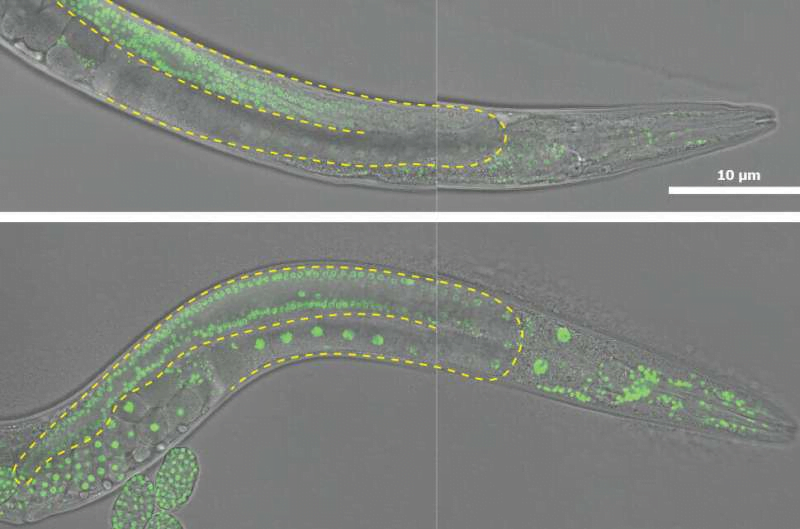
Representative differential interference contrast (DIC) image micrographs of the CRISPR-tagged histones under study. The dashed lines outline the gonads. Credit: Ryan J. Gleason, Johns Hopkins University.
Researchers have spotted how specific proteins within the chromosomes of roundworms enable their offspring to produce specialized cells generations later, a startling finding that upends classical thinking that hereditary information for cell differentiation is mostly ingrained within DNA and other genetic factors.
Read more here: https://phys.org/news/2023-04-worm-embryonic-cells-potential.html