

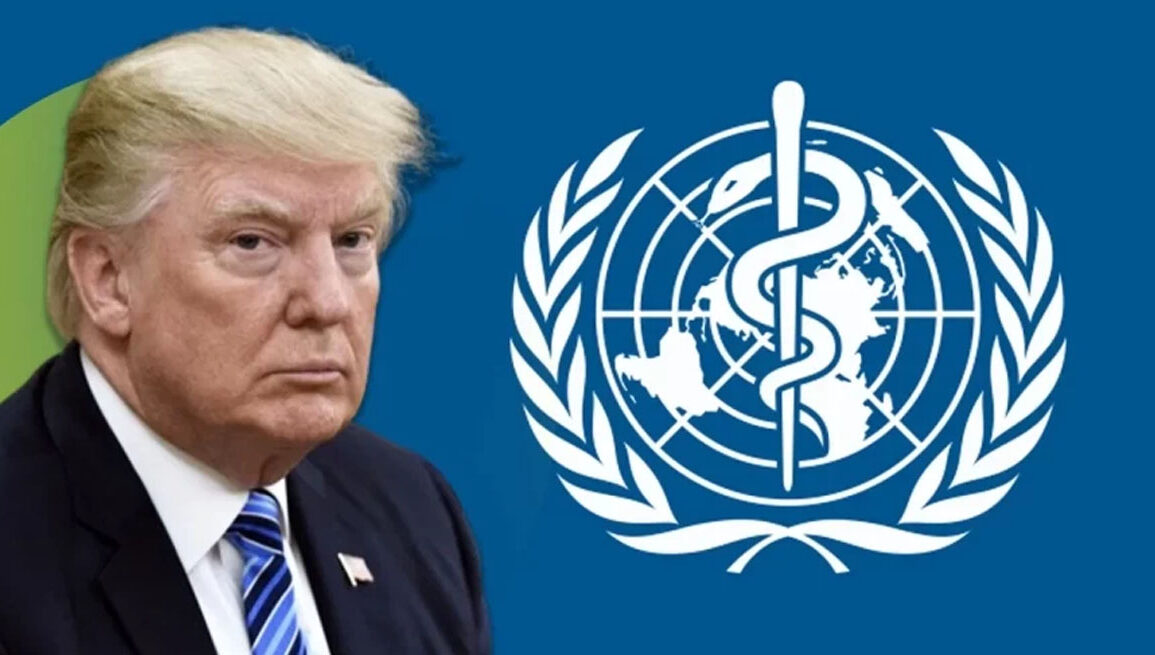
On his first day back in office, President Donald Trump reignited global controversy by announcing the United States’ withdrawal from the World Health Organization (WHO). The decision, which fulfills a campaign promise, has stirred intense debate about its implications for global health, U.S. leadership, and pandemic preparedness. Here’s an in-depth look at the history behind this move, Trump’s rationale, and what the future may hold.
The Role and History of the WHO
Founded in 1948 with strong backing from the United States, the WHO was established as a specialized agency of the United Nations to tackle global health challenges. Its mission, as stated on its website, is to “confront the biggest health challenges of our time and measurably advance the well-being of the world’s people.” Over the decades, the organization has spearheaded efforts to combat pandemics, track emerging diseases, and provide medical aid in underserved and war-torn regions. The WHO’s work has been critical in addressing health crises like Ebola, Zika, and, most recently, COVID-19.
The organization operates on a biennial budget of approximately $6.8 billion, with contributions from its 194 member states. The United States has historically been the largest donor, contributing $1.284 billion during the 2022-2023 period alone, which is significantly more than the next-largest donor, Germany. These contributions have granted the U.S. substantial influence within the organization, but they have also made the country’s withdrawal a deeply impactful decision.
Trump’s Rationale for Withdrawal
President Trump’s grievances with the WHO date back to his first term, particularly during the COVID-19 pandemic. He has repeatedly criticized the organization for being too slow to respond to the initial outbreak in Wuhan, China, and for allegedly relying too heavily on information provided by Chinese authorities. In his executive order announcing the withdrawal, Trump stated that the WHO “failed to adopt urgently needed reforms” and accused the organization of being influenced by “inappropriate political pressures” from member states.
“The WHO continues to demand unfairly onerous payments from the United States, far out of proportion with other countries’ assessed payments,” Trump said, adding that China, with a population of 1.4 billion, contributes nearly 90% less to the organization than the U.S.
Another major point of contention is the WHO’s work on a proposed “pandemic treaty,” which aims to strengthen global preparedness for health crises. Some conservatives in the U.S. view this treaty as a potential threat to national sovereignty, fearing it could impose legally binding obligations on member states. Trump’s decision to withdraw reflects these concerns, as his executive order explicitly instructed the U.S. to cease negotiations on the treaty and other amendments to international health regulations.
Immediate and Long-Term Consequences
The withdrawal process, as outlined in the WHO’s founding agreement, requires a one-year notice and payment of outstanding financial obligations for the current fiscal year. If the process is completed, the implications for both the U.S. and global health efforts will be far-reaching.
- Loss of Global Data and Coordination: One immediate consequence is the loss of access to critical global health data. The Centers for Disease Control and Prevention (CDC) relies heavily on the WHO’s data-sharing networks to monitor outbreaks and coordinate responses. For example, when China first sequenced the genetic makeup of the novel coronavirus in 2020, it shared this information with the WHO, which then disseminated it to other countries.
- Diminished U.S. Influence: The withdrawal would mean the U.S. forfeits its leadership role in setting international health standards and policies. Critics argue this would create a vacuum for other nations, particularly China and Russia, to assert greater influence within the organization. Lawrence Gostin, a public health law expert at Georgetown University, called the decision “a grievous wound to public health but an even deeper wound to American national interests and national security.”
- Financial Strain on the WHO: As the largest donor, the U.S. provides essential funding that supports many of the WHO’s programs, including those addressing health emergencies in vulnerable regions. Without U.S. contributions, the organization could struggle to maintain its operations at current levels.
Alternative Paths for U.S. Leadership
While critics decry the withdrawal as shortsighted, Trump and his supporters argue that the U.S. can lead global health efforts through other channels. Organizations like GAVI (The Vaccine Alliance) and the Global Fund have demonstrated that effective international health initiatives can exist outside the WHO framework. Brett Schaefer, a research fellow at the Heritage Foundation, noted that “there’s hardly a lack of precedent for addressing pandemic issues outside of the WHO.”
Trump’s executive order also directed the administration to identify “credible and transparent” international partners to assume roles previously handled by the WHO. However, building a new global health framework or coalition would require significant time, resources, and cooperation—challenges that could prove difficult to overcome in the near term.
What’s Next?
The U.S. withdrawal from the WHO marks a significant shift in global health diplomacy. While Trump’s supporters view the move as a necessary step to protect American interests and sovereignty, critics warn it could leave the U.S. vulnerable in the face of future pandemics. Elisha Dunn-Georgiou, president and CEO of the Global Health Council, described the decision as “really bad for the U.S. [in terms of] access to data, to surveillance, to being at the table negotiating and holding other countries accountable when there is an epidemic or pandemic.”
HNZ Editor: In reality this is the first step in a negotiation by Trump, he has put WHO in an untenable position. The U.N. must come to the table and a) require more contributions from others, b) give the U.S. more control and visibility into the organization and c) shut up the critics of the U.S. in this respect. If this happens, WHO will bounce back into a much stronger organization.
If this does not happen, Trump may move to form a different organization outside of the U.N. that others will have to join and pay for. And WHO would be toast.