

What Is Therapeutic Plasma Exchange?
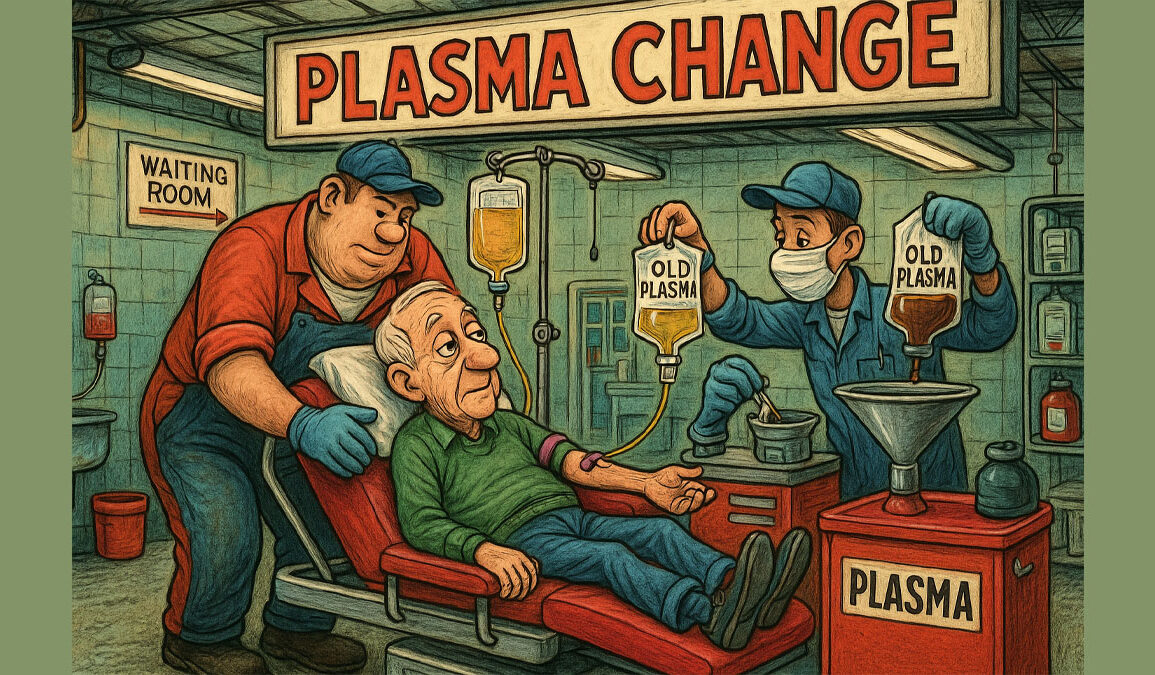
Therapeutic Plasma Exchange (TPE), sometimes called plasmapheresis, is a medical procedure where a person’s plasma—the liquid part of blood—is removed and replaced with a clean substitute such as saline and albumin. Originally developed to treat autoimmune and blood-related diseases, TPE is now attracting attention for its possible role in slowing or reversing the biological aging process.
A recent clinical trial from Circulate Health and the Buck Institute for Research on Aging suggests that TPE, particularly when combined with intravenous immunoglobulin (IVIG), can reduce biological age in humans. This idea builds on years of research showing that changes in blood composition may affect how the body ages.
The Clinical Trial and Its Results
In the first human trial of its kind, researchers tested TPE on 42 participants over 50 years old. Participants were divided into four groups: those receiving biweekly TPE, biweekly TPE plus IVIG, monthly TPE, and a control group. Each group underwent multi-omics profiling—an advanced analysis looking at thousands of biological markers across systems like the epigenome, immune function, and metabolism.
The most dramatic results came from the group receiving TPE combined with IVIG. Their biological age, as measured by molecular markers, dropped by an average of 2.61 years. Those who received TPE alone saw a smaller drop of 1.32 years. Participants with worse health at the start—measured by higher levels of glucose, bilirubin, and liver enzymes—saw the biggest improvements, including gains in balance and muscle strength.
However, the benefits appeared to level off after three sessions. Researchers say future approaches may need to space out treatments or combine TPE with other therapies to keep the rejuvenation going.
How TPE Compares to Earlier Work
The TPE results build on two decades of work from pioneers like Irina and Michael Conboy at UC Berkeley. In a landmark 2005 study, the Conboys connected young and old mice via a procedure called parabiosis, showing that young blood seemed to rejuvenate old tissue. But later work suggested the benefits might not come from “young” factors being added, but from “old” ones being removed.
In a 2020 study, the Conboys replaced half of a mouse’s plasma with a neutral solution and saw similar benefits—improved cognition, reduced brain inflammation, and better muscle and liver health—without using any young blood at all. This hinted that getting rid of age-related toxins might be just as important, if not more so, than adding anything new.
Steve Horvath, the creator of the widely-used epigenetic aging clocks, once skeptical, has since changed his view. While his early human studies saw limited changes, he now acknowledges the field’s progress. “The real surprise is that it affects the epigenome,” he said. “How is that even possible?”
Why It Matters for the Future
The promise of TPE lies in its ability to reset the body’s molecular signals. Just like a computer reboot clears out sluggish code, TPE may help aging cells stop producing harmful proteins and recalibrate to a younger state. For people with chronic inflammation, early-stage dementia, or age-related immune decline, TPE could offer a powerful new tool.
Dr. Matt Kaeberlein of the University of Washington, a veteran aging researcher, has even decided to try TPE himself. “As someone who tends to be pretty conservative about endorsing interventions, I would say I’m cautiously optimistic,” he said.
Meanwhile, companies like Alkahest and Elevian are working on therapies that isolate specific proteins—like GDF11—that seem to play key roles in rejuvenation. These could someday be delivered in drug form without needing a blood-exchange procedure.
The Bottom Line
While more research is needed, especially in larger human populations, the latest findings suggest therapeutic plasma exchange may not just treat disease—it might help prevent it by turning back the biological clock. Scientists now believe both removing harmful substances from old blood and adding youthful signals may be necessary for maximum effect.
Whether future treatments come as infusions, pills, or something else entirely, the age-old dream of slowing down aging might be inching closer to reality—not by magic, but by better understanding what’s flowing through our veins.