


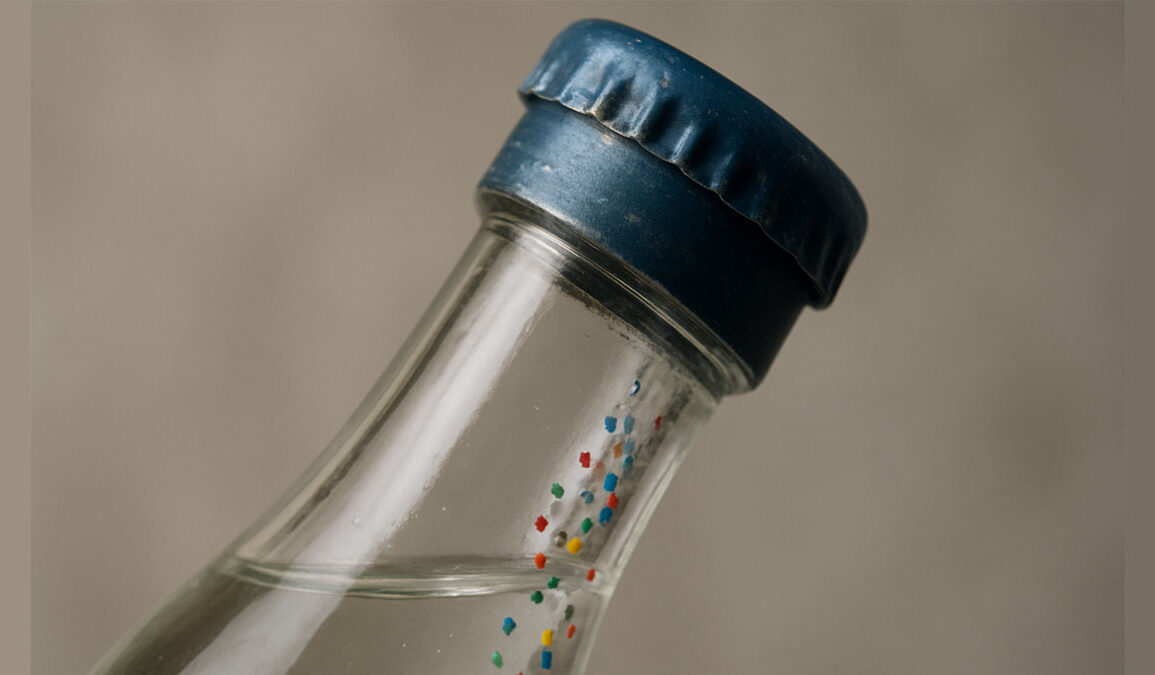
A new study from France’s food safety agency, ANSES, has turned conventional wisdom on its head: drinks sold in glass bottles may actually contain more microplastics than those sold in plastic ones. Researchers found that beverages like soda, beer, iced tea, and lemonade packaged in glass bottles had five to 50 times more microplastic particles than those in plastic bottles or metal cans.
“We expected the opposite result,” said Iseline Chaib, a PhD student who led the research. The assumption was that plastic bottles, being made entirely of plastic, would release more particles into the liquid inside. But that wasn’t what the data showed.
Where the Microplastics Come From
According to the researchers, the main culprit isn’t the glass itself—it’s the caps. Specifically, the colorful plastic paint coating the caps on glass bottles appears to shed plastic particles during storage and handling.
“The particles emerging from the samples were the same shape, color and polymer composition as the paint on the outside of the caps,” Chaib explained. When stored together, the caps likely rub against each other, creating micro-scratches that release these tiny plastic fragments. These fragments then make their way into the drinks.
Glass bottle caps also tend to be screwed on tightly, increasing the likelihood of friction and shedding.
Not All Drinks Are Equal
The study analyzed a range of beverages sold in France. Flat and sparkling waters contained relatively few microplastics, with around 4.5 particles per liter in glass bottles and just 1.6 in plastic ones. Wine, too, had low contamination, even when bottled in glass with plastic-coated caps. The reason for this is still unclear.
However, soft drinks were far more affected. On average, they contained around 30 microplastic particles per liter. Lemonade had about 40, and beer reached up to 60 particles per liter. The worst offenders were iced teas and soft drinks packaged in glass, which sometimes exceeded 100 particles per liter.
What Does This Mean for Human Health?
Microplastics are increasingly found in our food, water, and even the air. Scientists have already detected them in human blood and organs. But what these particles actually do inside the body remains largely unknown.
“There is still no reference level for a potentially toxic amount of microplastics,” ANSES said in its statement. That means it’s not yet possible to say whether the amounts found in these drinks pose a health risk.
Still, the presence of microplastics in everyday beverages raises questions about long-term exposure and potential harm, especially since these particles can carry chemical additives and pollutants.
According to ANSES, beverage companies can reduce the level of microplastic contamination. In fact, the agency tested a simple method—blasting the caps with air and rinsing them with water and alcohol. This cleaning process cut microplastic contamination by about 60%.
That suggests that a few small manufacturing changes could make a big difference.
The study, which was published in the Journal of Food Composition and Analysis, offers a reminder that the safest or most environmentally friendly option isn’t always the most obvious. While glass may be better for the planet in some ways, when it comes to microplastic exposure, it may not be the cleanest choice for your drink.